Keywords
Comprehensive geriatric assessment, Economic evaluation, systematic review

This article is included in the Ageing Populations collection.
Comprehensive geriatric assessment, Economic evaluation, systematic review
The revised version of “Evaluating the Cost-Effectiveness of Comprehensive Geriatric Assessment: Protocol for a Systematic Review of Economic Evaluations” underwent several key textual and conceptual changes in response to reviewer feedback. Overall, these revisions aimed to clarify the study’s objectives, improve methodological transparency, and enhance readability and precision across sections.
The Abstract was updated to emphasize that the review specifically targets economic evaluations of CGA.
In the Background, unclear or redundant phrasing was corrected, including revising “identifying to improve that improve healthy ageing” to a grammatically correct and conceptually precise version. The explanation of CGA was rewritten to better describe its multidisciplinary nature, inclusion of frail older adults, and engagement of patients in care planning. Reference formatting and wording around “frailty” were standardized for consistency and tone.
Methodological sections were strengthened substantially. The inclusion and exclusion criteria were revised to broaden eligibility. We allowed studies with less than six months’ follow-up and clarifying that CGA must be delivered by personnel with gerontology training.
The methods section now differentiates between trial-based and model-based economic evaluations, specifies the PROSPERO registration (number and date), and ensures consistent future-tense phrasing throughout. Additionally, the risk of bias (ROB-1) assessment was removed. Limitation of not conducting methodological assessment is acknowledged.
Figures and tables were also revised.
See the authors' detailed response to the review by Jonas Ammundsen Ipsen
See the authors' detailed response to the review by Robert Murphy
With increasing life expectancy and changes in demography1, the demand for healthcare is increasingly rapidly in line with the growth of the older population2. The World Health Organization (WHO) defines "healthy ageing" as "the process of developing and maintaining the functional ability that enables well-being in older age"3. To realize healthy aging, health and social care systems advocate a shift from acute management of cases coordinated, longitudinal, and integrated care for older adults4. As a result, researchers are increasingly focused on identifying interventions that improve healthy ageing.
Comprehensive Geriatric Assessment (CGA) is a multidimensional interdisciplinary diagnostic process focused on determining an older person's medical, psychological, and functional capabilities to develop a coordinated and integrated care plan5. CGA is considered for older adults living with frailty or at risk of adverse outcomes6. To improve the trajectory of aging, CGA considers various factors, including medical, psychological, and functional impairment, as well as environmental and social issues. CGA requires an interdisciplinary team that may include geriatric specialists, doctors, nurses, and allied health professionals, and aims to produce a coordinated and integrated care plan for treatment, rehabilitation, support, and long-term care with active engagement of the older adults in decision-making.
Over the last decade, CGA is being increasingly used in various health conditions and healthcare settings. For example, reviews have assessed the effectiveness of CGA across various care settings including emergency departments7–9, primary/outpatient care10,11, community settings5,12, hospital inpatient departments13,14, acute geriatric units15,16, and long-term care facilities17. Similarly, the effectiveness of CGA in certain population groups, such as surgical patients18–20, cancer patients21,22, and in the prevention of delirium23, has been reviewed. The resource implications of CGA can vary between studies due to differences in the settings, target population, or the intensity of the intervention24, resulting in heterogeneity in treatment outcomes5.
Although there is strong evidence to support the clinical effectiveness of CGA in managing older adults living with frailty, health systems are increasingly interested in knowing the situations in which CGA can be implemented most efficiently. To examine efficiency, economic evaluation is defined as a comparative analysis of alternative courses of action in terms of both costs and consequences25,26. Economic evaluation can be classified into two categories: partial and full27. Full economic evaluations constitute cost-utility, cost-effectiveness, cost-consequence, cost-minimization, and cost-benefit analyses. Full economic evaluations compare both the costs and effects of alternative comparisons. The cost of the comparators includes the cost of the intervention (the input cost for comparators) and resource-use consequences (health service utilization after the intervention).
Where: Tc: Total cost; Ci: Cost of intervention; Cc: resource use consequence
Effectiveness in the comparison groups can be measured in quality-adjusted life-years (QALYs) or other outcomes such as life-years gained, deaths averted, and improvement in frailty.
With respect to design, economic evaluations can be classified into trial-based and model-based economic evaluations. Trial-based economic evaluation is conducted alongside a randomised controlled trial (RCT) by tracking relevant costs and effectiveness data of comparison groups throughout the trial. Model-based economic evaluations define a set of multiple factors within a single decision-analytic framework, generating expected costs and effects for comparison groups and facilitating decision-making under uncertainty.
As the number of economic evaluations of CGA has increased, systematic reviews have contributed to knowledge by systematically identifying the evidence base and providing critical appraisal of reporting quality28,29. Previous systematic reviews exist but offer opportunities for improvement:1) Ellis et al.13 included economic evaluation of CGA in inpatient settings, but primarily to inform a decision analytic model; 2) Briggs et al.5 described the costs of CGA in community settings, but did not critique full economic evaluations; and 3) Garrard et al. mentioned the cost-effectiveness of CGA in primary care, but did not critically appraise reporting quality10. To date, we have not found a systematic review or critical appraisal of the full economic evaluation of CGA. Therefore, this protocol aims to appraise full economic evaluation studies on CGA and assess the cost-effectiveness of the intervention by focusing on various care settings, economic perspectives, and sub-group characteristics.
The Preferred Reporting Items for Systematic Reviews and Meta-analyses Protocols 2015 (PRISMA-P) was used to develop the protocol30. The PRISMA-P checklist can be found online (see supplementary Appendix 1)31. This review will be conducted and reported in accordance with the 2020 PRISMA guidelines32. This review was registered in PROSPERO (registration number CRD42023492586) on December 11, 2023.
Inclusion criteria
Types of studies: We will include full economic evaluation studies, either model-based or trial-based, conducted in the English language. Studies with at least six months of follow-up (or time horizon) will be included to appropriately capture the impact on costs and effectiveness5,29.
Population: This review will encompass individuals aged 65 years or older (or 55 years or older if the average age of study participants exceeds 70 years)5. The participants may or may not be acutely unwell, and they should be identified as either frail or at risk of adverse outcomes (e.g., falls, functional decline, nursing home admission).
Intervention: Comprehensive geriatric assessment provided at all levels of care, including home, nursing home, primary care, and tertiary health facilities by a multidisciplinary team for older adults.
Comparison: the comparator is care as usual or standard care
Outcomes: The primary outcomes will include the mean costs, mean effects, incremental costs, and incremental effectiveness.
Setting
All healthcare settings, including CGA provided at home, GP practice, emergency/acute care departments, outpatient departments, inpatient departments, and long-term care facilities, will be considered.
Exclusion criteria
We will exclude studies that do not define population groups as "at risk.” Studies with CGA interventions provided without the explicit involvement of geriatric expertise will not be included. Studies that applied partial economic evaluation will be excluded from the review25,27. Studies with less than six months of follow-up (time horizon) will be excluded. Commentaries, reviews, methodological articles, and editorials will also be excluded. We will exclude studies that are conducted on a single disease condition10.
Table 1 below presents the inclusion and exclusion criteria.
Using pilot search terms, a preliminary search was conducted on PROSPERO, PubMed, and Embase to identify any similar systematic reviews, either in progress or published, to mitigate the duplication of work. However, no on-going studies identical to the present systematic review were found.
A search strategy will be devised with support from a librarian at Trinity College Dublin and the literature5. This strategy will be applied across various databases including Embase, MEDLINE, and CINAHL (Supplementary Appendix 2)31. Our approach will include a manual search of reference sections in the identified studies and searches for cited references. Additionally, relevant databases specific to economic evaluations, such as the Tufts CEA Registry and NHS Economic Evaluation Database, will be explored. EndNote 21 will be used to import studies, and Covidence will be utilized to manage search results and remove duplicate records.
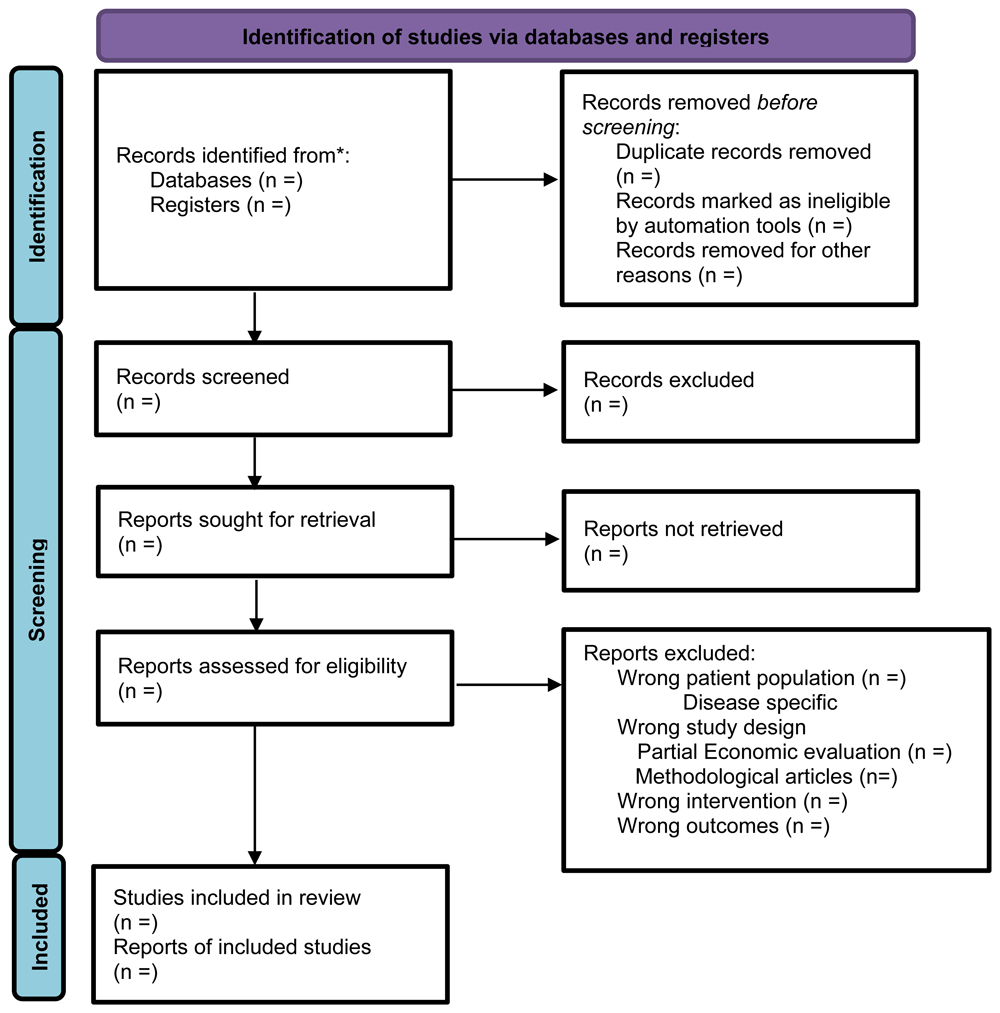
The study selection will be outlined using a PRISMA flow diagram. Two authors will independently screen the eligible titles and abstracts. The full text of potentially eligible studies will be identified, and a decision to include these full-text articles will be made independently by these two authors. Disagreements to include eligible studies will be approved by discussion in the presence of a third or fourth author (DT or RG). Figure 1 summarises the flow of the selection process.
Two reviewers independently will extract data from selected studies using a structured data collection form on COVIDENCE after a pilot study. If there are disagreements between the two reviewers, the decision will be made by the third and fourth reviewers.
The Consolidated Health Economic Evaluation Reporting Standards (CHEERS) statement provides guidelines for proper reporting of economic evaluations29. This statement includes 28 criteria outlining the minimum standards for such reports. The CHEERS-2022 checklist will be used to evaluate the reporting quality of economic evaluations33.
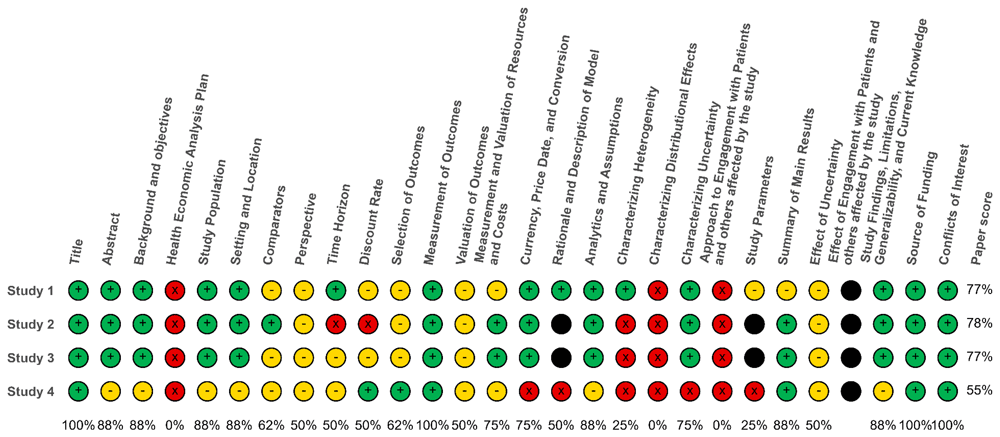
To enhance the interpretability of the reporting quality of papers, we will employ a traffic light color-coding system to visually represent the degree to which the key elements of the CHEERS checklist were addressed:
1. Green: Indicates that all elements were fully addressed.
2. Yellow: Indicates that some parts of the elements were only partially addressed.
3. Red: Indicates that the elements were not addressed at all.
4. Black: Indicates that the elements were not applicable.
Figure 2 shows the traffic-light system of the reporting quality of the studies.
A description of the characteristics of the studies and the results will be displayed using a narrative summary and tables. The general characteristics of the included studies will be presented in Table 2.
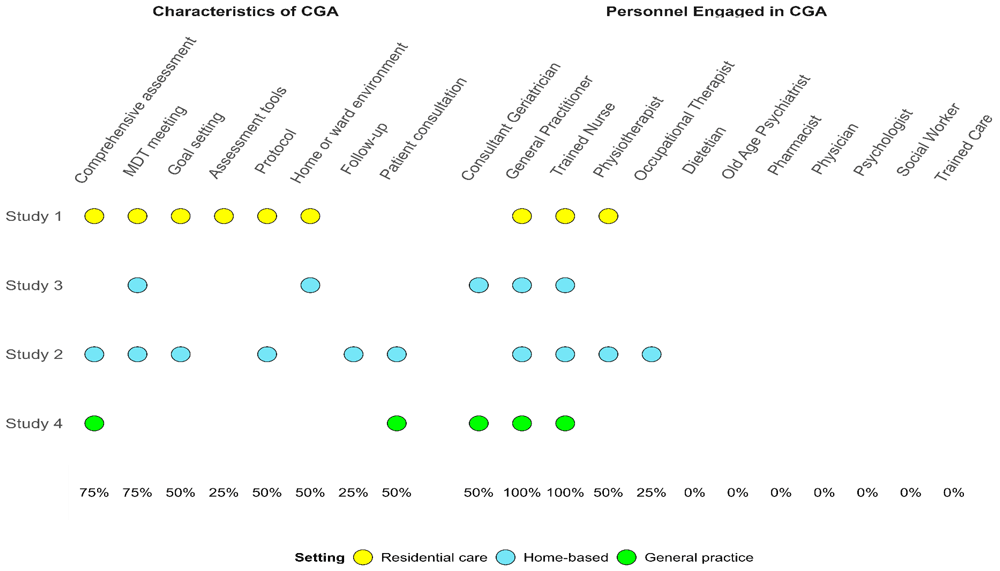
Narrative reports and tables will be categorized into three sections: intervention characteristics, study characteristics, and study findings. Intervention characteristics encompass the country where the study was conducted, the name of the CGA intervention being investigated, specifics about the services provided to the CGA group, the composition of the team delivering the CGA intervention, details about the target population, and care settings (such as outpatient, inpatient, emergency, and home long-term care facilities). Figure 3 shows a description of the characteristics of the interventions being compared.
Study characteristics include the analytical approach (trial-based or model-based), the health economic perspective of the study, the resources used to measure costs, the time horizon, discount rates for both cost and effectiveness, outcomes measured, the instruments used to measure these outcomes, how outcomes are valued, the threshold applied, and the analysis of uncertainty.
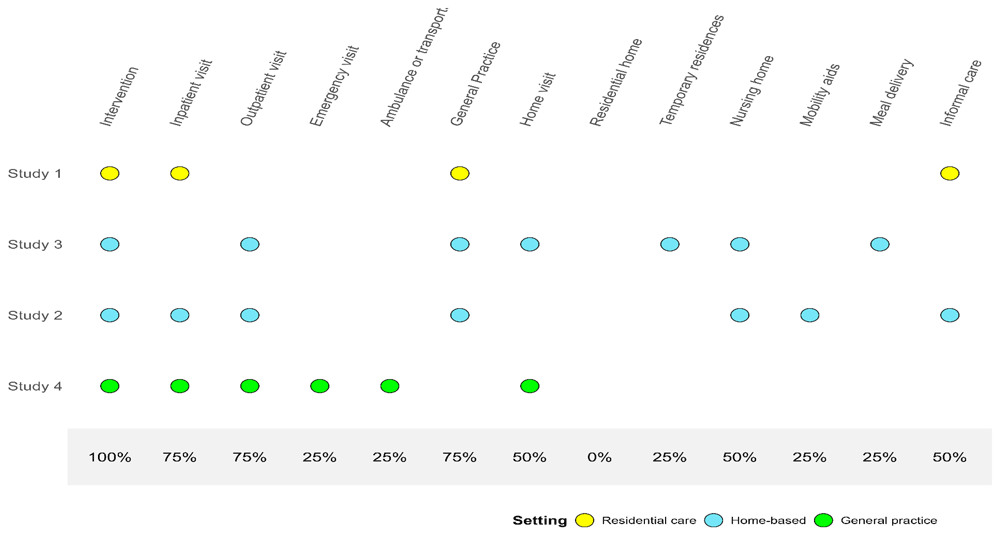
Descriptions of resource use (health service utilization) for both groups are presented in Figure 4.
A description of the presentation of study characteristics is shown in Table 3.
| Study ID | Country of study | Target population | Setting | Analytic approach | Perspective of the study | Time horizon | Outcome | Instrument used to measure outcome | Valuation of outcome |
|---|---|---|---|---|---|---|---|---|---|
| Study 1 | |||||||||
| Study 2 | |||||||||
| Study 3 | |||||||||
| Study 4 | |||||||||
| Study 5 |
For cost-utility studies, we will present the difference in costs and quality-adjusted life-years on a cost-effectiveness plane. The cost-effectiveness plane is used to plot the difference in cost and QALY between the intervention and control groups. It is divided into four quadrants: 1) the northeast (NE) quadrant indicates that the intervention is costlier and more effective; 2) the northwest (NW) quadrant indicates higher cost and lower effect; 3) the southwest (SW) quadrant indicates lower cost and lower effect; and 4) the SE quadrant indicates lower cost and lower effect. To allow comparability, all costs reported in the cost-effectiveness plane will be converted to and the price year of 2024 in Euro using the purchasing power parity and gross domestic product deflator index34. Figure 5 illustrates the cost-effectiveness plane that will be used to report the incremental costs and QALYs by care setting.
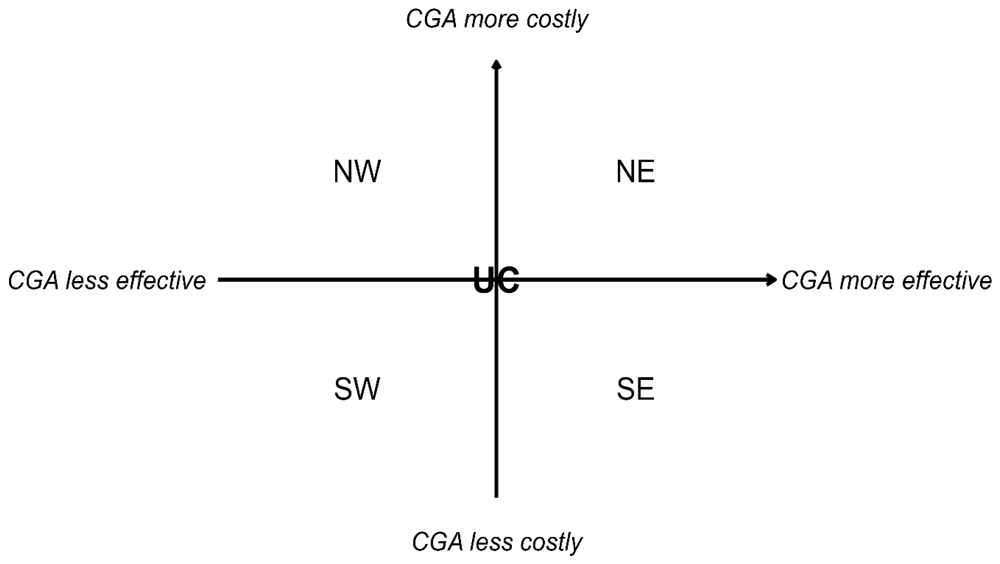
NW: Northwest; SW: Southwest; NE: Northeast; SE: Southeast; UC: Usual care.
A detailed description of the cost-utility analysis, including the country of study, setting, base-year currency, willingness to pay per QALY, incremental QALY (95% CI), perspective, incremental cost (95% CI), and the authors’ conclusion about the intervention, will be presented in Table 4.
This review protocol aims to evaluate the cost-effectiveness of CGA. This systematic review will support decision making by assessing and appraising cost-effectiveness across different characteristics, including different care settings and economic perspectives. Reporting summary findings with attention to intervention characteristics, study characteristics, and results will facilitate appraisal and a robust interpretation of the findings. We will appraise approaches to the identification, measurement, and valuation of costs and outcomes which will support proper interpretation of the cost-effectiveness evidence and guide the conduct of future economic evaluations35.
Ethics approval is not required for this systematic review, as it solely involves the use of publicly available economic evaluation studies and does not involve individual patient data. Therefore, there are no ethical concerns regarding patient confidentiality or informed consent. The findings of this review will be disseminated through presentations at national and international conferences, to reach a wide audience of researchers and practitioners. Additionally, the results will be published in a peer-reviewed journal to contribute to academic literature and inform future research and policymaking in the field of economic evaluation.
CHEERS, Consolidated Health Economic Evaluation Reporting Standards; CGA, Comprehensive Geriatric Assessment; CPI, Consumer Price Index; DALY, Disability Adjusted Life Year; ICER, incremental cost-effectiveness ratio; QALY, quality-adjusted life year.
Provide sufficient details of any financial or non-financial competing interests to enable users to assess whether your comments might lead a reasonable person to question your impartiality. Consider the following examples, but note that this is not an exhaustive list:
Sign up for content alerts and receive a weekly or monthly email with all newly published articles
Register with HRB Open Research
Already registered? Sign in
Submission to HRB Open Research is open to all HRB grantholders or people working on a HRB-funded/co-funded grant on or since 1 January 2017. Sign up for information about developments, publishing and publications from HRB Open Research.
We'll keep you updated on any major new updates to HRB Open Research
The email address should be the one you originally registered with F1000.
You registered with F1000 via Google, so we cannot reset your password.
To sign in, please click here.
If you still need help with your Google account password, please click here.
You registered with F1000 via Facebook, so we cannot reset your password.
To sign in, please click here.
If you still need help with your Facebook account password, please click here.
If your email address is registered with us, we will email you instructions to reset your password.
If you think you should have received this email but it has not arrived, please check your spam filters and/or contact for further assistance.

Comments on this article Comments (0)