Keywords
dementia, lower and middle-income country (LMIC), education

dementia, lower and middle-income country (LMIC), education
With population ageing, the prevalence of dementia is increasing globally (Prince et al., 2016), particularly in lower- and middle-income countries (LMIC), where two-thirds of the world’s nearly 50 million people with dementia reside (Prince et al., 2013). In many LMIC, alternatively called the ‘majority world’(Khan et al., 2022), services for older persons’ health and social care are scarce and the infrastructure to support people with dementia and their families are still developing. According to World Health Organisation (WHO) estimates, about 50 million people have dementia worldwide, with 10 million new diagnoses every year (Organization, 2021). Approximately 4.8 million people are currently living with dementia in South Asia, with the majority residing in India (about 3.8 million), followed by Bangladesh (0.6 million) and Pakistan (0.4 million) (Naheed et al., 2023) This figure is expected to rise dramatically due to population ageing, reaching an estimated 24.7 million people with dementia in South Asia by 2050. Projections for individual countries suggest that India will see its dementia population increase to 11.4 million, Bangladesh to 2.0 million, and Pakistan to 1.4 million by mid-century. Additionally, in a wide international consensus consultation for the Global Burden of Disease report, disability from dementia was accorded a higher disability weight (0.67) than that for almost any other condition, apart from severe developmental disorders (Agency, 2011).
In South Asia, with a combined population of 55.9 million population are over the age of 65 years (Poot & Roskruge, 2020), the provision of clinical professionals for dementia is sparse. According to the World Health Organization (WHO) Global Dementia Observatory Provisional Country Profile 2017 (Organization, 2019), for every 100 K populations in Bangladesh, the available number of neurologists is 0.09 with no geriatricians, no long-term care facilities, no adult day centers, and no outpatient social care centers (Khatun et al., 2025). In Nepal, the situation is similar, with 20 neurologists serving the entire country and only 3 to 5 registered geriatric medicine specialists in Nepal (Gajuryal et al., 2021; “Recommendations to prevent and control iron deficiency in the United States. Centers for Disease Control and Prevention,”). Both Bangladesh (Naheed et al., 2023) and Nepal (Thapa et al., 2024) lack an integrated dementia plan and there are no available guidance for health and social care staff to manage dementia risk. In contrast, in India, resources for dementia are more developed, they have dementia care infrastructure, including the creation of memory clinics, day care centers, and long-term care facilities in several regions (Shaji & Dias, 2006). National organizations such as the Alzheimer’s and Related Disorders Society of India (ARDSI) and Dementia India Alliance (DIA) have established multiple chapters and offer a range of services including support groups, caregiver training, helplines, and online memory clinics (Shaji & Dias, 2006). Additionally, India has launched policy initiatives such as the National Dementia Strategy plan and integrated dementia care into broader national health programs like the National Program for Healthcare of the Elderly and the Mental Healthcare Act (Anirudhan et al., 2025).
However, considering the size of India’s population, with a 1.46 billion over the age of 65 years (Economics, 2025), these resources are insufficient to tackle the burden of dementia in the coming future (Issac, 2024). Thus, there is an urgent need to ensure health system readiness for dementia management in South Asia. A critical element of this readiness is education of professionals in all aspects of dementia diagnosis and care.
Barriers to developing dementia services and research in South Asia, as well as stigma and poor health literacy related to aging conditions, are significant, including among health professionals (I. Leroi et al., 2020). Several studies, globally, have shown that primary care clinicians feel that they lack the appropriate training in diagnosing dementia and providing treatment, and thus lack confidence in making a diagnosis and undertaking a management plan (Milne, 2010; Turner et al., 2004). Tools to aid diagnosis are often not culturally sensitive and can be biased by characteristics of both patients and informants such as age, sex, and education (Chithiramohan et al., 2024). In 2019, an expert reference group in Pakistan highlighted key challenges in dementia diagnosis and care in the South Asian region (Leroi et al., 2019). These included insufficient mental health and dementia training in medical education, the lack of recognition of neuropsychiatry as a distinct field, a shortage of trained personnel for dementia diagnosis and management, under-developed specialization of geriatric psychiatry and behavioural neurology, and a scarcity of professionals dedicated to dementia research and clinical practice. Additionally, inadequate resources and limited collaboration among community services, specialist clinics, and primary care teams pose further obstacles to effective diagnosis and care. Finally, inadequate resources and poor cooperation between community services, specialist clinics, and primary care teams may also be barriers to diagnosis and care (Bernstein Sideman et al., 2022).
This rising rate of dementia in South Asia thus demands a skilled and knowledgeable workforce ready to meet its related challenges (van Hout et al., 2000). For clinicians, there is an urgent need for access to education that is user-friendly, affordable, and accessible with available peer support, supervision, and access to dementia champions, especially for those working in rural and remote regions. The World Health Organization’s (WHO) eight-year plan, the “Global Action Plan on the Public Health Response to Dementia, 2017 – 2025,” (Organization, 2017) proposed action for member states, partners and the secretariat is to ‘develop, deliver and promote evidence-based, age-, gender-, disability- and culturally sensitive interventions and training to health professionals, especially within the primary health care system, to improve knowledge and practices of such staff …’.
The 2019, ‘Roadmap for Dementia Research in Pakistan’(Leroi et al., 2019) identified a set of priority topics for developing capacity for dementia research and care, derived from the World Health Organization’s (WHO) ‘Global Action Against Dementia’ (Organization, 2017) and applicable to majority world settings. The priority topics included the need for capacity and capability development amongst professional in the dementia field. Various theoretical frameworks for health-related capacity development exist (Nussbaum, 2011) often directed at the institutional level (Assessment, 1998). In contrast, to date, there exists a handful of initiatives with the primary aim of ‘targeted capacity development’ (Collins et al., 2014) for dementia in majority world settings. Directed at the individual, rather than the institutional, they are focussed on particular skill sets such as research (Iracema Leroi et al., 2020) or leadership training. For example, broad interdisciplinary training combining knowledge, skills, research and leadership capacity is delivered by the Global Brain Health Institute (www.gbhi.org), which was developed as a global brain health leadership training programme for mid-career professionals from diverse disciplines; however, the number of graduated GBHI Fellows from the South Asian region is still limited. Moreover, this initiative, are accessible only to a limited number of professionals, and require extensive time and resource commitments.
Currently, web-based education has changed the face of learning and provides flexible, accessible, and cost-effective platforms for the delivery of education to a wide audience, regardless of their setting or location (Booth et al., 2009; Ellis et al., 2013; Innes et al., 2012). Thus, the potential for wide-spread and accessible dementia education for professionals has never been greater and some quality courses already exist, such as the University of Tasmania’s ‘Understanding Dementia’ MOOC (Eccleston et al., 2019). The literature suggests that web-based education is a flexible (Cartwright et al., 2015; Dias & Patel, 2009) and cost-effective (Maloney et al., 2015) medium; however, to be effective and functional it must contain features that promote learning and support knowledge translation into practice (Nguyen, 2015; Riley & Schmidt, 2016), and be regionally relevant. Moreover, for education to effective and lead to meaningful change and action, the content must be tailored to local and regional settings, taking cultural, linguistic, and health system contextual issues into account (Andrulis & Brach, 2007).
The purpose of this article is to report on the impact of a hybrid (on-line and live) education training course for dementia in South Asia. We also report on how the course was co-developed, piloted and implemented, with the goal of increasing the number of dementia-competent clinicians in South Asia. The course is directed at health professionals on the front line of dementia diagnosis and care. The aim of the initiative is to improve quality of life for people at risk of or living with dementia, and their families.
Stage 1: Preparatory activity
We initially convened a Core Team of five dementia healthcare professionals and academics (SS, IL, SF, SV) together with a coordinator with experience of living and/or working in South Asian settings. The Core Team met virtually on a regular basis to establish the project’s strategic framework, approach, and methods. This was achieved by an analysis of existing frameworks for developing educational material for healthcare professionals. Based on the utility and pragmatic approach, the ADDIE model (Analyze, Design, Develop, Implement, and Evaluate) was chosen to develop and implement our program. ADDIE is applicable to various educational contexts, is widely applied and incorporates elements from other design models, with five sequential steps (Kaminski, 2007).
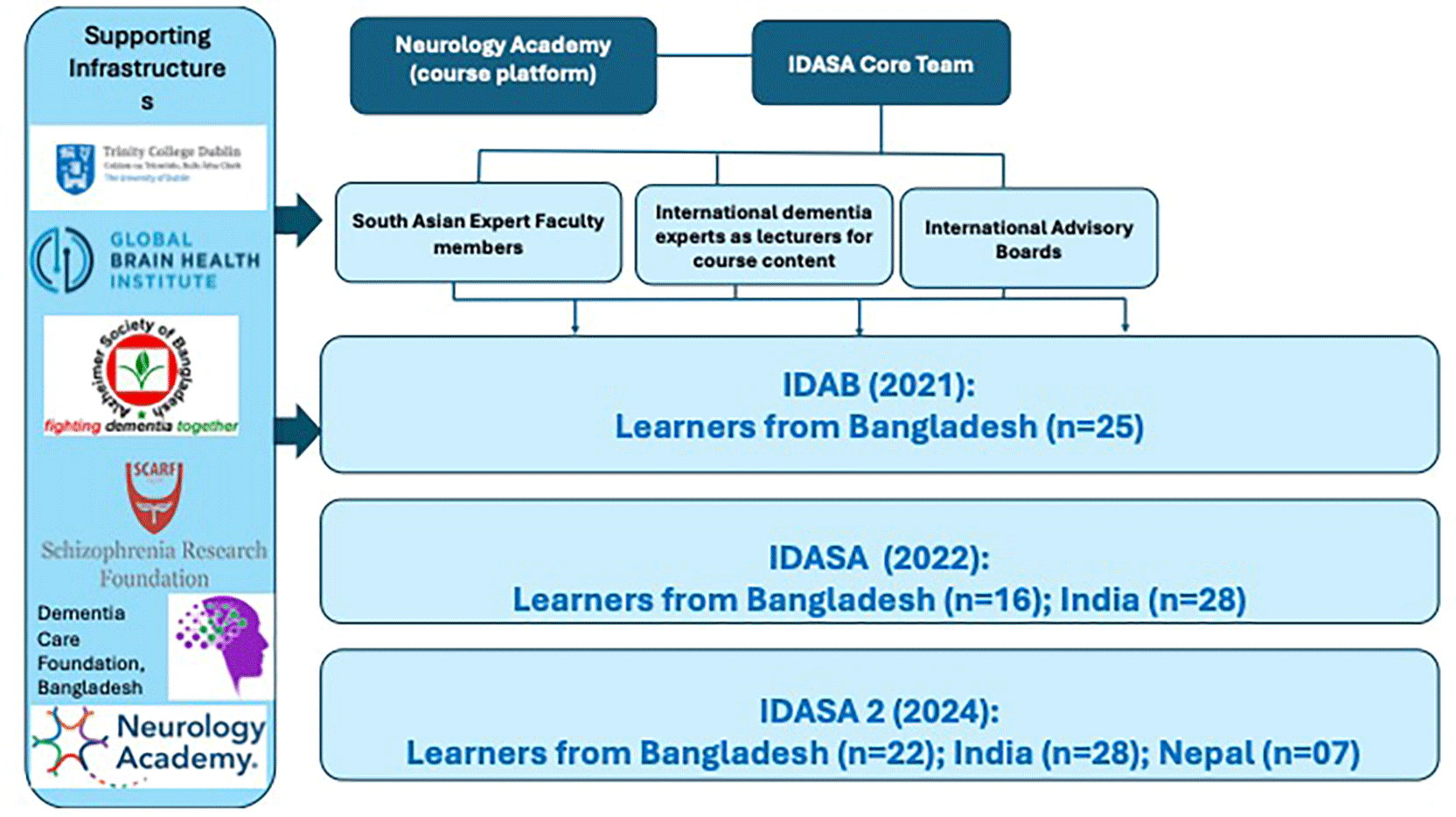
We selected an education provider with specialist in flexible delivery of high-quality educational content specifically for neurodegenerative conditions, which was Neurology Academy (NA; About us | Neurology Academy). NA, established over 20 years ago to provide clinicians in the UK with practical clinical knowledge and skills regarding Parkinson’s disease, has provided training to over 19,000 clinicians from the UK and wider parts of the globe, including 16 neurological and neurodegenerative conditions. The education is geared to service development, practically focused, with small interactive case-based training, delivered in a variety of ways, including in-person and online. NA provided the infrastructure for the course including registration, website aspects, online course delivery. Course content was provided by a range of international experts (n = 19) in dementia diagnosis, management and care, mostly linked to the Global Brain Health Institute, and all having experience in working in dementia in South Asia or majority world settings. Of these 19 lectures, six were invited to join the IDASA faculty group to provide additional input to the Core Team, attend monthly live teaching sessions, and mentor learners. All faculty members were dementia professionals of South Asian origin (see Figure 1 for outline of the course organizational structure).
Content development and cultural adaptation:
The Core Team, in consultation with local stakeholders in South Asia, including clinicians and third sector partners like Alzheimer Bangladesh, designed the course structure and delivery. The course material was organized around 8 themes ( Table 1), featuring 29 pre-recorded lectures totalling up to 15 hours. These lectures covered various aspects of dementia clinical knowledge from epidemiology to civic organization involvement and were complemented by assigned readings, multiple-choice questions, and case studies. Each theme typically comprised 4–5 short lectures, followed by a quiz of 5–10 questions to track learners’ progress. Learners were allowed multiple attempts at each quiz, with a passing threshold of 50%. Those scoring below 50% were directed back to the lecture material for revision before reattempting the quiz. To accommodate learners’ schedules, lectures were intentionally kept short (up to 20 minutes) for easy access during their workday. Recordings were done via Zoom, edited, and uploaded to the course portal. New theme content was released every two weeks over a four-month period, with access contingent upon successful completion of quizzes after each section. IDASA was culturally adapted by conducting most live discussions in Bengali and Hindi to address language barriers, while key teaching segments remained in English. Policy lectures were specifically tailored to the health system contexts of Bangladesh and India. The curriculum also incorporated culturally relevant case studies and practice-based learning, ensuring the training was aligned with local needs and realities.
Components of the course
To ensure uptake by mature learners in a professional working context, it was deemed important to vary to modes of delivery of learning material. Thus, the course consisted of five components:
• Didactic content (pre-recorded for asynchronous and on-demand access) and pre-reading components for each topic, delivered every 2 weeks for four months.
• Monthly 90-minute full class online live interactive session with IDASA Faculty as facilitators to summarise key points of didactic content, case-based interactive discussion in break-out groups, with IDASA faculty as facilitators, group-wide quizzes by polling and ‘town hall’ discussions regarding course content and delivery.
• Quality improvement project with each learner being required to design and undertake a short pragmatic QI project related to dementia in their home institution, to be evaluated and presented as an abstract and poster for the end-of-course conference.
• Live day-long end-of-course conference, one in Dhaka for Bangladesh-based learners, and one in Bangalore for India-based learners. No live conference has yet been organised in Nepal. This provided an opportunity for learners to present their QI projects as posters, share dementia information with the wider, local stakeholder group, and enable learners to meet each other in-person. Hybrid facilities for on-line attendees were available.
• Group-wide moderated WhatsApp group, including the faculty to foster network development for informal interaction, problem-solving and sharing of new information.
Learner recruitment and selection
Learners for IDASA were recruited through an open online application process hosted on Google Docs under the Neurology Academy. Applicants were required to submit a short Expression of Interest form, which included a two-page CV, a statement outlining their motivation for applying, their goals for dementia care in their country over the next five years, and details of their current professional position. This approach ensured that candidates provided both their professional background and a clear vision for advancing dementia care locally. All applications were reviewed by core team members of the IDASA, who carefully assessed each submission to select participants with the greatest potential to contribute to dementia services and leadership in their regions. This structured and transparent selection process helped ensure a diverse and committed cohort aligned with the aims of the IDASA programme.
International advisory board
An International Advisory Board of 8 experts was initially created for IDAD with 6 local experts and 2 international experts to guide the delivery of the course based on local intelligence. For IDASA, this was expanded to 11 members (9 local experts +2 international experts) to include representation from India, and in IDASA 2, to include two experts from Nepal.
Evaluation framework
To evaluate the overall effectiveness of the IDASA training, we adopted the 2016 revised version of Kirkpatrick’s “Return on Investment”(Kirkpatrick & Kirkpatrick, 2016) model, which has been developed specifically for the evaluation of training and is recommended as an evaluation framework for dementia education (Surr et al., 2017). The four levels are Reaction, Learning, Behavior, and Results. This model consists of four levels, each of which we operationalized to capture impact, as outlined in Table 2.
Stage 2: Piloting the course (IDAB).
The first International Dementia Academy Bangladesh (IDAB) course, delivered in 2021, enrolled 27 delegates from across Bangladesh, representing a range of health and social care professions. The course was designed as a five-month online programme, featuring 29 pre-recorded lectures, monthly live sessions, quizzes, and a requirement for learners to develop a Quality Improvement (QI) project proposal rather than a full project, due to the pilot nature of the programme and the constraints of the COVID-19 pandemic. Key challenges encountered included language barriers between Bengali and English, increased reliance on technology for access—which was further complicated by pandemic-related online requirements—limited time for live discussions and feedback, and a course pace that some working professionals found too fast. To address these issues, most general discussions in live meetings were held in Bengali, while major teaching and learning activities remained in English. Continuous support was provided via email for technological issues, and learners were encouraged to engage with each other and with faculty through email discussions. The course pace was adjusted by introducing a one-month gap to help struggling learners catch up, and quizzes were integrated into live sessions with immediate feedback. Despite these adaptations, about 35% of learners expressed a desire for a more accessible course format, and technical accessibility for the final live conference did not fully meet expectations. Nevertheless, 77% of learners reported a positive impact on their knowledge, attitudes, and practices, and the course completion rate among final learners was 75%, with 14 delegates submitting QI project proposals. The experience and feedback from this pilot course have informed ongoing efforts to expand and improve the programme, which has since evolved into the International Dementia Academy South Asia (IDASA), now including India and featuring an even broader international faculty.
Ethical considerations
This project was conducted as a service and training evaluation and quality improvement initiative to assess a clinical training scheme; therefore, formal ethical approval was not required under local institutional guidelines. The project utilized a service improvement framework to enhance local practice rather than testing a research hypothesis. Despite the absence of formal IRB oversight, the study adhered to the principles of the Declaration of Helsinki, with rigorous measures maintained to ensure participant anonymity and confidentiality through the use of anonymized, aggregated data.
The delegates were required to sign a learning agreement prior to participation in the course. The agreement specified that course content and materials could be used for the purpose of course evaluation and improvement, and all delegates provided informed consent for this use. In addition, delegates provided informed consent to participate actively in a WhatsApp group as part of the course activities.
Stage 3: Implementing the course (IDASA)
IDASA builds on the foundation laid by the International Dementia Academy Bangladesh (IDAB), expanding both its geographic reach and educational approach. While IDAB was piloted in 2021 as Bangladesh’s, IDASA now includes participants from both Bangladesh and India and features a broader international faculty. The curriculum has evolved from pre-recorded lectures and monthly live sessions to a blended model of interactive and self-directed learning, with delegates undertaking a small service development project over five months and presenting their work at the course’s conclusion. IDASA also places greater emphasis on regional adaptation, with course content and live discussions offered in both English and Bengali, and policy sessions tailored to the specific health systems of Bangladesh and India. This evolution reflects a commitment to building a sustainable, culturally relevant training platform for dementia care leaders across South Asia.
Stage 4: Expanding the course (IDASA 2)
IDASA 2 expanded on the original IDASA by including participants from Nepal, in addition to Bangladesh and India. The course further enhanced its curriculum with updated, region-specific content, a stronger mentorship component, and required delegates to complete and present a service development project over five months. These changes aimed to foster greater cross-country collaboration and practical impact in dementia care across South Asia.
In each Stage, we applied the ADDIE educational design framework to guide our activity, as outlined in Table 3.
The Kirkpatrick model of evaluation showed that participants found the IDASA course effective and beneficial. It significantly enhanced their knowledge of dementia, but some participants reported improved clinical skills and practice incorporation. The course addressed knowledge gaps and supported its re-offering, suggesting potential long-term benefits. Improvements include more live sessions, clinical scenario quizzes, downloadable materials, and discussion opportunities. A summary of the course evaluation results, organized by Kirkpatrick’s four levels, with key metrics provided as percentages based on IDASA 2 is presented in Table 4.
We developed and implemented a sustainable, internationally co-designed online dementia training program for health professionals in South Asia, uniquely integrating interactive learning, regional adaptation, and mentorship to address critical gaps in dementia care in resource-limited settings.
The International Dementia Academy Bangladesh (IDAB) and its expanded iterations—International Dementia Academy South Asia (IDASA) and IDASA 2—demonstrated high participant satisfaction (over 95% agreed the course was valuable and enhanced their knowledge), significant improvements in dementia knowledge and awareness, and moderate increases in clinical skills and practice change (approximately 78% reported improved clinical skills and incorporation of dementia care into practice). The course fostered a dedicated network of early-career professionals committed to advancing dementia care, with strong support for continuation and expansion. The curriculum, delivered via an adaptable online platform, included pre-recorded lectures, monthly live sessions, case-based discussions, and service development projects, ensuring relevance to local clinical contexts and sustained engagement.
Our findings align with the broader literature on dementia training, where interactive, case-based, and mentorship-supported programs are associated with improved knowledge, confidence, and self-efficacy among health professionals (Gkioka et al., 2020) (Takeuchi et al., 2020; Zabihi et al., 2025). However, the literature also highlights challenges in translating knowledge gains into sustained behavioral change and organizational impact, particularly in resource-limited settings where systemic support is weak (Schneider et al., 2021; Zabihi et al., 2025). Our results notably exceed typical satisfaction and learning outcomes reported in similar studies, possibly due to the program’s tailored design, regional adaptation, and the inclusion of service development projects that encourage practical application (Zabihi et al., 2025). In contrast to some studies, which report only modest improvements in clinical practice or organizational outcomes, our program achieved high rates of reported practice change and generated a community of practice, suggesting that the combination of international expertise, mentorship, and local engagement may be particularly effective (Zabihi et al., 2025).
The uniqueness of our program lies in its collaborative, cross-border approach, involving international and regional experts to co-create content relevant to local needs, and its emphasis on building a sustainable network of professionals dedicated to advancing dementia care in South Asia. The adaptability of the online platform and the inclusion of live, interactive sessions and service development projects further distinguish it from traditional didactic or purely self-directed training models, supporting both knowledge acquisition and its translation into practice (Zabihi et al., 2025). This model offers a scalable blueprint for dementia training in other low- and middle-income countries facing similar challenges in dementia care.
The IDASA initiative faced several limitations and challenges, despite their innovative and impactful design. First, the programs were delivered in resource-limited settings where health and social care infrastructure for dementia is underdeveloped, and there is widespread stigma and poor health literacy regarding dementia, which can hinder participant engagement and the broader adoption of new practices. While the online, flexible, and interactive format improved accessibility, it also relied on stable internet access and digital literacy, which may not be uniformly available across all regions or among all professionals, potentially excluding some individuals. Additionally, the pilot nature of these courses meant that initial cohorts were intentionally small to ensure quality and interactivity, which limited the immediate reach and generalizability of findings. Translating knowledge gains into sustained behavioral change and organizational impact—especially in environments with limited systemic support and unclear responsibilities for dementia care—remained a challenge, as seen in the literature and reflected in the moderate rates of reported practice change (Karrer et al., 2020). Furthermore, building a sustainable professional network and ensuring long-term policy buy-in required ongoing external guidance and support, highlighting the need for continued funding and engagement from both local and international stakeholders.
The next steps for IDASA center on expanding, deepening, and sustaining its impact within and beyond South Asia. Building on the success of its pilot and subsequent cohorts, IDASA plans to broaden its reach by adapting the program for additional countries and regions, particularly in low- and middle-income settings with similar healthcare challenges. This expansion includes updating and diversifying course content to reflect evolving best practices and regional needs, as well as incorporating more live, interactive sessions and practical service development projects to enhance learning and real-world application. Securing ongoing funding and forging new partnerships—such as those with international research networks and philanthropic organizations—will be crucial for scaling up the program and ensuring its long-term sustainability. Strengthening the alumni network and fostering a community of practice will support continuous professional development and advocacy for improved dementia care. Finally, robust monitoring and evaluation will underpin the next phase, enabling IDASA to demonstrate its impact on clinical practice, patient outcomes, and health systems, and to continually refine its approach for maximum effectiveness.
Targeted educational interventions for dementia in South Asia can improve knowledge and change behavior to action knowledge through dementia service development. Findings highlight a clear need for clinicians to have access to targeted education and training, especially given the growing numbers of people with dementia.
Provide sufficient details of any financial or non-financial competing interests to enable users to assess whether your comments might lead a reasonable person to question your impartiality. Consider the following examples, but note that this is not an exhaustive list:
Sign up for content alerts and receive a weekly or monthly email with all newly published articles
Register with HRB Open Research
Already registered? Sign in
Submission to HRB Open Research is open to all HRB grantholders or people working on a HRB-funded/co-funded grant on or since 1 January 2017. Sign up for information about developments, publishing and publications from HRB Open Research.
We'll keep you updated on any major new updates to HRB Open Research
The email address should be the one you originally registered with F1000.
You registered with F1000 via Google, so we cannot reset your password.
To sign in, please click here.
If you still need help with your Google account password, please click here.
You registered with F1000 via Facebook, so we cannot reset your password.
To sign in, please click here.
If you still need help with your Facebook account password, please click here.
If your email address is registered with us, we will email you instructions to reset your password.
If you think you should have received this email but it has not arrived, please check your spam filters and/or contact for further assistance.

Comments on this article Comments (0)