Keywords
Home support, Home care, Ageing in place, Age friendly healthcare, Community-based care.

This article is included in the Ageing Populations collection.
Home support, Home care, Ageing in place, Age friendly healthcare, Community-based care.
As populations age globally, governments are increasingly prioritising policies that enable older individuals to live independently in their own homes and communities if they want to (Wiles et al., 2012). In line with this international shift toward ageing-in place, Ireland has committed to a transformative vision for healthcare, encapsulated by the Sláintecare ambition to deliver the “Right Care, in the Right Place, at the Right Time”. Central to this approach is the strengthening of community-based support, particularly home support services (also called home care) (DoH, 2017,2024).
In Ireland, reforms are underway to enhance the quality, safety, and equity of home support and to set national standards. The current Programme for Government includes a commitment to establish a statutory home support scheme that ensures consistent access to high-quality, regulated services. Progress toward this goal includes the development of new legislation to introduce a licensing system for home support providers, alongside the drafting of regulations that set out the minimum standards required for service delivery.
The Health Information and Quality Authority (HIQA) is developing draft National Standards for Home Support Services. These standards will cover home support providers caring for and supporting people to live in their own homes for as long as possible. These standards set out what outcomes a person using home support services should expect and what a service provider needs to do to achieve these outcomes. A key element of these standards is responsiveness, defined by HIQA as “the system’s capacity to address the evolving needs, concerns, and preferences of those receiving care”. Services must be person-centred, flexible, and integrated to achieve this aim (HIQA, 2024).
Currently, eligibility for home support is determined through a needs assessment process conducted by the Health Service Executive (HSE). Home support services are delivered either by HSE-employed staff, or through private or voluntary providers, under formal agreements. Demand for home support has grown significantly in recent years, and demand is projected to continue to rise driven by an increasing older population (ESRI, 2021,2022).
The most reliable estimate of actual home support delivery in 2024 is approximately 23.8 million hours. While the precise outturn for recipients is not explicitly stated, available sources consistently indicate that circa 60,000 individuals received home support over the course of the year. For 2025, the government has allocated approximately €838 million to the sector, with plans to deliver 24 million hours of care to over 59,000 people.
Ireland’s older adults are highly diverse, in terms of functional ability, health conditions, health and social inequalities, poverty, access to home support, support networks and community assets (O'Halloran et al., 2021). While older age does not necessarily mean ill health, people who are eligible for home support may need flexible and responsive support to maintain functional, physical and/or psychosocial health (Gregory et al., 2017). Home support services typically assist with personal care, activities of daily living, medications assistance (prompting to take medicines), social participation/inclusion, and more complex needs requiring multi-disciplinary input.
Efforts are currently underway to standardise the assessment of support needs across the system (HRB, 2021). The Department of Health (DoH) and HSE have committed to the implementation of the interRAI assessment framework for home support applications (de Almeida Mello, D., et al. 2023). This internationally validated tool is being used to develop a care banding model to support equitable and transparent resource allocation. The HSE’s future operating model for home support is articulated through its broader integrated care and Sláintecare reform programme (HSE Corporate Plan 2025–2027; HSE Integrated Service Delivery model), which emphasises regionally delivered, person-centred care in the home.
In general, home support service responsiveness comprises multiple dimensions. In the first instance, consideration of individual service user needs and circumstances is crucial to a responsive health service. Related to this, the quality of relationships and interactions between the service user and the home support workers1 (HSWs) or care managers is a very important feature of person-centred care (McCormack et al., 2024). From an organisational perspective, the regulation, delivery, organisation and financing of services are key factors influencing responsiveness. Broader socio-economic- political- cultural factors add another layer of complexity (Mirzoev, & Kane, 2017).
In Ireland, government policy seeks to provide home support that is needs-based, equitable, accessible, sustainable, and of good quality (DoH, 2024). However, these operational-orientated goals may not necessarily be responsive to the diversity of individual service user needs, or changes in need or circumstances. Responsiveness is not only a service goal. It is part of the experience of care, which in turn is key to getting the most useful/effective/meaningful support needed to protect life at older ages and ensure people’s human rights (Spencer et al., 2025):
“Among other things, responsiveness means reducing the damage to one’s dignity and autonomy, and the fear and shame that sickness often brings with it.” (WHO, 2000, p24).
Crucially, the lived experiences of service users are not always fully recognised or drawn upon as sources of insight. Yet these perspectives are essential for enhancing responsiveness, not only to protect lives but to allow people to live well in a new stage of life:
“At old ages, we want to be alive but, more important, we want to be ‘alive’.” (Sir Michael Marmot, The Health Gap, 2019 edition, p209).
Opinions on how well a home support system performs might be influenced by a range of factors, including the functioning of the system, as well as the experience and expectations of the service users. For example, the following quote from Lucy in Kildare (research by Collaborator O’Sullivan) illustrates a desire to live independently with supports:
“For those of us who have compromised health and mobility, there is that fear, what is going to become of me?… I would like the government to take on board, instead of putting us into nursing homes, they’re going to look at helping us to remain and live independently at home with supports.” (Lucy, quoted in O’Sullivan et al., 2022, p18.)
Despite a substantial body of work on health-system responsiveness, most studies do not explore the specific challenges of home care or home support services, nor do they centre the perspectives of older service users (Contandriopoulos et al., 2022; Khan et al., 2021; Mirzoev & Kane, 2017). A recent expert-consensus study in China applied the Service Quality (SERVQUAL) model to home support and identified 23 indicators – including reliability, assurance, responsiveness, tangibility and empathy. Here, responsiveness was defined as “timely delivery of services and attentiveness to clients’ concerns”, with experts stressing efficient processes and adequate staffing as critical enablers (Zheng et al., 2024). One systematic review of qualitative studies found that older adults value autonomy and respectful engagement in home care – effective communication and the ability to make informed choices were central to their experience of responsiveness, leading to calls for “truly person-centred interactions” (Gregory et al., 2017, p.320). Autonomy relates to agency, whether older adults themselves define their options and preferences, and can age in place in the way they choose to (Urbaniak & Walsh 2021).
A realist review identified three core mechanisms underpinning effective home support: system integration, case management, and relational continuity. The study highlighted a need for clarity in how services are “defined and aligned with recipient needs” to improve responsiveness (Contandriopoulos et al., 2022, p.687). The Accountability, Responsiveness and Quality for Clients (ARQ) Model, piloted in Vancouver, introduced cluster care and performance-based funding. It achieved over 99% of service requests met promptly, along with significant gains in continuity of care and client satisfaction (Kelly & Orr, 2009). In Finland, a 15-year follow-up of integrated homecare service showed that clients, relatives and staff rated responsiveness as consistently high. Clients reported better punctuality and receipt of needed help, yet perceived staff to be more hurried than staff reported (Paljärvi et al.,2011).
The report by O’Sullivan et al. (2022), highlights the views of older adults about working conditions. Breda said: “Home help … don’t get paid really enough. But, more than that, they’re so restricted in what they can do now that sometimes it’s not worth having them there anyway.” Similarly, Eileen called for more funding for the home help service saying: “I feel very strongly that every home help … there has to be a HSE change in paying them good money. Because they are just not available, they don’t want to work for minimum wages.”
The Attune Project will further explore these issues in the context of home support responsiveness.
The primary knowledge user is the Department of Health (DoH); however, knowledge translation activities will also extend to the Health Service Executive (HSE), health and social care professionals, voluntary, community and social organisations (VCSOs), and international policy and practice networks worldwide.
Robust service user focused research is needed to inform policy. The Attune project will provide vital evidence on service responsiveness from the perspective of older adult service users. The project will demonstrate how engaging with lived experience can enhance policy development and service provision (Contandriopoulos, et al. 2022). Research is needed to enhance interprofessional working, integration of care, and collaborative models of co-produced solutions (Power and Crowley, 2024). The project investigation will consider the acceptability and potential for digital and data, such as telecare, remote monitoring, and use of artificial intelligence technologies, in enhancing support (Morrow et al., 2024a). In addition, the detailed examination will also consider the evidence on how different staffing models, standardised induction, training, and career pathways might enhance responsiveness (IPH, 2023; Lynch & Morrow, 2025; Morrow et al., 2024b; Morrow et al., 2024a).
This research project aims to examine the responsiveness of home support services in Ireland from the perspective of older service users. The Attune project will explore how individual needs, expectations, and circumstances, alongside relational/interactional, structural, and socio-economic-political-cultural factors, shape service user’s experiences.
Findings from the project will inform the development of the statutory home support scheme by guiding resource allocation, service design, and policy decisions. Through integrated knowledge translation, the project will connect policymakers with the lived experiences of service users, offering insights into how home support enhances quality of life, and strengthens person-centred care, to inform scalable, community-based care models relevant to Ireland and internationally.
The study has five objectives, which are designed to be SMART (Specific, Measurable, Achievable, Relevant, and Time-bound) objectives, as follows:
Objective 1: To actively involve service users, carers and advocacy groups throughout the research process to shape and influence the research design and outputs.
SMART: Ensure active involvement of a panel of service user, carer and advocacy stakeholders (8 places are budgeted including Co-Chair) using online training, panel meetings, workshops and consultations. From project month 1 through to month 24.
Objective 2: To recruit and engage with older service users in ethical and inclusive ways to listen to their lived experience of service use.
SMART: Administer a national survey and attain a minimum of 200 responses. Recruit a purposive sample of minimum 30 older adult service users (or unpaid/family carers for those unable to participate themselves), across 6 study areas by Month 6 (target 36).
Objective 3: To connect policymakers with the lived experiences of service users using a ‘Tiger Team’ approach (a team of policy experts focused on a particular problem).
SMART: Engage key policy stakeholders in a Tiger Team. Agree a schedule of meetings. Produce and provide policy briefings, convey service user narratives and preliminary research insights.
Objective 4: To engage key home support sector stakeholders and representatives in consultations regarding service user responsiveness of home support services at key stages of the project.
SMART: Conduct 3 focus groups with home support staff and undertake structured consultations to validate findings and gather sector-specific feedback. Host two roundtables featuring service user narratives and research insights (provisional format: online in month 12, in-person in Dublin in month 18).
Objective 5: To produce policy recommendations and an implementable framework for practice.
SMART: Finalise and disseminate a set of policy recommendations and a practical framework by Month 24, with input from Service user, Carer & Advocacy Panel (SCAP), and drawing on the consultation findings from home support sector representatives and stakeholders. Develop a draft curriculum for a stand-alone module for HSWs/care managers to support implementation.
Deliverables for these objectives are described later, see Deliverables and dissemination.
The justification for the Attune Project is that the robust investigation will produce important and valuable evidence to inform home support service decision making in Ireland. The uniqueness of this study lies in the connection between older adult’s lived experiences and the policy focus on responsiveness. The justification for the multi-method approach is that a representative survey is essential to capture service users’ views and experiences of home support responsiveness. The scope of the survey will include communication, quality, and dignity, for example. In-depth interviews with service users, and focus groups with HSWs, will explore where services could more effectively support health and quality of life for older adults (WHO, 2006). Example topics could include the acceptability and potential for data, digital technologies, telecare, staffing models, education and training. This approach will provide a well-rounded robust approach to the evidence collected.
The focus and scope of the Attune project is the lived experience of older adult home support service users (65 years of age and older). The data from service users will be captured using survey and interview methods. Members of SCAP will help the research team to develop data collection instruments and to interpret the findings of the study.
The study will also gain perspectives from home support providers, including home support service managers and home support workers, using focus group method (detail below).
We acknowledge the central role of unpaid and family carers in sustaining home support systems, and the importance of carer wellbeing (Teahan et al., 2021). However, a meaningful examination of carer perspectives would require a different sample framework, recruitment process and methodologies, which are beyond the scope of the project. Carer perspectives will not be completely excluded but they will not be the central focus of the research. Carers (unpaid and paid) will be included in the PPI element of the project, recognising that caring relationships are critical to home support.
The Attune Project will employ a multi-method approach to ensure a rich and comprehensive understanding of how Ireland’s home support services can become more responsive to the lived experiences of older adults. A representative survey of home support service users will provide insights into service use, preferences, and unmet needs, while interviews and focus groups will allow for deeper exploration of personal experiences, contextual factors, and priorities for improvement. Stakeholder engagement, including older adults, family carers, HSWs, provider organisations, and policymakers, will be embedded throughout the project to ensure the research reflects real-world perspectives and operational realities. Patient and Public Involvement (PPI) will guide the development of research tools, interpretation of findings, and identification of meaningful solutions, ensuring older adults’ voices remain central. This multi-method and participatory design supports integrated knowledge transfer, enabling ongoing dialogue and co-production that will enhance the relevance, impact, and practical adoption of the project’s recommendations.
The study will use systematic rapid review approach following an established method (JBI Guidance) and a defined research question (“How is responsiveness in home support defined and measured internationally?”). Systematic database searching will use inclusion/exclusion criteria. Quality appraisal of included studies will be conducted with input from a systematic review consultant (direct librarian help from RCSI Library). A rapid and systematic review approach ensures international grounding, policy relevance and conceptual clarity within the limitations of the project. The scope of the international evidence will include all countries, including Denmark and the Netherlands, both of which share some long-term care system attributes with Ireland. Literature from wider European Union (EU) and Organisation for Economic Co-operation and Development (OECD) countries will be included. A protocol for the systematic rapid review is registered with the PROSPERO database (see https://www.crd.york.ac.uk/PROSPERO/view/CRD420261342582).
The survey design will combine adaptation of validated instruments from the UK, Canada, and the Netherlands (informed by the research literature and co-applicant’s expertise and knowledge). Items will be assessed and selected/adapted to suit Ireland-specific service contexts. PPI representatives (the project’s SCAP) will play an active role in piloting and refining the survey and other tools with the research team. The scoring systems applied in the survey will depend on the questions/items being asked and the original validated instruments. The exact order, layout, wording and response format of the survey will be piloted and refined with our PPI contributors.
A sample size calculation indicates that issuing 2,000 surveys (paper and electronic) with a maximum expected high of 30% response rate could yield 600 responses (minimum target is 200 older adults) which is sufficient for subgroup analysis by age, gender and region. In respect to population representativeness a sample structure can be devised based on Central Statistics Office (CSO) figures to match the population characteristics and monitor underrepresented groups for further targeted recruitment if required.
In this way, non-response bias can be monitored by comparing respondent demographics with national CSO benchmark data. Where underrepresentation is identified targeted outreach via community partners can be used. While most interviews will be conducted by telephone or video conference calls, it is possible that face-to-face survey options (e.g., verbal reading of questions) could be used for individuals with additional barriers to participation, if individuals express this preference.
The survey will implement quality controls as standard best practice (e.g., removing straight-line, failed attention checks, and unrealistically fast responses) to ensure only valid responses are included in the final sample. Data gathered outside of the online surveys (e.g. paper-based survey)will be validated by two researchers to ensure quality. The study will use Framework Approach to analysis, triangulation methods, and involve PPI members in the interpretation to enhance quality.
Contingencies for low response rate to the paper survey are to promote an electronic version of the survey via community partners (Irish HomeCare, Volunteer Ireland, and Age Action in the first instance), use multi-channel dissemination, reminders, partnerships with trusted intermediaries, and targeted outreach to underrepresented groups.
An online survey will be developed to align with the paper-based version, in order to enhance accessibility, reach, and participation across diverse community and voluntary sector settings in Ireland. While paper-based surveys remain valuable for individuals with limited digital access or lower levels of digital literacy, an online format increases convenience for respondents who prefer completing surveys electronically and enables wider dissemination through organisational networks, mailing lists, and social media platforms. Combining both formats will support more inclusive data collection, reduce barriers to participation, and help toensure that responses reflect the diversity of service users across Ireland. .
The content of both formats (paper-based and online survey) will be matched, allowing for direct comparison of responses and the integration of data where appropriate. Using parallel formats in this way supports inclusive, flexible data collection while maintaining consistency and methodological rigour.
On the recommendation and advice of the project PPI co-applicant, an Easy Read version of the survey will be developed, tested with SCAP members, and made available for those who need it. The Easy Read will only include a subset of core survey questions.
Lived experience interviews will be conducted with a purposive sample of older adult home support service users across Ireland.
Participant sample: A purposive stratified sample requires a minimum of 36 interviews (max. 40) involving unpaid/family carers in interviews where necessary for service users unable to participate themselves.
Recruitment will rely on voluntary participation and self-disclosure rather than gatekeeper disclosure (i.e., service providers will not be involved in selection or asked to disclose personal information) protecting confidentiality. Participants will be given the opportunity to participate via telephone interviews, videoconferences (Zoom, MS Teams, Whatsapp or other preferred platforms). Interviews will be undertaken by the Postdoctoral Researcher with the support of the PI. Observational methods in interviews conducted in home settings will not be used because of ethical issues associated with privacy and confidentiality.
To enhance recruitment beyond CSO matching, the study will adopt a community-engaged approach to reach individuals from marginalised, seldom-heard, and less visible groups who may be less likely to engage with formal services or research (O’Sullivan, Desmond, & Buckley, 2023). This will include partnering with trusted community-based organisations (e.g. family carer organisations, disability and advocacy networks, regional and local associations and groups) to disseminate study information through established channels and relationships. In addition, the study will utilise community ambassadors or peer advocates, where appropriate, to support awareness and build trust. Outreach activities will take place in accessible, non-clinical settings such as community centres, libraries and local events, and will be supported by culturally appropriate and accessible materials (e.g. plain language, translated formats). These strategies aim to reduce barriers to participation, increase inclusivity and ensure that the study sample reflects the diversity of populations who use or may benefit from home support services.
To enrich the research three online focus groups will be held (1 hour duration), representing different types of formal home support provision: HSE, private providers, voluntary/collective providers. Focus groups will be set up with the support of the HSE (Co-I and Collaborators), Irish HomeCare, and the co-applicant’s previous work with providers. Focus group size of six will be used. Smaller focus group numbers may be more feasible and acceptable in pressurised service contexts. A minimum of 12 home support workers will be involved to gain important insights into their perspectives. A focus group topic guide has been developed to explore a range of relational, interactional, structural and cultural dimensions of home support responsiveness. The discussion will also cover training and education needs and attitudes towards developing new courses for continuous professional development (CPD) on service user responsiveness e.g., micro-learning modules or programmes.
Data on costs, hours used, and carers per hour, will be captured using survey and interview methods and by incorporating key questions into the interview schedule (led by three co-authors with economics expertise) (Walsh & Gillespie, 2023; Walsh et al. 2021; Walsh et al. 2020). Case studies will explore not only experiences but also perceived efficiency and resource use. Economic analysis will be embedded in the methods, not treated as an adjunct. Data on staffing, resource use, and costs, and how these differ across care recipient characteristics, will be collected across all strands of data collection. The overall analysis will examine value, resource use, and equity adjustments, providing policymakers with actionable insights.
PPI and advocacy input strategies are in place to support inclusivity and meaningful involvement. SCAP will work alongside the research team throughout the study to input into every stage of design, development and implementation of the research. Service users and carers involved in the study via SCAP will be invited to co-present at events, and findings will be shared with diverse lay audiences through Age Action and Volunteer Ireland, to amplify the voices of service users, as well as their needs and preferences in relation to home support.
The theoretical foundation for engagement is knowledge translation. Knowledge translation activities will be guided by the Knowledge-to-Action (KTA) Framework, emphasising cycles of:
• knowledge creation
• contextual adaptation
• implementation (translation of data, results and evidence so that it can be used in policy and practice)
Knowledge translation activities will be guided by a visual Knowledge-to-Action (KTA) Framework ( Figure 1), which emphasises iterative, non-linear cycles of knowledge creation, contextual adaptation, and implementation. Within this project, knowledge creation will involve the generation and synthesis of empirical findings through mixed-methods research, alongside the integration of service user, carer, policymaker and practitioner knowledge to ensure relevance and completeness of the evidence base.
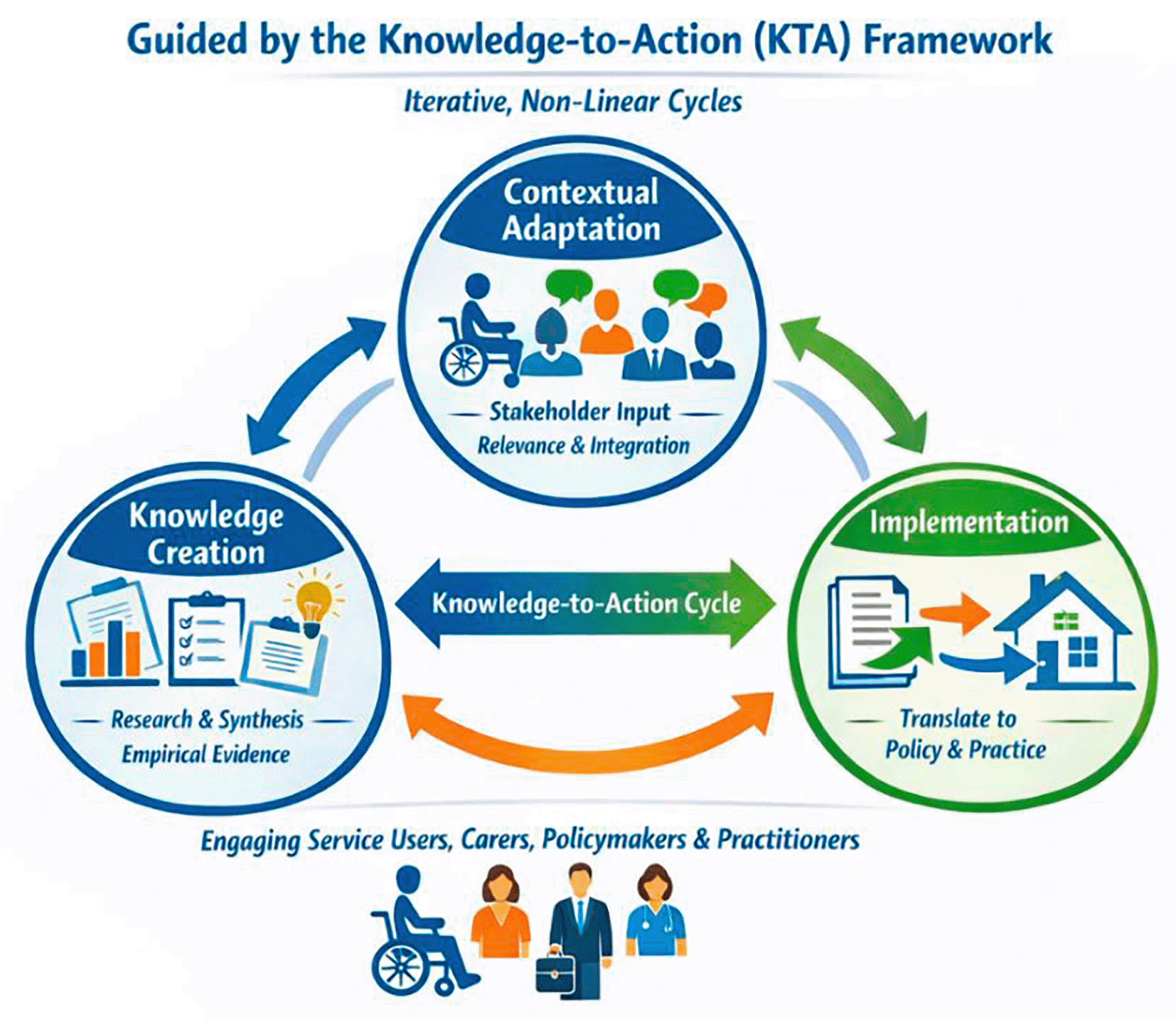
Contextual adaptation will occur through structured engagement with policymakers, service providers, and service users, including via the governance structures (see below), Project Advisory Group (PAG), Tiger Teams, and SCAP. These mechanisms will enable findings to be interpreted considering organisational, regulatory, and operational contexts, ensuring that outputs are tailored to the realities of Ireland’s health and social care system, and the needs and preference of people in need of care. Implementation will be supported through the co-production of policy briefs, practice frameworks, and implementation-focused guidance, aligned with decision-making timelines and system priorities. Ongoing feedback loops will allow emerging evidence to be refined and applied in real time, facilitating timely uptake and informing policy development, service design, and practice change.
The Attune Project governance structures will explicitly support knowledge translation and external validation, including team reflexivity processes, SCAP involvement, PAG meetings, sector-wide consultations, and input from international advisors (see Acknowledgements). Together, these mechanisms will promote the timely uptake of emerging evidence by relevant policy stakeholders and ensure that project outputs are closely aligned with operational realities and strategic policy objectives.
The strategic adoption of the Tiger Team approach (time-limited solution focused meetings of experts) in the design of the project aims to facilitate the collection, formulation and delivery of policy-orientated knowledge. Engagement via four Tiger Team meetings will be a key factor in the project’s success. A structure will be developed to monitor and assess engagement processes to ensure effective knowledge-to-action using an integrated knowledge translation (iKT) process (a detailed separate iKT plan is available from the research team).
Stakeholder engagement is critical to the success of the project. If there are scope and interest, stakeholders might include organisations such as Home and Community Care Ireland, ALONE, Age and Opportunity, Sage Advocacy, Family Carers Ireland, and organisations with experience of the needs of diverse service user groups such as the All Ireland Institute for Hospice and Palliative Care (AIIHPC). Mental health needs can impact the delivery and provision of care, including training for care providers on how these needs can be addressed. Therefore, stakeholders from mental health sector will be important. Given the growing number of cases of dementia, late onset mental health issues such as depression, and late diagnoses, such as autism, this is also likely to be an important component of an effective home support system.
To support research inclusion, a range of survey formats will be made available to accommodate diverse participant needs and preferences (detail above). Alongside paper-based and online versions, respondents will have the option to receive face-to-face assistance, in which a researcher or trained facilitator can read questions aloud or provide verbal explanations as required. This additional support is intended to ensure that individuals with literacy challenges, sensory impairments, cognitive difficulties, or limited confidence in completing surveys independently are still able to participate fully. Offering multiple modes of completion enhances accessibility, reduces barriers to engagement, and promotes equitable inclusion across all groups involved in the research. The research team will monitor replies to the surveys against population data, and target any gaps with community partners to achieve inclusive representation in the survey results. Reporting of gender and sex data will follow the Sex, Gender and Equity in Research (SAGER) guidelines (Heidari et al., 2016).
Responses collected via paper-based, electronic, and Easy Read survey formats will be integrated into a single dataset for analysis (while maintaining details of source format). All responses will be entered or imported into a central electronic database using a standardised coding framework to ensure consistency across formats. Paper and Easy Read responses will be manually entered by trained researchers, with quality checks (e.g. double data entry or verification of a sample) to minimise transcription errors. Question wording and response options will be aligned across formats as far as possible; where adaptations are required (e.g. simplified language or visual supports in Easy Read versions), responses will be mapped to equivalent variables during data processing. The dataset will be cleaned and reviewed to ensure comparability, and any format-specific differences will be documented and considered during analysis. This approach will enable robust combined analysis while maintaining the accessibility of the survey for diverse participants.
Data confidentiality and participant privacy are paramount. All data collection and management activities will comply with GDPR and institutional ethical guidelines. Sensitive data will be anonymised or pseudonymised as appropriate. Access to sensitive data will be restricted and monitored to prevent unauthorised use. Data will be stored securely on password protected computers owned by the university (RCSI) and only shared between members of the core research team for the purposes of the research. Further detail of data management is in the Data Protection Impact Assessment (DPIA). Following project completion, all data will be securely archived in appropriate repositories (RCSI Research Repository and Open Science Framework) to ensure long-term preservation and accessibility. Metadata and documentation will remain accessible to support future reuse and replication studies. The team will provide ongoing support for data requests where feasible and in line with ethical considerations.
The study will use Framework Approach (Richie & Spencer, 1994) to analysis, which provides a structured yet flexible approach suitable for applied policy research. Deductive coding domains will be informed by policy priorities (e.g., responsiveness, access, efficiency), while inductive coding of qualitative data will capture unanticipated insights. Framework matrices will enable systematic comparison across participant groups and the data sources. Involving PPI members during the analysis will help to validate the interpretation being made of key findings. Realist evaluation principles (“what works, for whom, in what contexts”) will guide the interpretation of results.
Data integration will be generated through triangulation of survey, qualitative, and economic evidence (e.g., cost of care data). Key findings across these sources will be aligned with the research questions to identify key evidence and any gaps or weaknesses in the evidence. Narrative case studies, derived from the interviews and focus groups, will draw together data to illustrate lived experiences of home support responsiveness in diverse contexts. Case studies will make the issues of responsiveness easier to understand from a human experience perspective. Selection will be purposive, ensuring representation by geography (urban/rural), service model (public/private), and population characteristics (gender, ethnicity, disability). Data sources will include interviews, self-reported service use, and contextual/system data (e.g., regional staffing and funding models where available).
Deliverables relating to objective 1:
D1.1 Establish a Service User, Carer & Advocacy Panel (SCAP) with two Co-Chairs by Month 2. Develop Terms of Reference, SCAP information, support and training, and PPI payments/expenses system.
D1.2 Develop a schedule for SCAP engagement and meetings (M3, M4, M5, etc.).
D1.3 Co-develop research tools, analysis and outputs with feedback from SCAP.
D1.4 Produce a mid-project engagement review report and feedback to SCAP about the panel’s ongoing contributions to the research (M12).
D1.5 Generate a final engagement report highlighting contributions made by SCAP and the impact on research design and outputs - drawing on GRIPP2 reporting guidelines (M24).
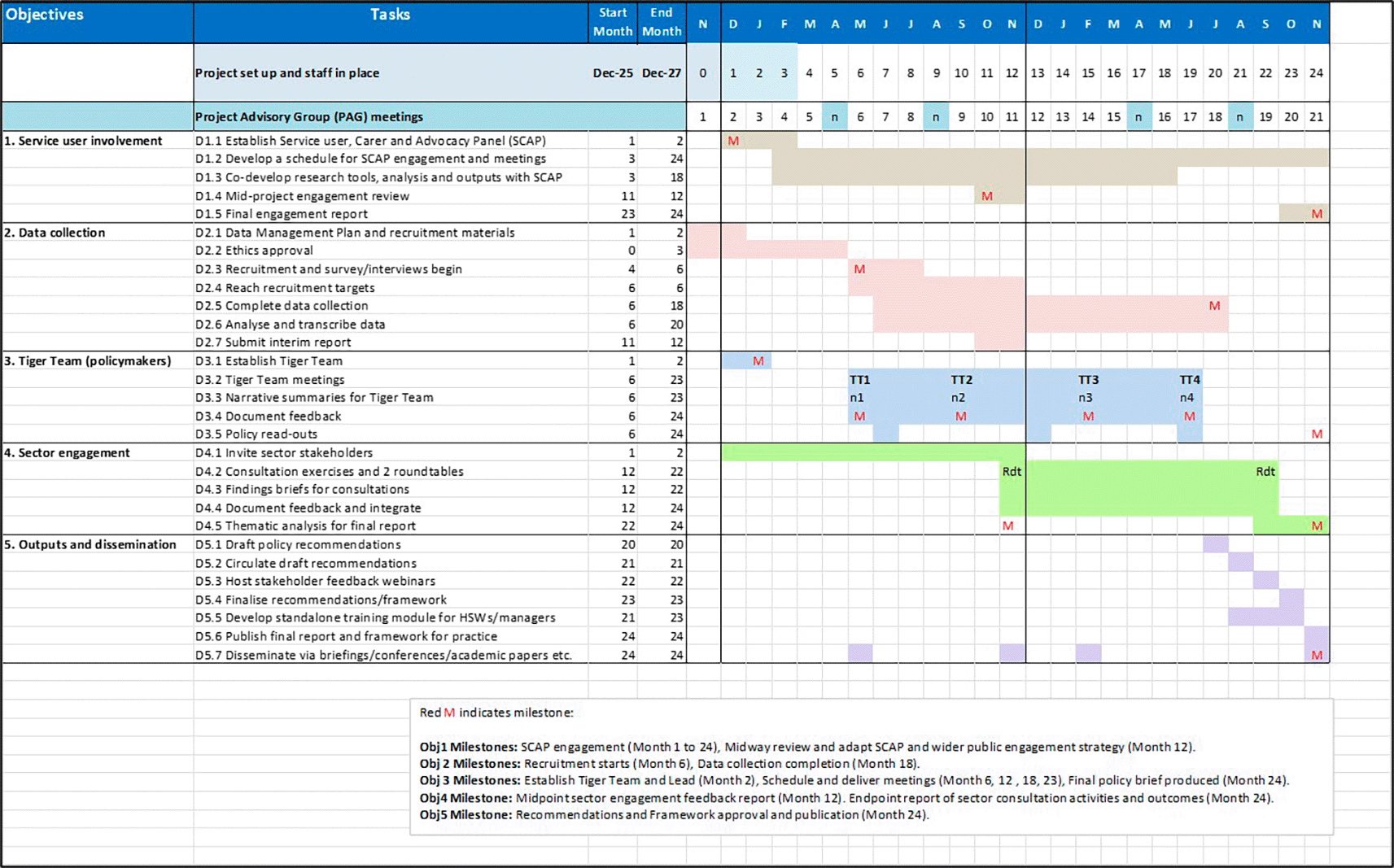
Milestones: SCAP engagement (Month 1–24), Midway review and adapt SCAP and wider public engagement strategy (Month 12).
Deliverables relating to objective 2:
D2.1 Data Management Plan, recruitment protocol and recruitment materials using accessible plain.
English (Month 1–2).
D2.2 Ethics approval secured (Month 3).
D2.3 Begin recruitment, survey distribution and interviews (Month 4).
D2.4 Reach recruitment targets (Month 6).
D2.5 Complete any follow up interviews/data collection (Month 18).
D2.6 Analyse survey data and transcribe and code interviews.
D2.7 Submit interim data report (Month 12).
Milestones: Recruitment completion (Month 6), Data collection completion (Month 18).
Deliverables relating to objective 3:
D3.1 Engage policymakers in the design and set up of a Tiger Team (Month 2).
D3.2 Schedule and deliver online Tiger Team meetings (e.g., Months 6, 12, 18, 23).
D3.3 Prepare narrative summaries from interviews for presentation and discussion by the Tiger Team.
(ongoing).
D3.4 Document policymaker feedback and key issues arising (ongoing).
D3.5 Create 1-page ‘read-outs’ for policymakers following each Tiger Team meeting.
Milestones: Establish Tiger Team and Lead (Month 2), Schedule and deliver meetings (Month 6, 12, 18, 23), Final policy brief produced (Month 24).
Deliverables relating to objective 4:
D4.1 Invite key home support staff and sector stakeholders and representatives to participate in consultation activities including 3 home support worker/carer focus groups and 2 roundtable events during the project (Month 1–2).
D4.2 Schedule and execute consultation exercises focusing on key questions and provide structured feedback template, roundtables online and in-person (Months 12, 22).
D4.3 Prepare findings brief for each consultation activity.
D4.4 Document feedback and integrate into research analysis.
D4.5 Create sector engagement thematic analysis to include in full report (Month 24).
Milestone: Midpoint sector engagement feedback report (Month 12). Endpoint report of sector consultation activities and outcomes (Month 24).
Deliverables relating to objective 5:
D5.1 Synthesise data findings into draft recommendations (Month 20).
D5.2 Circulate draft recommendations to Research Advisory Group, sector stakeholders, and policymakers (Month 21).
D5.3 Host feedback webinars as required to stakeholder groups (Month 22).
D5.4 Finalise recommendations and framework for practice with implementation guidance (Month 23).
D5.5 Develop a draft curriculum for a stand-alone module for HSWs/care managers to support implementation of the service responsiveness framework (Month 21–23).
D5.6 Publish policy report and framework for practice (Month 24).
D5.7 Disseminate through targeted policy briefings and sector conferences (national and international conferences in Yrs 1 & 2).
D5.8 Academic publications (Month 12, Month 24).
Milestone: Recommendations and Framework approval and publication (Month 24).
Key outputs from the project will be as follows:
• Full report: A comprehensive report for the study will be produced.
• Responsiveness indicators: Based on the evidence, responsiveness indicators will be co-developed with PPI partners and policymakers. They will span both process indicators (e.g., timeliness, continuity) and outcome indicators (e.g., satisfaction, quality of life). Indicators will be explicitly mapped to the evidence using Framework Analysis, ensuring consistency and traceability.
• Implementation framework: Whist training will not be developed as part of this project; the findings will inform future work to support HSWs and care managers to implement responsiveness indicators or the practical framework that is developed by this research project.
• Policy briefing papers and recommendations.
• Academic publications and presentations.
A public-facing dissemination strategy aims to build trust, enhance transparency, and ensure findings reach the groups most affected by the issues. Media and press releases will be developed with RCSI expertise (FNM Communications Lead) and circulated for approval by relevant parties and the HRB funders, in accordance with the project contract. Service users and carers involved in the study will be invited to participate in communications e.g., contributing to newsletters or short video presentations. Presentations and workshops to policy audiences will support early policy engagement with input from the policy owners to target key individuals and departments.
Authorship and author contributions will adhere to good practice standards and the Faculty of Nursing and Midwifery Authorship and Publications Policy. Royal College of Surgeon’s in Ireland (version 2026).
International dissemination will be supported via:
• The Global Dementia Observatory Knowledge Exchange Platform (WHO), where outputs relevant to home care and dementia services will be shared.
• The WHO Collaborating Centre for Nursing and Midwifery at RCSI, which has long-standing engagement with international policy networks and has led regulatory research informing national policy in Ireland and Europe. Direct collaboration with the WHO Technical Officer for Long-Term Care and participation in European level policy work through the European Nursing Council, providing access to regulatory bodies and EU level stakeholders working on long-term care.
• The Faculty of Nursing and Midwifery RCSI is a member of The Person-centred Practice International Community of Practice (https://www.pcp-icop.org/) an international community of academic, health and care organisations and individual members, which can provide a valuable source of advice, dialogue and knowledge exchange.
Over the course of the project plain English summaries will be produced for different purposes and lay audiences, including newsletter style summaries, project briefs, and open access academic papers. The project will also make available audio recordings, short web-based videos, and picture-based infographics, aligned with accessibility standards.
The research project will be led and managed by Dr Elizabeth Morrow (Principal Investigator, FNM RCSI) who will have overall responsibility for coordinating the project’s activities, ensuring ethical and institutional compliance and adherence to timelines and budgets, and maintaining effective communication among team members and stakeholders. Dr Morrow’s extensive experience in managing policy-focused interdisciplinary research projects in the UK and Ireland will be pivotal in driving progress and ensuring high-quality research outputs. Prof Lynch will provide any additional governance support should it be required. Dr Morrow will lead reporting to the funder and chair Attune Project meetings to ensure clear communication and timely progress.
The broader research team (co-authors of this Study Protocol) includes experts in the field of home care and evidence translation for policy, and their wider collaborators are highly relevant and include service user collaborations and leads from HSE and Irish HomeCare, the types of primary provider organisations whom this research is targeting. Each co-applicant has committed to structured engagement on methodological domains such as survey design, health services, economics, and PPI, as well as flexible provision of advice to the PI as required. The co-applicants all have experience undertaking large-scale projects, including HRB-funded projects. The PI will be seeking input and drawing on their experience throughout the project lifetime. RCSI provides the infrastructure necessary for a project of this scale. Through the high level and broad range of expertise of the team, and a robust governance and project management framework, we are confident that the project can be successfully delivered in the given timeframe.
Full-Time Postdoctoral Researcher (Dr Bernadine O’Donovan): A full-time postdoctoral researcher with over 5 years of relevant experience contributes methodological expertise and research skills to the project. Their responsibilities will include data collection, management, and analysis; participant recruitment coordination; literature reviews; and assisting with the preparation of research outputs.
The co-applicants and their areas of expertise are:
Professor Mary Lynch (Co-Investigator – Economic Perspectives): Prof Lynch will provide expertise on economic evaluation frameworks and contribute to interpreting economic data, ensuring the integration of economic perspectives within the project’s findings.
Professor Mary Rose Sweeney (Co-Investigator – Education Perspectives): Prof Sweeney will oversee the educational and training components, supporting knowledge translation strategies and ensuring educational implications are embedded throughout the research.
Dr Brendan Walsh (Co-Investigator – Service Modelling and Policy): Dr Walsh will lead service modelling and policy analysis, advising on the interaction between service delivery and policy frameworks and contributing to dissemination aimed at policymakers.
Dr Sharon Walsh (Co-Investigator – Home Care Models and Economics): Dr Walsh will provide expertise on home care service models and their economic aspects, ensuring findings reflect current service delivery realities and economic considerations.
Emer Ahern (Co-Investigator - HSE) Will support engagement with HSE departments and initiatives, such as Age-Friendly Health Systems and the 4 Ms Framework (What matters, Medications, Mind, Mobility).
A group of external international advisors has been convened for the benefit of bringing international perspectives to the research (see acknowledgements). Their mini-biographies are available from the research team.
In accordance with HRB requirement for EfP funded projects, the project has a Project Advisory Group (PAG) attended by the PI, Co-Is, Policy Sponsor and Policy Owners, Collaborators and advisors with relevant expertise. The PAG have elected to meet monthly to ensure the project remains aligned with its objectives to inform the statutory home support scheme.
The role of the PAG is to:
• Review progress against milestones and deliverables
• Offer strategic advice and help address emerging challenges
• Monitor financial management and resource allocation
• Oversee ethical, PPI, research inclusion and methodological considerations
• Support dissemination and impact planning
The PAG has developed and agreed Terms of Reference (separate document available from the research team), in accordance with the terms of the project contract. Agendas and minutes of meetings will be maintained by the research team throughout the duration of the project.
Project Planning and Monitoring: Dr Morrow will maintain a comprehensive project plan detailing milestones, deliverables, and timelines. This plan will be updated regularly and used to track progress during weekly internal meetings of the core members of the research team.
• Weekly research team meetings: To discuss operational issues, challenges, and data collection progress.
• Monthly Project Advisory Group meetings (PAG): Updates, interdisciplinary discussion, and problem-solving.
• Quarterly governance meetings (PI and CoIs): Strategic oversight and risk assessment.
The team will use digital platforms such as Microsoft Teams to facilitate communication and collaboration, alongside shared document repositories to ensure easy access to project materials.
Budget oversight will be conducted by Dr Morrow in collaboration with the institution’s finance office and Research Co-ordinator (Dr Erika Harno). Monthly budget reviews will monitor expenditure and identify any potential overruns promptly.
Identified risks include participant recruitment delays, staff absences, and data analysis challenges. Mitigation strategies include:
• Utilising multiple recruitment channels and maintaining a contingency participant pool.
• Cross-team/PPI training for shared understanding and expectation management.
• Implementing secure data storage with regular backups.
• Institutional capacity to unforeseen expenses or temporary staff support.
Should risks materialise, Dr Morrow will consult with Co-Is Prof Lynch and Prof Sweeney in the first instance and then the PAG to implement appropriate corrective actions, such as adjusting timelines or reallocating resources. Emphasis will be placed on transparent communication and flexibility to maintain project momentum and completion.
Ethical approval has been granted by RCSI Human Research Ethics Committee (awarded 12 February 2026 HREC Reference 202510008). Informed consent will be tailored to individual needs, including the use of accessible materials and support where necessary. All participants will be reminded of their right to withdraw and stop or pause interviews at any stage. If there is any concern or signs of distress interviews will be halted immediately until participants chose to continue or end the interview. Data will be anonymised and stored securely in accordance with GDPR guidelines and RCSI Data Management Policy.
No personal identifiable data about service users or home care workers will be collected as research data (e.g., no names or addresses). The research does not include the use of patient data or records. No individuals or the name of facilities will be identified in the research outputs. Personal data (names, email) will only be collected for the purposes of research participation. No computer IP addresses will be collected. Any research data (survey/focus group data) will be pseudonymised (given a code) and stored separately from personal data.
The Attune Project’s engaged ethical research approach, means working with PPI contributors and other stakeholders, in ways that approach ethics not only as a requirement, but as a relational practice that requires critical reflection on research practices and processes that support agency, inclusion and participation. Reflexivity is built into the project (e.g., debriefings, team meetings, field notes), guided by ethical principles of research governance and integrity (Olmos-Vega, et al., 2023). Members of the research team undertake mandatory training in data protection, cybersecurity, equality, diversity and inclusion (EDI), and have undertaken adult safeguarding training.
Informed consent for all participation in the research will be obtained. Participants will be informed using. Participant Information Leaflets (PIL), which have undergone review by the university ethics committee. The PIL explains the purpose of the study and how their data will be used, their rights to refuse to participate and the right to withdraw without giving reason.
For each of the research methods the following types of informed consent will be required:
• The paper-based service user survey: written consent (consent question and tick box to indicate willingness to complete the questionnaire/or decline and dispose of the questionnaire).
• Electronic service user survey: electronic consent (consent question and tick box to indicate willingness to complete the questionnaire/or decline and close the link).
• Easy-read version of the survey: electronic consent (consent question and tick box to indicate willingness to complete the questionnaire/or decline and close the link).
• Interviews with service users: verbal consent for telephone interviews, written consent for any in person interviews (consent question and tick box to indicate willingness to participate in the interview/or decline).
• Focus groups with home support workers and managers: written consent (consent question and tick box to indicate willingness to participate in the interview/or decline).
There is a legal presumption that all participants have capacity. Capacity will be presumed unless an adequate trigger for concern is identified. Where such a trigger arises, capacity will be supported and maximised in accordance with the HSE National Consent Policy on Health and Social Care (2019, updated 2024). The Policy says that anyone seeking consent must start with the idea that each person is able to make their own decisions. Each person should be supported to make their own decisions wherever possible, in accordance with the Assisted Decision-Making (Capacity) Act 2015. The Assisted Decision-Making (Capacity) Act is a law for any adult who may need support to make decisions, now or in the future. The Act says that every adult is able to make their own decisions. They should be given the support they need to do this. The Plain English HSE Consent Policy will be followed (https://www2.healthservice.hse.ie/files/132/).
The approach to managing fluctuating capacity in electronic participation in the survey will involve:
• Recognising that capacity may fluctuate, the survey design will support informed decision-making by allowing participants to complete the survey at a time of their choosing. Participants can pause or exit the survey at any point. There is no time-limited completion or pressure to continue once started. The survey uses clear, simple language and avoids unnecessary cognitive burden in the layout.
• Participants are advised at the outset that they should only proceed if they feel able to concentrate and make decisions at that time. If a participant experiences reduced capacity, distress, or fatigue while completing the survey, they are encouraged to discontinue participation.
• Partial responses will not be analysed unless explicit consent has been provided for their use (or will be handled in line with the approved data management plan).
• Additional safeguards that are built into the electronic survey are prominent signposting to researcher contact details for questions or clarification before and during participation, a reminder that participation does not affect access to home support services or any other supports, no use of proxy or substitute consent for survey participation, a trusted person can assist with reading questions or filling in answers provided by the respondent (it is specified that this should not be a paid home support worker).
Approach to capacity to consent in interviews:
• Prior to participation the researcher will check the person has had time to read the PIL and ask questions, explain the study purpose, procedures, risks, and benefits in plain, accessible language, check understanding by asking participants to describe the study in their own words, assess the participant’s ability to understand the relevant information and retain the information long enough to make a decision and communicate that decision (verbally or non-verbally).
• Only participants who demonstrate capacity to provide informed consent at the time of recruitment will be invited to proceed with the interview or focus group participation.
Approach to managing fluctuating capacity in interviews:
• Recognising that some older adult service user participants may experience fluctuating capacity, capacity will be viewed as an ongoing process rather than a one-time assessment. To manage this capacity will be re-checked at each point of data collection, including immediately prior to interviews and during interviews. All participants (service users, carers or health support workers) will be reminded that participation is voluntary. They may pause, reschedule, or withdraw at any time without consequence. If a participant shows signs of reduced capacity during data collection (e.g. confusion, distress, difficulty following the question), the researcher will pause the interview, re-explain the study/question and confirm willingness to continue. The research will offer to stop or reschedule for another time.
• If capacity is judged to be temporarily impaired, data collection will be deferred until such time as capacity is regained. If capacity is not regained, the participant will be withdrawn from the study and any data collected up to that point will be handled in accordance with the participant’s stated wishes and ethical approval conditions.
Additional safeguards in the design of the interview methods are as follows:
• Use of short interviews, with breaks offered as needed. Conducting interviews by preferred method (telephone, video, text or in-person) at a time of day chosen by the participant to support capacity and comfort. Allowing participants to have a trusted support person present if they wish (without that person answering on their behalf ). Pauses in the interview schedule for monitoring for distress, fatigue, or cognitive overload.
Commencement date, 1 December 2025 for 24 months.
End date 30 November 2027.
A project Gantt chart illustrates delivery of the objectives and key milestones ( Figure 2).
The project will report to the commissioner HRB in accordance with required standard reporting procedures (available at https://www.hrb.ie/funding/grant-management/reporting/).
The study will use the following reporting guidelines:
ChatGPT based on the GPT-5.3 model (an OpenAI large language model) was used to develop the Knowledge-to-Action (KTA) Framework illustration, Figure 1.
Provide sufficient details of any financial or non-financial competing interests to enable users to assess whether your comments might lead a reasonable person to question your impartiality. Consider the following examples, but note that this is not an exhaustive list:
Sign up for content alerts and receive a weekly or monthly email with all newly published articles
Register with HRB Open Research
Already registered? Sign in
Submission to HRB Open Research is open to all HRB grantholders or people working on a HRB-funded/co-funded grant on or since 1 January 2017. Sign up for information about developments, publishing and publications from HRB Open Research.
We'll keep you updated on any major new updates to HRB Open Research
The email address should be the one you originally registered with F1000.
You registered with F1000 via Google, so we cannot reset your password.
To sign in, please click here.
If you still need help with your Google account password, please click here.
You registered with F1000 via Facebook, so we cannot reset your password.
To sign in, please click here.
If you still need help with your Facebook account password, please click here.
If your email address is registered with us, we will email you instructions to reset your password.
If you think you should have received this email but it has not arrived, please check your spam filters and/or contact for further assistance.

Comments on this article Comments (0)