Keywords
migrants, underrepresentation, clinical research, participants, participatory health research, intervention, race, ethnicity.

This article is included in the Public and Patient Involvement collection.
migrants, underrepresentation, clinical research, participants, participatory health research, intervention, race, ethnicity.
Clinical trials should ideally consist of participants who reflect the characteristics of the population for whom the knowledge gained from the research is applicable (Muthukumar et al. 2021). Numerous studies have reported the significant underrepresentation of underserved groups in clinical research in countries such as Australia, the United Kingdom (UK), and the Republic of Ireland (Hughson et al. 2016; Bodicoat et al. 2021; Biggs et al. 2024a; Brijnath et al. 2024). The term underserved group refers to segments of the population that are represented in health research at lower levels than expected from population estimates (Bodicoat et al. 2021). Groups identified as underserved in clinical research are diverse and often only categorised based on characteristics such as age, ethnicity, or disability (Bodicoat et al. 2021). Other characteristics, however, including socioeconomic status and geographic location, can also contribute to a group's classification as underserved (National Institute for Health Research 2020).
There are several consequences of underrepresenting underserved groups in clinical research. First, the results of the research may not be generalisable to a broad population because different groups may respond differently to an intervention (e.g. a new drug or medical device) due to variations in physiology or disease state (National Institute for Health Research 2020; Brijnath et al. 2024). Second, being certain that the balance of risk and benefit of an intervention is favourable for a given group can only be achieved by studying the effects of the intervention in a range of diverse groups (National Institute for Health Research 2020). Third, if clinicians lack evidence of the effect of an intervention on a particular group, they may be reluctant to offer the intervention to that group, resulting in clinical opinion replacing evidence (National Institute for Health Research 2020). Moreover, the successful delivery of interventions to target populations is complex, with biological, psychological, sociocultural, and logistical differences having an impact (National Institute for Health Research 2020). Therefore, unless the effectiveness of an intervention has been tested in heterogeneous groups, there is no certainty that it will work in practice (National Institute for Health Research 2020). The COVID-19 pandemic serves as a recent example of this problem: COVID-19 disproportionately affected older populations, migrants, and ethnic minority groups. These groups were underrepresented in COVID-19 research (Biggs et al. 2024a), resulting in a lack of knowledge on which factors were contributing to a greater burden or severity of disease, and which interventions could be effective (Treweek et al. 2020). Without this knowledge, people in these groups can miss out on important benefits of treatments or not be spared harms (Treweek et al. 2020).
This paper focuses on migrants as an underserved group in clinical research. Defined as people who move across international borders for any reason (IOM 2019), a recent WHO report highlighted the health disparities that some migrants experience in host countries (WHO 2022). Due to the cause or nature of migration journeys, some migrants endure a substantial healthcare burden that is insufficiently addressed by research specifically tailored to meet their needs (MacFarlane et al. 2022; WHO 2022). Despite the notable differences in how these groups respond to or engage with healthcare interventions compared to other populations, clinical research often fails to address these disparities (National Institute for Health Research 2020; Bodicoat et al. 2021). As numerous studies have established the persistent underrepresentation of migrants and their consequences, several others have identified a complex array of barriers that hinder their involvement in clinical research. These barriers include language and communication, attitudes and beliefs, lack of trust, lack of knowledge of and access to clinical trials, eligibility criteria, and practical and logistical issues (Hughson et al. 2016; Treweek et al. 2020; Bodicoat et al. 2021; Brijnath et al. 2024). There can also be stigma around specific research topics, such as sexual and reproductive health (Brijnath et al. 2024). Conversely, some studies have highlighted strategies that are in line with Participatory Health Research (PHR) as a research model to enhance the inclusion of migrants, such as building and nurturing relationships with the communities in focus, employing roles like patient navigators or community liaisons to support individuals during the recruitment and consent phases, translating study documents, and adopting communication methods that respect cultural sensitivities (Hughson et al. 2016; Bodicoat et al. 2021; Alarcón Garavito et al. 2025).
Participatory Health Research (PHR) is a research paradigm that has the potential to address the challenges of involving migrants in clinical research as community partners (Roura et al. 2021). The goal of PHR is to do research with, not on, people by maximising the participation of those whose lives or work are the subject of the research in all stages of the research process (Roura et al. 2021). There is evidence that it can be effective in increasing the participation of minority groups in research and testing the generalisability of effective interventions (De las Nueces et al. 2012). Some examples of the success of PHR initiatives include the participation of migrants as partners in the development and implementation of cross-cultural consultations across four European countries and the co-production of a breast screening video by Asian migrant women in the UK (Roura et al. 2021).
In Ireland, the most recent Census of Population in 2022 reported that the population is increasingly diverse, with 20% of the population born in another country (Central Statistics Office 2022). Although two scoping reviews (Villarroel et al. 2019; Cronin et al. 2024a) have shown an increase in migrant health research over time in Ireland, there has been no systematic analysis of the representation of migrants in clinical research and whether/how PHR is being used to support the representation of migrants in clinical research. These gaps mean that first, there is a lack of evidence available to assess whether migrants are adequately represented and included in clinical research in the country, as well as the implications of this.
Second, there is a lack of evidence about whether clinical research is being done with or on migrants in Ireland. Therefore, this study aims to address these two gaps, with the following objectives:
A database of peer-reviewed migrant health research in Ireland was analysed (Cronin et al. 2024b), and an additional search was performed on ClinicalTrials.gov. These are described in turn below.
The rationale for searching the migrant health research database was that it contained a comprehensive list of 142 peer-reviewed studies from two scoping reviews of migrant health research in Ireland covering the period from 2001 to 2023. The first scoping review included 80 studies published from 2001 to 2017 (Villarroel et al. 2019). The second scoping review was an update and included 62 studies published from 2017 to 2023 (Cronin et al. 2024a). The inclusion criteria for the studies in both scoping reviews were as follows:
• Empirical research using primary or secondary data on the health of migrants in Ireland
• Published in a peer-reviewed journal
• Written in English
Our working definition of clinical research was taken from Ireland’s national funder for health research, the Health Research Board, which defines clinical research according to the definition of the Canadian Institutes of Health Research (see Table 1).
| Type of research | Definition |
|---|---|
| Clinical research | Research to improve the diagnosis and treatment (including rehabilitation and palliation) of disease and injury, improving the health and quality of life of individuals as they pass through normal life stages. It is conducted on, or for the treatment of, patients (Canadian Institutes of Health Research) |
| Population Health Research | Improves the health of the population or defined subpopulations through a better understanding of how social, cultural, environmental, occupational, and economic factors determine health status or through the identification of effective interventions for improving health status and reducing health inequalities (Health Research Board 2024) |
| Health Services Research | Improves the efficiency and effectiveness of health professionals and the healthcare system through changes in practice and policy; it is a multidisciplinary field of scientific investigation that studies how social factors, financing systems, organisational structures and processes, health technologies, and personal behaviours affect access to healthcare, the quality and cost of healthcare, and ultimately health and well-being (Health Research Board 2024) |
The following criteria were used to classify a study in the Migrant Health Research Database as clinical research:
a. Is this study a clinical trial?
b. Does the study focus on a specific disease, condition, or injury?
c. Is the disease, condition, or injury clinically diagnosed?
d. Is the objective of the study to improve the diagnosis and treatment of a disease, condition, or injury?
Each study had to meet either criterion a (as a clinical trial) or criteria b, c, and d (as an observational study) to be categorised as clinical research. For studies categorised as clinical research, information was extracted on the specific disease or condition, whether it was communicable or noncommunicable, and the clinical setting of the study. Each of the clinical research studies was further categorised as a PHR study or not based on their explicit mention of the use of participatory approaches or community involvement in the research process. Also, each study was categorised based on whether it was a clinical trial or not and if it focused primarily on migrant health. The remaining studies in the database were categorised as population health or health services research, guided by the definitions in Table 1.
ClinicalTrials.gov is a website and online database of clinical studies that aims to provide information about clinical research to the public, researchers, and healthcare professionals (U.S. National Institutes of Health 2000). Study sponsors and investigators submit information on clinical research studies to the database, including the results of the studies, where available. Our rationale for using it is that it includes clinical research studies (interventional or observational) that are currently being conducted, will be conducted, or have been completed and is an important source for identifying unpublished clinical research studies.
The search on this website was conducted on the 17th of June 2025. There were no restrictions on the search by study date, study type, study status, or eligibility criteria. The initial search used Ireland as the location to identify the total number of studies registered in Ireland. Subsequently, the search strategy in Table 2 was used, with terms related to migration, ethnicity, and language, and Ireland as the location. The search terms were guided by those used in scoping reviews of migrant health research in Ireland and previous research (Fain et al. 2021; Muthukumar et al. 2021, 2025).
| Keywords (Other terms field) | Migrant OR refugee OR English OR Ethnic OR race OR asylum OR language |
| Location | Ireland |
| Study Status | All studies (recruiting, not yet recruiting, completed) |
The search results were downloaded in a comma-separated value file format. Each study was categorised as relevant to migrant health based on whether migrants were the primary focus of the study or secondary demographic data were collected that included the migration status or ethnicity of participants. Data from relevant studies were extracted into a data extraction sheet in Excel format with the following headings: study title, study status, migrant variables collected, health condition, study type, and location. The extracted data were manually checked by two independent reviewers (AH and OA).
A descriptive analysis was conducted to categorise studies by type of research and by disease, setting, the use of participatory approaches or community involvement, study design, and whether there was a primary focus on migrant health.
Our analysis of the database of migrant health research in Ireland was based on 141 studies – one study was retracted. Among the 141 studies, 41 (29%) were classified as observational clinical research, 44 (31%) as population health research, and 56 (40%) as health service research. Notably, no clinical trials were identified. Of the 41 observational clinical studies, only one study (1%) was designated as a participatory health research study. This was a study conducted by Brady et al., collaborating with non-governmental, community-based and statutory organisations to develop and pilot standardised data collection tools that were used to create a national surveillance system to monitor HIV testing in the community in Ireland (Brady et al. 2020). Three (7%) of the population health studies and 10 (18%) of the health services research studies were identified as participatory health research.
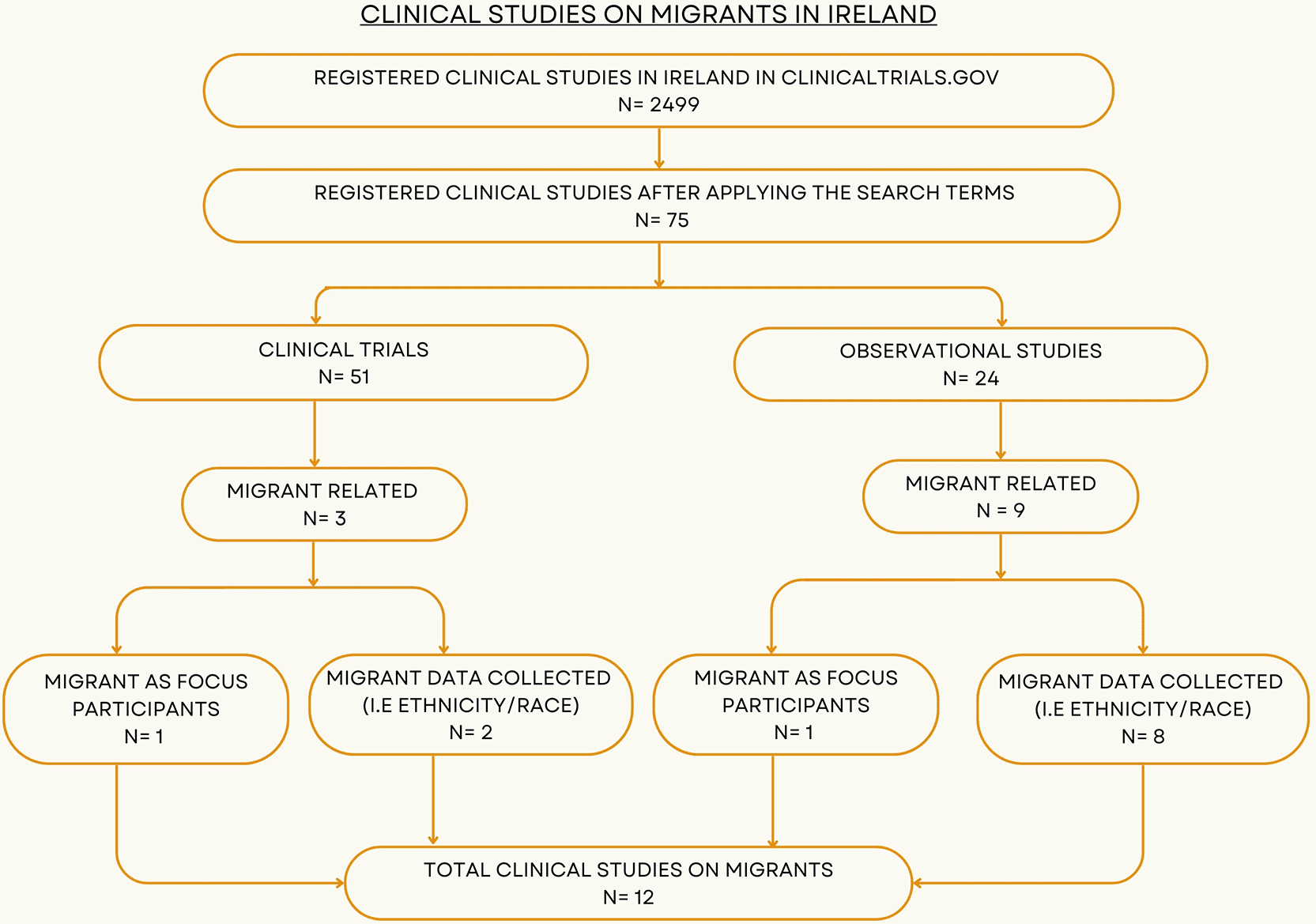
The total number of clinical research studies in Ireland registered on the ClinicalTrials.gov website was 2499 ( Figure 1). After applying the search terms related to migration in Table 2, there were 75 potentially relevant registered studies. After reviewing these studies, 12 were found to be relevant to migrant health research because they included migrants either as participants or collected secondary data on ethnicity and/or race. Of the 12 relevant studies, three were clinical trials. One of these three trials enrolled a cohort of Asian participants, and two recorded secondary information on ethnicity/race for all the participants. Of the nine observational studies, one included a cohort comprising recent migrants as participants and eight studies recorded secondary data on ethnicity/race for all participants. In addition to the 12 relevant studies, four studies had an inclusion criterion of language proficiency in English and potentially excluded migrants who did not speak English well.
Combining the findings from our review of the Migrant Health Research Database in Ireland (N = 41 clinical research studies from 141 studies) and a systematic search of ClinicalTrials. gov (N = 12 studies from 2499 studies conducted in Ireland), there were 53 studies (53/2640, 2%) relating to migrant health. These studies were analysed in detail. The analysis focused on the following characteristics: study title, source, disease/health condition, setting, use of participatory health research approach, whether it is an interventional study (i.e. clinical trial design) and if the study is primarily focused on migrant health. The results are presented in Table 3.
| Study title | Source | Disease/Health condition | Setting | Participatory health research | Clinical trial | Primary focus on migrant health | |
|---|---|---|---|---|---|---|---|
| 1 | Paediatric HIV: the experience in Ireland 2004-2011 | Migrant Health Research Database | Paediatric HIV (Human immunodeficiency virus) | Paediatric hospital | No | No | No |
| 2 | A national measles outbreak in Ireland linked to a single imported case, April to September 2016 | Migrant Health Research Database | Measles | Hospital inpatient and community | No | No | No |
| 3 | The utility of first-trimester plasma glycated CD59 (pGCD59) in predicting gestational diabetes mellitus: A prospective study of non-diabetic pregnant women in Ireland | Migrant Health Research Database | Gestational diabetes mellitus | Hospital outpatient | No | No | No |
| 4 | The Diagnostic Accuracy of Second Trimester Plasma Glycated CD59 (pGCD59) to Identify Women with Gestational Diabetes Mellitus Based on the 75 g OGTT Using the WHO Criteria: A Prospective Study of Non-Diabetic Pregnant | Migrant Health Research Database | Gestational diabetes mellitus | Hospital outpatient | No | No | No |
| 5 | Autism in a recently arrived immigrant population | Migrant Health Research Database | Autism | Paediatric hospital | No | No | Yes |
| 6 | Establishment of a national surveillance system to monitor community HIV testing, Ireland, 2018 | Migrant Health Research Database | HIV | Community | Yes | No | No |
| 7 | Malarial cases presenting to a European urban Emergency Department | Migrant Health Research Database | Malaria | Emergency department | No | No | No |
| 8 | Vitamin D status in Irish children and adolescents: value of fortification and supplementation | Migrant Health Research Database | Vitamin D deficiency | Paediatric hospital | No | No | No |
| 9 | Construction-related eye injuries in Irish nationals and non-nationals: attitudes and strategies for prevention | Migrant Health Research Database | Occupational injury | Accident and Emergency department. | No | No | Yes |
| 10 | Categorical mental capacity for treatment decisions among psychiatry inpatients in Ireland | Migrant Health Research Database | Psychiatric disorder | Psychiatric inpatient | No | No | No |
| 11 | Occupational injuries in foreign-national workers presenting to St James’s Hospital Plastic Surgery service | Migrant Health Research Database | Occupational injury | Hospital | No | No | Yes |
| 12 | Demographic characteristics of survivors of torture presenting for treatment to a national centre for survivors of torture in Ireland (2001-2012) | Migrant Health Research Database | Torture | Hospital outpatient and Community | No | No | Yes |
| 13 | Comparison in maternal body composition between Caucasian Irish and Indian women | Migrant Health Research Database | Maternal obesity | Hospital outpatient | No | No | Yes |
| 14 | Stroke Risk Factors, Subtype, and Outcomes in a Multi-Ethnic Stroke Population | Migrant Health Research Database | Stroke | Hospital inpatient | No | No | Yes |
| 15 | Paediatric management of a tuberculosis outbreak in an Irish Direct Provision Centre | Migrant Health Research Database | Tuberculosis | Hospital inpatient and Community | No | No | Yes |
| 16 | A snapshot of genetic lineages of Mycobacterium tuberculosis in Ireland over a two-year period, 2010 and 2011 | Migrant Health Research Database | Tuberculosis | Laboratory | No | No | No |
| 17 | Prevalence and correlates of restrictive interventions in an Irish child and adolescent psychiatric unit: a 4-year retrospective study | Migrant Health Research Database | Psychiatric disorder | Psychiatric inpatient | No | No | No |
| 18 | Prevalence of colour vision deficiency in the Republic of Ireland school children and associated socio-demographic factors | Migrant Health Research Database | Colour vision deficiency | Schools | No | No | No |
| 19 | The association between time spent on screens and reading with myopia, premyopia and ocular biometric and anthropometric measures in 6-to 7-year-old school children in Ireland | Migrant Health Research Database | Myopia | Schools | No | No | No |
| 20 | Risk factors associated with myopia in school children in Ireland | Migrant Health Research Database | Myopia | Schools | No | No | No |
| 21 | Prediction of gestational weight gain – a biopsychosocial model | Migrant Health Research Database | Gestational weight gain | Maternity hospital | No | No | No |
| 22 | Custody, care and country of origin: demographic and diagnostic admission statistics at an inner-city adult psychiatry unit | Migrant Health Research Database | Psychiatric disorder | Psychiatric inpatient | No | No | No |
| 23 | Multi-drug-resistant tuberculosis: experiences of two tertiary referral centres | Migrant Health Research Database | Tuberculosis | Hospital inpatient | No | No | No |
| 24 | Susceptibility to infectious rash illness in pregnant women from diverse geographical regions | Migrant Health Research Database | Varicella-zoster, Rubella and Parvovirus B19 infections | Maternity hospital | No | No | Yes |
| 25 | A high prevalence of vitamin D deficiency observed in an Irish Southeast Asian population: A cross-sectional observation study | Migrant Health Research Database | Vitamin D deficiency | Hospital outpatient | No | No | Yes |
| 26 | Imported childhood malaria: the Dublin experience, 1999–2006 | Migrant Health Research Database | Malaria | Paediatric hospital | No | No | No |
| 27 | Pregnant immigrant Nigerian women: an exploration of dietary intakes | Migrant Health Research Database | Maternal obesity | Maternity hospital | No | No | Yes |
| 28 | The increasing prevalence of childhood sickle-cell disease in Ireland | Migrant Health Research Database | Sickle cell disease | Paediatric hospital | No | No | Yes |
| 29 | Antibiotic-resistant tuberculosis and bovine tuberculosis in an Irish hospital population (1991 to 2001) | Migrant Health Research Database | Tuberculosis | Hospital inpatient | No | No | No |
| 30 | Prevalence, predictors and perinatal outcomes of peri-conceptional alcohol exposure – retrospective cohort study in an urban obstetric population in Ireland | Migrant Health Research Database | Fetal alcohol syndrome | Maternity hospital | No | No | No |
| 31 | Late presentation of HIV despite earlier opportunities for detection: experience from an Irish tertiary referral institution | Migrant Health Research Database | HIV | Hospital | No | No | No |
| 32 | Socio-demographic and clinical characteristics of migrants to Ireland presenting with a first episode of psychosis | Migrant Health Research Database | Psychosis | Mental health service | No | No | Yes |
| 33 | Obstructive sleep apnoea – is ethnicity an independent risk factor in adenotonsillectomy patients | Migrant Health Research Database | Obstructive sleep apnea | Paediatric hospital | No | No | Yes |
| 34 | Ocular injury requiring hospitalisation in the Southeast of Ireland: 2001–2007 | Migrant Health Research Database | Occupational Injury | Hospital inpatient | No | No | No |
| 35 | Vitamin D: determinants of status, indications for testing and knowledge in a convenience sample of Irish adults | Migrant Health Research Database | Vitamin D deficiency | Hospital outpatient | No | No | No |
| 36 | Ethnic minority populations and child psychiatry services: an Irish study | Migrant Health Research Database | Psychiatric disorder | Mental health service | No | No | Yes |
| 37 | Globalisation, immigration and diabetes self-management: an empirical study amongst immigrants with type 2 diabetes mellitus in Ireland | Migrant Health Research Database | Type 2 Diabetes mellitus | Hospital outpatient | No | No | Yes |
| 38 | Relationship between vitamin D knowledge and 25-hydroxyvitamin D levels amongst pregnant women | Migrant Health Research Database | Vitamin D deficiency | Maternity hospital | No | No | Yes |
| 39 | Multisystem inflammatory syndrome in the context of paediatric COVID-19 infection in the Republic of Ireland, April 2020 to April 2021 | Migrant Health Research Database | Multisystem inflammatory syndrome | Paediatric hospital | No | No | No |
| 40 | Fetal growth restriction and the risk of perinatal mortality – case studies from the multicentre PORTO study | Migrant Health Research Database | Fetal growth restriction | Maternity hospital | No | No | No |
| 41 | Epidemiology of chronic hepatitis B virus in Ireland using routinely collected surveillance and administrative data, 2004-2014 | Migrant Health Research Database | Hepatitis B | Hospital inpatient | No | No | No |
| 42 | Connect-5 Needs Assessment Survey to Identify Healthy Lifestyle Requirements of a Rural Irish Community | ClinicalTrials.gov | Healthy Lifestyle | Community | No | No | Yes |
| 43 | Validation of the European Oncology Quality of Life Toolkit | ClinicalTrials.gov | Cancer | Hospital and Community | No | No | Yes |
| 44 | European Registry on the Management of Helicobacter Pylori Infection | ClinicalTrials.gov | H. Pylori Infection | Hospital outpatient | No | No | No |
| 45 | PAN-EU Utilisation, Effectiveness and Safety of Ipilimumab Administered in EAP Patients with Advanced Melanoma | ClinicalTrials.gov | Melanoma | Hospital | No | No | No |
| 46 | Neoadjuvant Therapy for Oesophageal Cancer and Cardiopulmonary Physiology | ClinicalTrials.gov | Oesophageal cancer Pneumonitis Pulmonary Fibrosis Respiratory Failure Pneumonia Fibrosis Adenocarcinoma Squamous Cell Carcinoma | Hospital | No | No | No |
| 47 | Paediatric Sjogren’s Syndrome Cohort Study and Repository | ClinicalTrials.gov | Sjögren's Syndrome | Paediatric hospital | No | No | No |
| 48 | Study to Assess the Effectiveness of Existing Anti-Vascular Endothelial Growth Factor (Anti-VEGF) in Patients with Wet Age-Related Macular Degeneration | ClinicalTrials.gov | Ophthalmology, Macular Degeneration | Hospital | No | No | No |
| 49 | Palliative Care and Oncology Survey on Terminology | ClinicalTrials.gov | Cancer | Hospice, Hospital | No | No | No |
| 50 | The Role of Intermediaries in Connecting Individuals to Local Physical Activity - Study Protocol | ClinicalTrials.gov | Physical Inactivity | Community | No | No | No |
| 51 | Mater-Bronx Rapid HIV Testing Project. | ClinicalTrials.gov | HIV | Emergency department | No | Yes | No |
| 52 | A Study of Trastuzumab Emtansine in Participants with Human Epidermal Growth Factor Receptor 2 (HER2)-Positive Breast Cancer Who Have Received Prior Anti-HER2 and Chemotherapy-based Treatment | ClinicalTrials.gov | Breast Cancer | Hospital | No | Yes | Yes |
| 53 | Expanded Access Program for Maraviroc at Multiple Centres | ClinicalTrials.gov | HIV | Hospital | No | Yes | No |
Further analysis described the distribution of diseases and conditions of interest across the 53 clinical research studies ( Table 4). Over a quarter of the studies (15/53, 28%) focused on communicable diseases, most commonly tuberculosis and HIV, and the proportions were similar in both the migrant health research database (12/41, 29%) and ClinicalTrials.gov (3/12, 25%). For non-communicable diseases, over one in 10 studies (6/53, 11%) focused on mental health conditions, including psychiatric disorders such as schizophrenia, affective disorders, depression, and psychosis. All of these studies were identified in the migrant health research database. Almost one in 10 studies focused on cancer (5/53, 9%) and all of these studies were identified in ClinicalTrials.gov.
| Migrant health research database (N=41) | ClinicalTrials.gov (N=12) | Total (N=53) | |
|---|---|---|---|
| Type of Disease/Condition | N (%) | N (%) | N (%) |
| Communicable | |||
| Tuberculosis | 4 (10) | - | 4 (8) |
| HIV | 3 (7) | 2 (17) | 5 (9) |
| Others | 5 (12) | 1 (8) | 6 (11) |
| Non-communicable | |||
| Mental health condition | 6 (15) | - | 6 (11) |
| Cancer | - | 5 (42) | 5 (9) |
| Vitamin D deficiency | 4 (10) | - | 4 (8) |
| Gestational Diabetes & Type 2 Diabetes Mellitus | 3 (7) | - | 3 (6) |
| Colour vision deficiency & Myopia | 3 (7) | - | 3 (6) |
| Maternal and Infant Health | 8 (20) | - | 8 (15) |
| Occupational Injury | 3 (7) | - | 3 (6) |
| Other conditions | 2 (5) | 4 (33) | 6 (11) |
Table 5 summarises the settings in which the studies were conducted. The majority of studies (39/53, 74%) were conducted in a hospital setting, either as an inpatient, an outpatient or both. Community settings were less common (10/53, 19%), and no studies were conducted in general practice. Other settings included the hospice, accident and emergency department, mental health service and laboratory.
| Migrant health research database (N=41) | Clinicaltrials.gov (N=12) | Total (N=53) | |
|---|---|---|---|
| Setting | N (%) | N(%) | N(%) |
| Hospital inpatient | 7 (17) | - | 7 (13) |
| Hospital outpatient | 6 (15) | 1 (8) | 7 (13) |
| Hospital | 2 (5) | 6 (50) | 8 (15) |
| Psychiatric inpatient | 3 (7) | - | 3 (6) |
| Maternity hospital | 6 (15) | - | 6 (11) |
| Paediatric hospital | 7 (17) | 1 (8) | 8 (15) |
| Community/Schools | 7 (17) | 3 (25) | 10 (19) |
| Hospice | - | 1 (8) | 1 (2) |
| Accident and Emergency department | 2 (5) | 1 (8) | 3 (6) |
| Mental health service | 2 (5) | - | 2 (4) |
| Laboratory | 1 (2) | - | 1 (2) |
This comprehensive analysis examines the Migrant Health Research Ireland Database (2000-2023) of peer-reviewed research and registered clinical research studies in the Republic of Ireland as listed on ClinicalTrials.gov. The result of this analysis revealed that only (53/2640, 2%) health research studies from both sources pertained to clinical research studies relevant to migrants in Ireland. Notably, only three (6%) of these 53 studies were clinical trials. The majority of these studies (34/53, 64%) did not have a primary focus on migrant health and instead collected secondary data on migration status/ethnicity/race as a demographic variable. The 53 studies addressed various diseases and health conditions affecting migrants, with a predominant focus on tuberculosis, HIV, mental health disorders, and cancer, and were primarily conducted in hospital-based settings (39/53, 74%). Furthermore, only one out of 53 studies (2%) incorporated a participatory health research approach involving refugees and/or migrants in the research process.
Disease/Health conditions
Among the 53 studies analysed, tuberculosis and HIV emerged as the most frequently researched communicable diseases in the migrant population in Ireland. In comparison, other communicable diseases such as hepatitis A and B, measles or sexually transmitted diseases were less often researched. This observation is significant as it indicates a potential overemphasis on researching certain infectious diseases more than others. In the noncommunicable disease group, mental health disorders were the most commonly researched, followed by cancer and vitamin D deficiency. Although these diseases are significant areas of research in noncommunicable diseases, other major ones, like cardiovascular and chronic respiratory conditions, have been less studied. The implication of this narrow focus on certain disease conditions among migrants is that other diseases may remain undiagnosed and untreated well after migration (Heywood and López-Vélez 2018), which could lead to poor health outcomes in migrants. Furthermore, this narrow focus on migrant specific diseases may reinforce harmful stereotypes and political narratives, further cementing the continuous focus on infectious diseases in research and policy for migrants (Roura et al. 2021). Finally, this attention to ‘migrant specific’ diseases could lead researchers to overlook other significant health issues affecting migrants, which are often similar to those of the host population (Roura et al. 2021).
Settings
The majority of studies (39/53, 74%) were conducted in a hospital setting. The small proportion that was undertaken in community settings and schools (10/53, 19%) and a complete lack of studies in general practice suggest a problematic, limited outreach beyond hospital confines. This limitation could be attributed to both personal and structural factors, as noted by some studies (Hughson et al. 2016), and may encompass non-inclusive recruitment strategies and a lack of trust in researchers and research institutions (National Institute for Health Research 2020). Engaging in clinical research within community settings is crucial, as these are the primary locations where patients typically receive their routine healthcare and because it helps tailor treatment strategies to the social and cultural needs of individual patients living in varying circumstances (Hohmann and Shear 2002; Jervis 2025). Community-based settings also enhance the adoption and retention of the intervention because community members become involved in the planned intervention (Heller and Wyman 2019).
Race/Ethnicity data
Another significant finding of this analysis pertains to the collection and reporting of race and ethnicity data within clinical trial registries and publications. In line with existing literature (Muthukumar et al. 2021, 2025), the findings from the 53 studies demonstrate that the documentation of ethnicity and race in clinical trial registries and publications in Ireland is likely infrequent and inconsistent. For example, in the two scoping reviews included in the Migrant Health Research database, while some studies aggregated demographic data and explicitly reported them in their findings, others collected demographic data but did not report them separately (Cronin et al. 2024a). This raises the need to improve the systematic collection and reporting of the race/ethnicity data of research participants, which is crucial for understanding how the knowledge gained from clinical trials applies to diverse populations (Fain et al. 2021). However, there are also concerns highlighted by certain studies regarding the confidentiality and application of race and ethnicity data. The use of incorrect or vague terminology, especially language associated with “race” and “ethnic group” concepts, can potentially create and perpetuate racial and ethnic biases, while also reducing the clinical significance of related research, as several studies indicate (Takezawa et al. 2014; Khan et al. 2022; National Academies of Sciences and Medicine 2023). The topic of population descriptors has garnered significant scholarly interest in North America and certain European regions (Takezawa et al. 2014; National Academies of Sciences and Medicine 2023). In these areas, there is a heightened awareness regarding how populations are characterised (Takezawa et al. 2014; National Academies of Sciences and Medicine 2023). This sensitivity is partly due to the historical context of racism in biomedical research and the increasing societal recognition of the importance of ethnic and racial matters (Takezawa et al. 2014; Khan et al. 2022). In the study of differential health outcomes across varied population groups, it is essential to actively challenge racialised perspectives rather than reinforce them (Khan et al. 2022).
Involvement as research partners
Our analysis indicates that migrants are very rarely active as community partners in clinical research in Ireland. This prompts the need to establish potential enablers and barriers within the Irish context to have such involvement in clinical research in Ireland. Are these enablers and barriers attributed to a combination of personal, structural or sociopolitical factors? These areas warrant consideration for future research to improve the involvement of migrants in clinical research studies.
To the best of our knowledge, this is the first comprehensive cross-sectional analysis to systematically map the representation of migrants in clinical research in Ireland. This was achieved through two primary strategies: an analysis of peer-reviewed literature on migrant health and a systematic search of ClinicalTrials.gov. ClinicalTrials.gov was used because it serves as an essential resource for identifying unpublished clinical research studies. Finally, the clinical study data were independently extracted by two reviewers. Furthermore, this analysis contextualises the research findings by referencing comparative international evidence of studies on underserved groups and their inclusion in clinical trials (Etti et al. 2021; Biggs et al. 2024a) and situating these findings in relation to the evolving demographic realities in Ireland (Villarroel et al. 2019).
The scope of this study was limited in terms of reliance on two scoping reviews; while comprehensive, they may have excluded some relevant studies published outside those of the reviews or grey literature not captured in peer-reviewed publications. Second, not all clinical studies conducted in Ireland may be registered on ClinicalTrials.gov, especially older studies or those not seeking United States of America (U.S.)/International approval, potentially leading to undercounting (Fain et al. 2021; Muthukumar et al. 2021, 2025).
In summary, the findings of this analysis indicate that migrants are underrepresented in clinical research in Ireland. We found that migrant health research in Ireland is rarely clinical and that clinical research in Ireland rarely documents the inclusion of migrants in study samples. These results underscore the necessity of ongoing efforts to improve the inclusion of underrepresented groups in clinical trials. In the United Kingdom, several initiatives exemplify efforts to enhance inclusivity in clinical research. Notably, the National Institute for Health Research (NIHR) has established three INCLUDE Frameworks as part of its INCLUDE Initiative. These frameworks encourage researchers to carefully consider factors such as ethnicity, individuals with limited capacity to consent, and those facing socioeconomic challenges in their trials. Furthermore, the STEPUP (Strategies for Trialists to Promote Equal Participation in Clinical Trials for Under-served Populations) initiative offers guidance from the Medical Research Council-NIHR-Trial Methodology Research Partnership (MRC-NIHR-TMRP) to aid in the design of more inclusive clinical trials (Biggs et al. 2024b). Additionally, the SENSITISE project, co-funded by the European Union through the EU ERASMUS+ programme, commenced at the end of 2023 and will continue until the end of 2026. Acknowledging the lack of formal training on inclusivity in clinical trials, the project aims to provide education for students and clinical trial professionals. SENSITISE comprises four work packages, including a free, 12-week, open-access online curriculum focusing on inclusive design, cultural barriers, and case-driven application (Shiely et al. 2024).
The following recommendations emerge from this analysis with the objective of enhancing targeted outreach, education, and policy support for migrants to improve their equitable participation in clinical research.
Redefine research agenda: The emphasis of the clinical research findings from the 53 studies on diseases specific to migrants highlights the viewpoint of Ireland, the host nation. This suggests that it is essential to make practical efforts first to address the health needs that migrants consider a priority and to involve them in the planning, design, execution, and dissemination of research. This can be achieved by adopting frameworks such as INCLUDE and STEPUP in conducting clinical research. (Biggs et al. 2024b).
Build trust: Trust plays a crucial role in research that involves human participants. Establishing trust can be achieved by employing community-based and participatory research methods, which emphasise forming relationships within the community before starting the research (Alarcón Garavito et al. 2025). These methods are also enablers for recruiting participants in clinical research and developing communication strategies for sustaining engagement throughout the trial and beyond (Alarcón Garavito et al. 2025).
Improve the collection and reporting of race/ethnic data in clinical research: Researchers must foresee the potential social and ethical issues linked to population descriptors (Takezawa et al. 2014; Khan et al. 2022). They have a duty to communicate their research findings with precision and to consider how the public might interpret and react to the descriptors used in academic papers and media reports (Takezawa et al. 2014; Khan et al. 2022).
Although various factors and methodological constraints influence the representation of migrants in clinical research, these recommendations call for a significant shift towards implementing carefully designed strategies grounded in relationships among all key stakeholders, such as researchers, community members, healthcare providers, and policymakers. They could help to tackle the complexities of creating clinical research in Ireland that is inclusive of all of its population.
Provide sufficient details of any financial or non-financial competing interests to enable users to assess whether your comments might lead a reasonable person to question your impartiality. Consider the following examples, but note that this is not an exhaustive list:
Sign up for content alerts and receive a weekly or monthly email with all newly published articles
Register with HRB Open Research
Already registered? Sign in
Submission to HRB Open Research is open to all HRB grantholders or people working on a HRB-funded/co-funded grant on or since 1 January 2017. Sign up for information about developments, publishing and publications from HRB Open Research.
We'll keep you updated on any major new updates to HRB Open Research
The email address should be the one you originally registered with F1000.
You registered with F1000 via Google, so we cannot reset your password.
To sign in, please click here.
If you still need help with your Google account password, please click here.
You registered with F1000 via Facebook, so we cannot reset your password.
To sign in, please click here.
If you still need help with your Facebook account password, please click here.
If your email address is registered with us, we will email you instructions to reset your password.
If you think you should have received this email but it has not arrived, please check your spam filters and/or contact for further assistance.

Comments on this article Comments (0)