Keywords
Prostate Cancer, Genitourinary Cancer, Metastatic Cancer, Dietary Intervention, Body Composition, Cancer Survivorship, Feasibility Study

Prostate Cancer, Genitourinary Cancer, Metastatic Cancer, Dietary Intervention, Body Composition, Cancer Survivorship, Feasibility Study
Improvements in 5-year net survival means that there are more people living with and beyond a cancer diagnosis, often referred to as “cancer survivors”1. The National Cancer Institute defines an individual as a cancer survivor from the time of diagnosis through the balance of life2. Cancer survivorship occurs in phases related to the goal of care; for those diagnosed with advanced or metastatic cancer, the goal is to treat with the intent to prolong life2.
In Ireland, 48% (n=104,065) of cancer survivors are male1. The 5-year net survival from all cancers, excluding non-melanoma skin cancer (NMSC), in males has improved by 25.1% over the last 20 years1. Prostate cancer accounted for 30% of all male invasive cancers (excluding NMSC) diagnosed from 2019-2021, but also accounted for 21% of cancer deaths during this period.1. Ireland’s National Cancer Control Programme’s (NCCP) National Cancer Strategy 2017 – 2026 identifies cancer survivorship as a distinct and important phase in the cancer care continuum3. People living with and beyond a cancer diagnosis have a unique set of needs that surpass the completion of their primary treatment, such as chemotherapy or radiotherapy, and are multifaceted and complex. The needs include the management of a wide range of symptoms, including physiological, psychological, sexual, cognitive, physical and nutritional challenges4,5. These symptoms may be equal or more disabling than the cancer diagnosis itself and its treatment and can significantly affect quality of life (QoL). A scoping review published in 2019 reported that it was clear the needs of people living with and beyond cancer in Ireland are currently not being met6. The NCCP recommended that survivorship care programmes should be tailored to address specific needs of individual cancer survivors, as one size does not fit all3.
The National Comprehensive Cancer Network’s (NCCN) Survivorship Guidelines recommend that a multi-disciplinary approach is used7. Consistent evidence has reported the importance of dietetic input within the cancer care multi-disciplinary team (MDT), due to its positive impact on clinically relevant outcomes, including reduction of treatment toxicity and increasing progression free survival and overall survival8. Unfortunately, nutritional deterioration has become an accepted part of the pathogenesis of cancer and its treatment, and changes in nutrition status can occur at any point of the cancer care continuum, not solely during treatment8.
The European Society of Clinical Nutrition and Metabolism (ESPEN) highlight that nutrition plays a crucial role in multimodal cancer care, recommending that cancer survivors maintain a healthy weight and follow a plant-based, low-fat diet9. The recommendation also acknowledges the needs of patients with advanced cancer receiving no anti-cancer treatment, defined as “palliative patients”9. The life expectancy of these patients may be several months to several years and deficits in nutritional status may impair performance status, QoL, tolerance to anti-cancer treatments and survival; therefore, screening and assessment by a dietitian is advised (Recommendation 41)9.
The Nutrition and Physical Activity Guidelines for Cancer Survivors from Rock et al. (2012) and the American Cancer Society (ACS) highlight that individuals who have been diagnosed with cancer are at a significantly higher risk of developing second primary cancers and are at an increased risk for chronic disease such as cardiovascular disease, diabetes and osteoporosis4. While individuals with cancer are advised to follow healthy dietary patterns to reduce the risk of secondary cancers and chronic disease4 the World Cancer Research Fund notes that current evidence is still insufficient to make specific, confident nutritional recommendations for survivors10. However, their general Cancer Prevention Guidelines are considered safe and potentially beneficial for those who have completed treatment10.
Androgen Deprivation Therapy (ADT), the most common hormonal treatment for prostate cancer, has expanded rapidly—especially for metastatic castration-sensitive cases11. Beyond the effects of chemoradiation, ADT can lead to altered body composition and significant deconditioning in men living with and beyond a prostate cancer diagnosis4,12–16. Body composition changes can occur throughout treatment, with studies showing a 2–4% decrease in muscle mass with a concomitant 14% increase in fat mass after 36 weeks of ADT12,14. Sarcopenia affects up to 52% of prostate cancer patients17 and these body composition changes may increase the risk of ADT-induced sarcopenic obesity and adverse outcomes18. Although patients may seem “well-nourished” by BMI, altered body composition, irrespective of baseline BMI, leads to lower function, quality of life, survival, and increased chemotherapy toxicity17. ADT may also accelerate bone loss, up to ten times faster than normal18.
Altered body composition and its consequences highlight the need for targeted support. Dietetic group education has proven effective in other chronic conditions like diabetes and cardiac rehab19–21. Yet, more than 60% of health professionals highlighted a need for prostate-cancer specific nutrition services22 especially since less than a third of men make lifestyle changes after diagnosis23. Despite this, specialist oncology dietetic group education for men with cancer remains rare in Ireland, with limited local research on nutrition during maintenance treatment.
Building on the need for specialist dietetic support, a shortage of registered dietitians in Ireland has been reported24. A 2021 study of over 1000 oncology survivors, 36% of whom were males with metastatic disease, found that although survivors value nutrition, only 39% had accessed dietetic care during their cancer journey25.
Although the overarching LIAM Mc trial protocol has been published26, it provides only a broad overview of the study, with limited detail on the design and delivery of the dietetic component. Given the complexity and innovation involved in this dietary intervention, including structured group education, behaviour change strategies, and personalised follow-up, there is a clear need to describe the rationale, content, and implementation processes in greater depth. This is especially relevant in the context of Irish oncology care, where dedicated dietetic survivorship services are not yet formally integrated into the healthcare system. By sharing a focused dietetic protocol, this manuscript aims to support replication, inform service development, and contribute to the growing body of evidence on scalable, patient-centred nutrition interventions for cancer survivors.
The aim of this paper is to present the dietetic protocol for a group education programme led by a registered dietitian for males affected by metastatic genitourinary cancer, as part of the Men’s Health Initiative LIAM Mc Trial in Ireland. This paper also outlines the approach to assessing the feasibility of delivering the intervention and collecting relevant dietary and body composition outcome data.
The working hypothesis is that a structured, dietitian-led group education programme, underpinned by evidence-based dietary guidelines and supported by peer interaction, will be acceptable to participants and feasible to implement in a survivorship setting for men with advanced cancer.
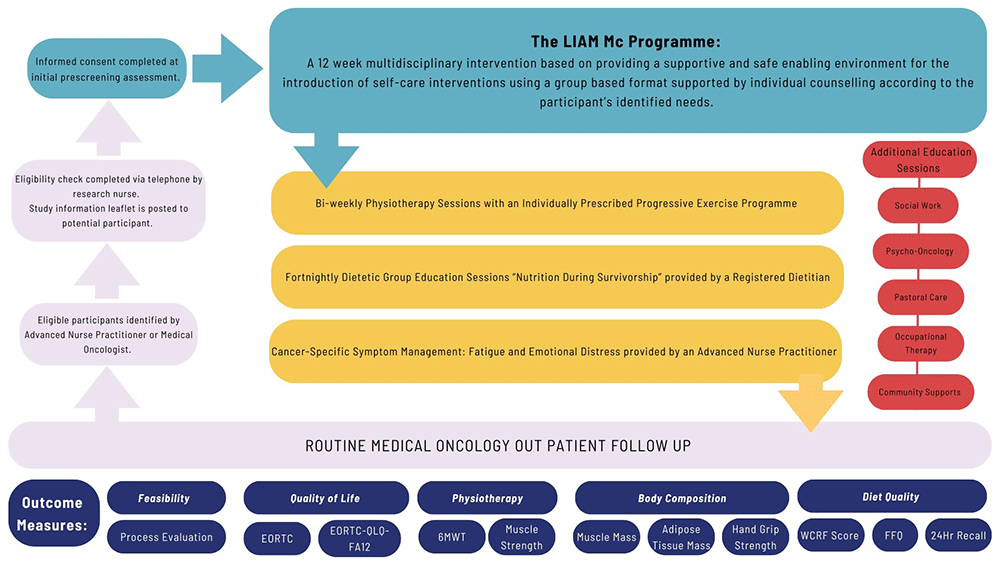
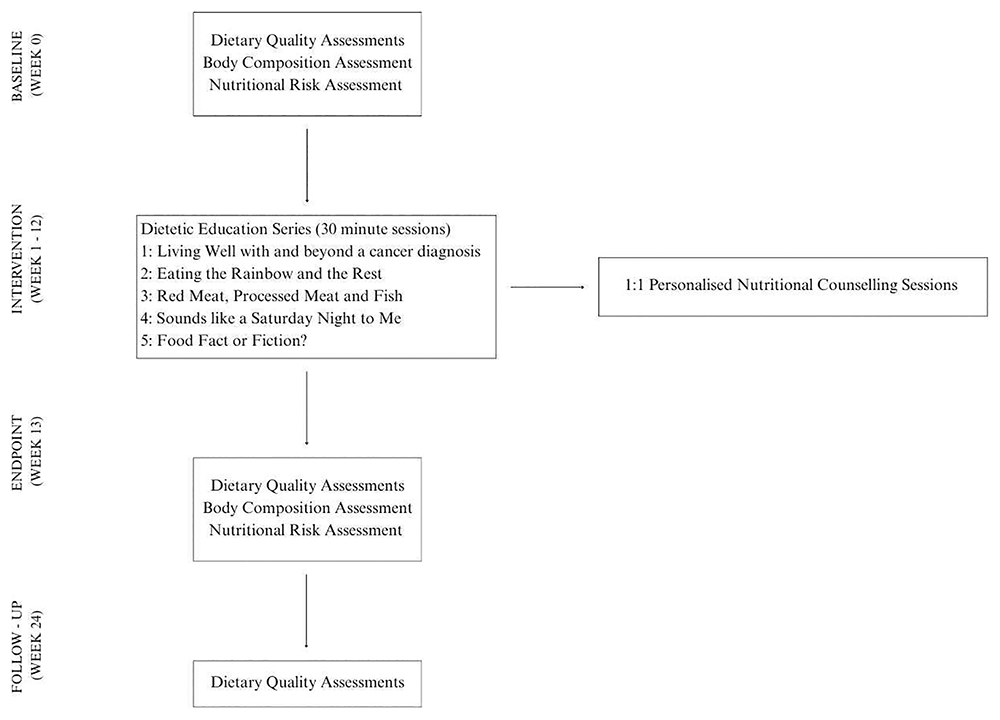
The LIAM Mc Trial is a single-arm, unblinded, 12-week interventional programme, led by a multidisciplinary team of allied healthcare professionals (Figure 1). The programme will be delivered in a rehabilitation gym specially equipped for this intervention. A dietetic education series is embedded into the programme and participants have access to 1:1 personalised nutritional counselling sessions as required (Figure 2). As this is a feasibility study, the primary aim is not to evaluate the effectiveness of the intervention but to assess the practicality of implementing a dietitian-led group education programme for men with metastatic genitourinary cancer.
The trial is conducted in accordance with the Declaration of Helsinki and the application sections of the ICH E6 Good Clinical Practices. As outlined in the main LIAM Mc protocol26, all future protocol amendments or modifications will be reviewed by the ethics committee. Eligible participants will receive verbal and written study information and have adequate time to consider participation before providing written informed consent at their initial assessment. Consent will be obtained by trained staff in accordance with the LIAM Mc protocol26. The trial received full ethical approval, granted by the Clinical Research Ethics Committee of the Cork University’s Teaching Hospital (ECM 4 [V] 01/11/2022). The trial is registered with ClinicalTrials.gov (NCT05946993) and Cancer Trials Ireland (CTRIAL-IE 23-18). The trial is funded by the Irish Cancer Society (MHI22BAM).
The LIAM Mc Trial is open to adult males diagnosed with advanced or metastatic genitourinary cancers, including prostate, urothelial tract, kidney, penile, and testicular cancers. Participants will be recruited from three hospitals within one Irish health service region. Eligibility will be assessed by the oncology clinical or research team. Inclusion and exclusion criteria are outlined in Table 1 and detailed on ClinicalTrials.gov (NCT05946993). Patients within the first three months of active systemic therapy will be excluded due to potential treatment-related barriers to participation but may be re-evaluated once stable or post-treatment.
As this is a pilot study, a formal sample size calculation has not been conducted, as such calculations are typically unreliable due to uncertainty around key input parameters27. Instead, the sample size has been pragmatically set at 60 participants, based on published guidance that recommends this number to allow the detection of process-related issues—such as recruitment or retention failures—that might occur in 5% of cases, with 95% confidence28. To account for potential attrition due to withdrawal, illness, or loss to follow-up, the target sample size has been increased to 72 participants. Participants are grouped into cohorts of 6, with the intention of running 12 group cohorts through the programme.
Data is securely transferred between the Trial Master File and the community rehabilitation gym before and after each intervention session. Dietetic data is collected by the clinical research dietitian using approved case report forms (CRFs). Data is entered into an electronic data capture system (Castor Electronic Data Capture [EDC]) designed specifically for the LIAM Mc Trial. The Castor EDC meets international guidelines with respect to data protection standards. Nutritional information is analysed and stored using Nutritics nutritional analysis software (www.nutritics.com). All electronic data is encrypted, backed up monthly, and stored on a secure, password-protected device and within the Nutritics platform. Access to Nutritics and Castor EDC is restricted to authorised team members via role-based permissions. The ultrasound images are exported for each participant from the VScan Air software (GE Medical Systems Ultrasound and Primary Care Diagnostics, Wisconsin, US) and uploaded securely to the trial’s electronic Trial Master File (eTMF). Supplementary files are available via an Open Science Framework: https://doi.org/10.17605/OSF.IO/ZBCSM29.
Participants are assigned a unique study ID used on all CRFs, stored separately from personal data. Only authorised team members can access identifiable information. Study data will be checked for errors or inconsistencies and verified against source data. Once cleaned, the Castor EDC database will be locked. Source data, including dietetic CRFs, will be filed in participants’ medical records per hospital guidelines.
At study completion, anonymised data will be available to the principal statistician and authorised researchers. Data collection will conclude in December 2025.
Quantitative analysis
Statistical analysis will be completed and/or supervised by a biostatistician. After final data entry, the dataset will be reviewed for outliers or discrepancies, which will be checked against source data. Once cleaned, the database will be locked. The study sample will be summarised using appropriate descriptive statistics: means (SD), medians (IQR), ranges for continuous variables, and counts (%) for categorical variables. Missing data will be handled according to best practice. Analyses will be conducted using R and RStudio. Feasibility outcomes will be analysed descriptively, in accordance with CONSORT guidelines for pilot and feasibility studies30. These outcomes will include recruitment rates, retention rates, attendance at group sessions, completion of outcome assessments, and uptake of one-on-one dietetic counselling. Acceptability of the intervention will be explored using participant feedback and qualitative data collected during and after the intervention. Where appropriate, 95% confidence intervals will be reported for key feasibility indicators to inform the design and planning of a future definitive trial.
Qualitative analysis
Full details of the qualitative analysis methodology have been described elsewhere26. Briefly, qualitative data will be analysed using thematic analysis, with NVivo software used to support data management and coding. Qualitative findings will be integrated with quantitative feasibility data to provide a comprehensive understanding of the implementation process, including participant experiences, acceptability of the intervention, and contextual factors influencing engagement.
Table 2 describes the schedule of dietetic measurements over the intervention period.
BIA: Bioelectrical Impedance Analysis, LTM: Lean Tissue Mass, LTI: Lean Tissue Index, FM: Fat Mass, FTI: Fat Tissue Index, ATM: Adipose Tissue Mass, MT: Muscle Thickness, PA: Pennation Angle, WCRF: World Cancer Research Fund, AICR: American Institute for Cancer Research, MST: Malnutrition Screening Tool
Body Mass Index: BMI is calculated by the participant’s weight in kg to the nearest 0.1kg, using the SECA Model 799 weighing scales, and their height in metres to the 0.01m, using SECA 206 stadiometer.
Waist Circumference: Waist circumference is measured to the nearest 0.1cm following the WHO STEPS Manual31. The measurement is conducted three times, and the mean value is used.
Body Composition: Body composition is measured using the Fresenius Kabi Body Composition Monitor (BCM, Fresenius Medical Care, Bad Homburg, Germany). Measurements include lean tissue mass, lean tissue index, adipose tissue mass, fat tissue index, total body water, body cell mass, extracellular water and intracellular water. Participants who have pacemakers, implanted electronic devices are excluded from this measurement. The quality value for each measurement aims to be > 85 out of 100.
Ultrasound Assessment of Muscle Mass: Muscle mass is measured using a VScan Air portable ultrasound. The rectus femoris is used as per the SARCUS Group 2021 recommendations32. Measurements are obtained at 50% of the distance between the greater trochanter and proximal patella of each leg. For participants whose rectus femoris is too large to image, measurements are obtained at 30% from the proximal patella. Muscle thickness (mm) and pennation angle (o) are measured taken three times on each leg and an average is calculated.
Handgrip Strength: Handgrip strength is measured using Jamar dynamometer (Jamar Hydraulic Hand Dynamometer, Model 091011725, Sammons Preston Roylan, Nottinghamshire, UK), using the second handle position as recommended by the American Society of Hand Therapists. The measurement is taken three times on each hand, alternating each measurement to allow a break.
Multiple 24-Hour Dietary Recall: Two 24-hour dietary recalls (weekday and weekend) are collected at baseline and endpoint. The dietitian will assign food codes to each item reported, with analysis limited to McCance & Widdowson, USDA, and Irish food composition databases33–35. A food code database will be created and updated with each new 24-hour recall. Data will be analysed using Nutritics software to assess macro- and micronutrients and dietary quality based on the WCRF cancer prevention framework. Comparisons will be made within and between individuals36. All reference data will be assessed within-individual comparison and between-individual comparison.
Food Frequency Questionnaire: Individual and collective sample data captured from the EPIC-Norfolk Food Frequency Question (FFQ) will be entered into the FFQ processing tool, FETA (Φετα) FFQ EPIC Tool for Analysis, which is based on the earlier CAFÉ system37. The FETA tool is free to use and will produce different levels of nutrient data, as well as basic food groups and food patterns. This programme is based on version 6 (CAMB/PQ/6/1205) of the EPIC-Norfolk Food Frequency Questionnaire. FETA calculates the average daily intake of 46 nutrients and 14 food groups, for each individual. The default nutrients list provides a description of each nutrient/food group and the units used. The nutrient data for the FFQ foods have come from McCance and Widdowson’s “The Composition of Foods (5th edition)”33. In FETA, the frequency category is converted into a portion multiplier (e.g. once a week = 1/7 = 0.14). After multiplication with the portion size, an average daily food weight for each of the 130 FFQ items is obtained. These weights are multiplied by the nutrient composition per gram to obtain the nutrient composition of the actual amount eaten. After summing all FFQ items for a participant, an average daily nutrient intake is obtained. Individuals with more than 10 missing lines of data will be excluded. The top and bottom 0.5% of the ratio of energy intake to estimated basal metabolic rate will be flagged as extreme outliers of nutrient intakes. All data will be exported from FETA data processing report into a readable Microsoft excel file for processing by the study statistician. The participant completes the FFQ between the pre-screening clinic and the beginning of the programme. The research dietitian then enters them into a FETA template for nutritional analysis. At a 6 month follow up, the research dietitian posts an FFQ to the participants. Participants return the FFQ by post using a stamped and labelled envelope provided.
Diet Quality: Diet quality is assessed using the World Cancer Research Fund (WCRF)/American Institute of Cancer Research standardized scoring system36.
The LIAM Mc dietary group education programme follows the recommendations from the WCRF, the ESPEN Practical Guideline for Clinical Nutrition in Cancer9 for cancer survivors and patients with advanced cancer, and the Healthy Ireland Food Pyramid38. The participants will engage with 5 dietetic education sessions that incorporate the 8 WCRF recommendations using the Healthy Ireland Food Pyramid highlighted in Supplementary Table 2. Sessions, designed using Canva (Canva Inc, Sydney, Australia) and PowerPoint (Microsoft Corporation, Washington, US) by a registered dietitian, include introduction, interaction, and reflection components. Focusing on behaviour change and group discussion, the programme aims to equip men with tools to make informed, evidence-based nutrition choices that enhance wellbeing. For example, the first session addresses managing expectations and establishing a dietary baseline using the Healthy Ireland Food Pyramid (Supplementary Figure 1).
After a “Your Food Pyramid” exercise, participants compare their current diet to the Healthy Ireland Food Pyramid38. Each session explains the science behind recommendations, for example, session 2 highlights nutrient differences between wholegrain and refined grains (Supplementary Figure 2). Practical advice and tips to encourage positive dietary changes, such as increasing fruit and vegetable intake, are provided (Supplementary Figure 3), along with handouts for reference.
Participants can also avail of opportunistic support during the physiotherapy sessions or whilst the registered dietitian is supervising the clinic. If relevant, the participant will be booked into a 1:1 personalised nutritional counselling appointment via a telehealth platform with the dietitian. Group discussions and a Q&A at the end of each session allow participants to clarify and reflect on the information.
At the final session, participants receive an exit pack including Breakthrough Cancer Research’s Healthy Eating for Cancer Survivors and the Truth Behind Food and Cancer Prevention books to support ongoing nutrition guidance39,40.
The LIAM Mc Trial involves a dedicated patient and public involvement (PPI) panel, including cancer patient advocates, who have contributed since the study’s inception. The team and PPI panel meet bi-monthly to discuss trial design, logistics, and participant support. A wider steering committee - comprising clinical experts, multidisciplinary members, community groups, and funders - meets quarterly to review trial progress, dissemination, and related projects.
A comprehensive overview of adverse event definitions, procedures, monitoring and reporting protocols has been detailed in the main LIAM Mc trial protocol26. No adverse events are expected from completing patient-reported outcomes, and participants may skip any questions they are uncomfortable answering. If any unexpected harm arises during participation, it will be recorded in the electronic data system and reported to the sponsor and Ethics Committee.
Anonymized participant nutrition and clinical data will be included in the final results, which are expected to be available by early 2026. All dissemination activities will adhere to ethical guidelines and data protection regulations. Study details are already publicly accessible via ClinicalTrials.gov (NCT05946993).
The LIAM Mc Trial is Ireland’s first dietitian-led group education programme for males with advanced or metastatic cancer. This 12-week multidisciplinary intervention combines group sessions with individual counselling to promote self-care in a supportive environment. It aims to fill gaps in current nutritional guidelines for cancer survivors by providing evidence-based, personalised nutrition advice tailored to the complex needs of this cohort, who often fall between “cancer survivor” and “palliative” categories9. Existing guidelines, such as ESPEN’s9, lack specificity for these patients, while the American Cancer Society4 highlights the impact of ADT on body composition and deconditioning, underscoring the need for dietetic intervention to prevent sarcopenic obesity and related poor outcomes4,8,12–18,41,42.
Body composition changes - muscle loss and fat gain - are not captured by BMI or weight loss measures alone, posing challenges especially in overweight or obese patients43. Irish outpatient settings typically rely on weight and height, missing critical body composition data. Although ESMO guidelines recognize ADT’s long-term effects on muscle and bone, they focus mainly on lifestyle interventions for bone health11, while NCCN emphasizes the importance of achieving optimal body composition through professional advice7. In this study, rectus femoris ultrasound is used alongside bioelectrical impedance analysis (BIA) to assess muscle and fat mass. Ultrasound offers a non-invasive, portable, and cost-effective way to directly monitor skeletal muscle in outpatient settings, overcoming limitations of BIA and infrequent computed tomography (CT)/ magnetic resonance imaging (MRI) imaging32,44. This novel approach supports dietitians in tracking nutritional intervention outcomes in survivorship care.
Group education enhances male engagement and addresses the shortage of specialist oncology dietitians. Despite elevated chronic disease risk post-ADT, fewer than one-third of men with prostate cancer make lifestyle changes after diagnosis23. Barriers to dietary change include lack of guidance, perceptions of irrelevance post-treatment, food preferences, and access45. Conversely, group-based programmes with healthcare professional input have been shown to improve knowledge, offer psychosocial benefits, and support sustainable behaviour change45. Successful lifestyle programmes consider treatment side effects, time pressures, health perception, and age, using clear information, integrative approaches, and peer support22,46. While effective in diabetes and cardiac rehab cohorts dietetic19–21, group education for men with advanced cancer remains rare in Ireland. Given their longer survival and chronic disease risk, tailored dietetic interventions are essential. Group education allows dietitians to efficiently support multiple patients and may reduce costs associated with malnutrition, which exceeds €1.4 billion in Ireland and accounts for 15% of UK healthcare spending47,48.
Dietitian-led group education offers a cost-effective, scalable model to meet the nutritional needs of men living with and beyond advanced cancer. The LIAM Mc programme fosters behaviour change and acknowledges food’s broader role in wellbeing, empowering participants to make informed dietary choices. This feasibility study will inform future trials and support development of evidence-based dietetic care models for survivorship, potentially extending to other cancers and chronic conditions.
The trial was registered in ClinicalTrials.gov on May 10th, 2023 (NCT05946993) https://clinicaltrials.gov/study/NCT05946993
The study was conducted in accordance with the Declaration of Helsinki and approved by the Ethics Committee of Cork University Teaching Hospitals (ECM 4 [V] 01/11/2022).
Written informed consent was obtained from all subjects involved in the study.
Provide sufficient details of any financial or non-financial competing interests to enable users to assess whether your comments might lead a reasonable person to question your impartiality. Consider the following examples, but note that this is not an exhaustive list:
Sign up for content alerts and receive a weekly or monthly email with all newly published articles
Register with HRB Open Research
Already registered? Sign in
Submission to HRB Open Research is open to all HRB grantholders or people working on a HRB-funded/co-funded grant on or since 1 January 2017. Sign up for information about developments, publishing and publications from HRB Open Research.
We'll keep you updated on any major new updates to HRB Open Research
The email address should be the one you originally registered with F1000.
You registered with F1000 via Google, so we cannot reset your password.
To sign in, please click here.
If you still need help with your Google account password, please click here.
You registered with F1000 via Facebook, so we cannot reset your password.
To sign in, please click here.
If you still need help with your Facebook account password, please click here.
If your email address is registered with us, we will email you instructions to reset your password.
If you think you should have received this email but it has not arrived, please check your spam filters and/or contact for further assistance.

Comments on this article Comments (0)