Keywords
SARS-CoV-2, COVID-19, coronavirus, face masks, non-pharmaceutical interventions, review

This article is included in the Coronavirus (COVID-19) collection.
SARS-CoV-2, COVID-19, coronavirus, face masks, non-pharmaceutical interventions, review
The COVID-19 pandemic, caused by the SARS-CoV-2 virus, presents a significant challenge worldwide, with the number of cases and deaths continuing to rise globally1,2. Considering the current lack of vaccine and effective treatment options, non-pharmaceutical interventions are necessary to interrupt the chain of transmission3. The use of face masks is part of a suite of infection prevention and control measures intended to limit the transmission of respiratory viral diseases4. By wearing a face mask as a means of source control, a person (including asymptomatic and presymptomatic cases who do not know they are infected) can reduce the spread of infection. Depending on the type of mask worn, face masks may also protect the wearer from infective droplets or from inhaling aerosols, and may reduce potential environmental contamination from droplets5. Mask grades include face masks classed as personal protective equipment (PPE) for use in healthcare settings, including respirators, which are designed to protect the wearer from aerosols and droplets, and medical (surgical) face masks worn both as protection against respiratory droplets and as source control of droplets from the person wearing the mask6. Non-medical or cloth face masks are intended to act as source control of respiratory droplets for use outside of healthcare settings6.
Since the start of the current COVID-19 pandemic, the use of face masks in public places has been recommended by an increasing number of countries7, with several jurisdictions introducing mandatory mask wearing in community settings such as public transport or retail outlets. Recommendations have mainly encouraged the general public to use non-medical or cloth face coverings to ensure that there is sufficient personal protective equipment (PPE) for healthcare workers4,7,8. These recommendations have largely been based on indirect evidence and physiological plausibility regarding the potential effectiveness of face masks, although the small number of heterogeneous studies on face mask use in the community have been interpreted inconsistently by policy-makers4,7–9. The use of face masks by the general public has been subject to ongoing debate, with concerns over potential harms if masks are worn incorrectly or inconsistently10. While previous systematic or rapid reviews have aimed to include studies of COVID-19 in community settings, only one review included a single study conducted in households during the pandemic; others have not identified any relevant studies or have focused on healthcare and other settings3,11–15.
The aim of this rapid review was to synthesise the available direct clinical evidence on the effectiveness of wearing face masks in community settings at reducing the transmission of SARS-CoV-2 compared with not wearing face masks.
A rapid review was conducted according to a standardised protocol16.
Systematic electronic database searches were conducted in PubMed, Embase, NHS Evidence and Europe PubMed Central (PMC). The search terms and detailed search strategy are available as Extended data17. Searches were conducted from 1 January 2020 to 27 August 2020. The reference lists and citations of included studies were searched to identify other potentially relevant studies.
Studies were eligible for inclusion if they reported on the effectiveness of wearing face masks of any type in community settings, including households, compared with not wearing face masks at reducing the risk of transmission of SARS-CoV-2. Clinical trials, cohort, case control and cross-sectional studies were eligible for inclusion. Case reports and studies conducted in healthcare settings or involving other respiratory viruses were excluded. As this review focused on direct evidence only, experimental laboratory studies and mathematical modelling studies were excluded. Language restrictions were not applied. We included both published studies and preprints.
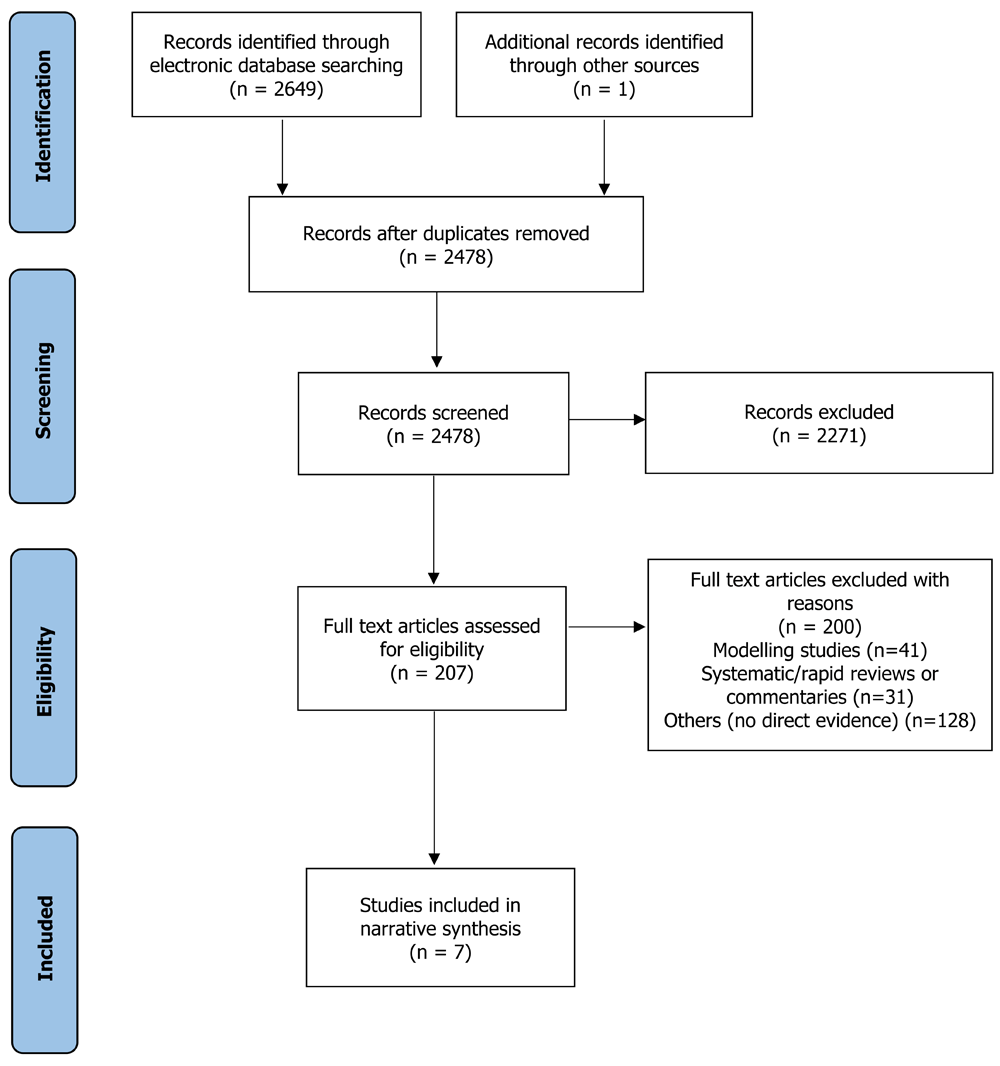
All records identified from the database searches were exported to EndNote® (Version X8) for reference management. Duplicates were removed. One reviewer reviewed the titles and abstracts of the remaining citations to identify records for full-text review. The full texts of potentially eligible studies were obtained and evaluated by two reviewers applying the predefined eligibility criteria. Figure 1 shows a PRISMA (Preferred Reporting Items for Systematic Reviews and Meta-Analyses) flow diagram of the study selection process.
Data extraction was conducted using a data extraction form developed for this review, and included study design, setting, participants, type of mask, adherence to masks, and effect estimates (OR, 95% CI) for associations between mask wearing and SARS-CoV-2 transmission. One reviewer extracted data, which was cross-checked by a second reviewer. Where discrepancies were identified, these were resolved through discussion between the reviewers. The Joanna Briggs Institute Critical Appraisal Checklists were used for quality appraisal18.
We identified seven observational studies that examined the use of face masks during the COVID-19 pandemic19–25, of which three were published as preprints19,22,24. These studies included a total of 12,024 individuals and were conducted in Hong Kong20, China19,21,23, the United States22,24 and Thailand25. Of the included studies, two were retrospective cohort studies21,23, two were case control studies24,25 and three were cross-sectional19,20,22. Two studies included all types of masks21,24, one study included both medical and non-medical masks25, and four studies did not report the type of face mask worn19,20,22,23. In six of the seven studies, face masks appeared to be effective at reducing the transmission of SARS-CoV-2. Details of included studies are listed in Table 1. Unadjusted effect estimates (where available) are shown in Figure 2.
| First author, country, study design | Population, Setting, Type of mask | Main results Adherence |
|---|---|---|
| Cheng20 Hong Kong Cross-sectional | 961 patients diagnosed with COVID-19. Various community settings (incl. karaoke, dining, workplace). Mask type not reported. | 11 clusters of 113 persons engaged in ‘mask-off’ activities, compared to 3 clusters of 11 people in workplace ‘mask-on’ settings (p = 0.036). Adherence Not reported for the clusters of cases. |
| Clipman22 United States Cross-sectional | 1,030 adults. 55 (5.3%) self-reported ever testing positive for SARS-CoV-2, of whom 18 tested positive in the previous two weeks. Unspecified indoor and outdoor settings. Mask type not reported. | In analyses restricted to participants who tested positive for SARS-CoV-2 within the previous 2 weeks (n=18), consistent indoor mask use within the previous 2 weeks (unadjusted OR 0.21, 95% CI 0.06 to 0.76) was associated with a lower likelihood of infection, compared to no or occasional mask use. Consistent outdoor mask use was not associated with a statistically significant reduction in infection (unadjusted OR 0.41, 95% CI 0.13 to 1.27) compared to no or occasional mask use. Self-reported adherence 53% (n not reported) always wore masks when visiting public indoor and outdoor locations. |
| Doung-ngern25 Thailand Case control | 1,050 contacts of confirmed COVID-19 cases (211 cases, 839 controls) Unspecified community settings. Medical and non-medical masks. | Compared with not wearing a mask, wearing either a medical or non-medical mask all the time was associated with a lower risk of infection (adjusted OR 0.23, 95% CI 0.09, 0.60). Wearing a mask sometimes was not associated with a lower risk of infection (adjusted OR 0.87, 95% CI 0.41, 1.84). Self-reported adherence Cases: Never 102/210 (49%); sometimes 79/210 (38%); all the time 29/210 (14%). Controls: Never 500/823 (61%); sometimes 125/823 (15%); all the time 198/823 (24%). |
| Hong23 China Retrospective cohort | Analysis based on 41 presymptomatic index cases with SARS-CoV-2 and 197 close contacts. Various community settings (incl. a chess and card room, households). Mask type not reported. | Close contacts of a presymptomatic index case who wore a mask were less likely to get infected with SARS- CoV-2 than close contacts who were in contact with a presymptomatic index case who did not wear a mask (8.1% (10/123) vs. 19.0% (14/74); OR 0.38, 95% CI 0.16, 0.91). Self-reported adherence 28 (68.3%) index cases wore a mask during the presymptomatic phase, while 13 (31.7%) did not. |
| Speaker24 United States Case control | Analysis based on 293 participants without known contact with a COVID-19 patient (68 cases developed COVID-19, 225 controls did not). Various community settings. All types of masks. | There was no statistically significant difference in mask wearing between cases (64% (43/68) reported always wearing a mask) and controls (55% (124/225 reported always wearing a mask); (unadjusted OR 1.40, 95% CI 0.80, 2.45). For cases and controls who wore masks, there were no statistically significant differences in the types of mask worn (respirator, surgical or cloth), although the numbers in some groups are very small. Adherence Not reported. |
| Wang21 China Retrospective cohort | 335 individuals in 124 families with at least one laboratory confirmed COVID-19 case. Household setting. All types of masks. | Compared with no family members wearing masks, household transmission was reduced when all family members wore masks all the time at home after the primary case’s illness onset date (unadjusted OR 0.20, 95% CI 0.07, 0.60), but not if only some family members wore masks (unadjusted OR 0.72, 95% CI 0.30 to 1.73). Transmission within families was also less likely when the primary case wore a mask at all times (unadjusted OR 0.30, 95% CI 0.11 to 0.82) after illness onset, but not when the primary case and/or family members wore a mask some of the time (unadjusted OR 1.15, 95% CI 0.46 to 2.87), compared to never wearing a mask. Face mask use before the primary case’s illness onset date by one or more persons in the household (primary case or household contact) reduced transmission compared with no face mask use (adjusted OR 0.21, 95% CI 0.06 to 0.79). It is not clear if masks were worn all the time or sometimes in this analysis Self-reported adherenceNever 41/124 (33.1%); sometimes 37 (29.8%); all the time: 46/124 (37.1%). |
| Xu19 China Cross-sectional | 8,158 adults (mask data reported by 5,120) Unspecified community settings. Mask type not reported | Not wearing a mask, compared with wearing a mask, was associated with significantly increased risk of infection (adjusted OR 7.20, 95% CI 2.24, 23.11). Wearing a mask, compared with not wearing a mask, was associated with significantly reduced risk of infection among those who practiced hand washing (RR 0.11, 95% CI 0.04, 0.29), proper coughing etiquette (RR 0.18, 95% CI 0.05, 0.57) and social distancing (RR 0.03, 95% CI 0.01, 0.11). Self-reported adherence 97.9% (5,012/5,120) wore a mask when going out. |
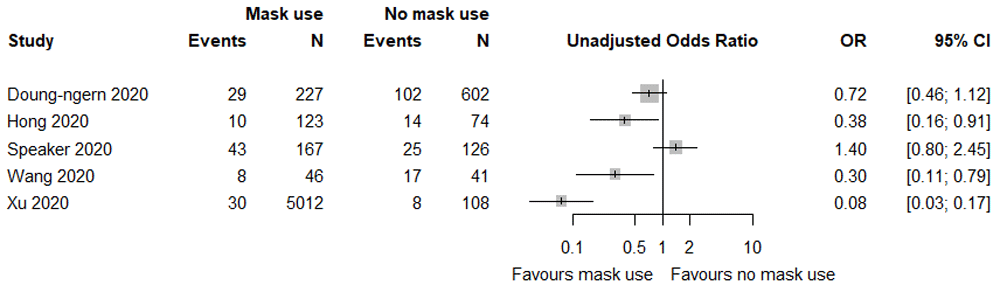
Note: Some studies reported insufficient data to allow calculation of ORs.
A case-control study conducted in Thailand included 1,050 contacts of symptomatic COVID-19 patients from nightclub, boxing stadium or enterprise office clusters identified through contact tracing25. In adjusted analyses, the risk of infection was significantly lower for contacts who self-reported wearing any type of mask all the time, compared with contacts who did not wear a mask during the contact period (adjusted OR 0.23, 95% CI 0.09 to 0.60). Wearing a mask sometimes was not associated with a lower risk of infection compared with not wearing a mask (adjusted OR 0.87, 95% CI 0.41 to 1.84), although it is not clear what other factors were adjusted for. A US case-control study included 293 individuals without known close contact with a COVID-19 case recruited through an online patient portal in Ohio and Florida24. There was no statistically significant difference between COVID-19 cases and controls in terms of mask wearing, with 64% of cases and 55% of controls self-reporting that they always wore a mask (unadjusted OR 1.40, 95% CI 0.80, 2.45).
A retrospective analysis of 127 SARS-CoV-2 patients in Taizhou, China included 41 presymptomatic patients who had recently travelled from Wuhan23. Prior to developing symptoms, the 41 patients had close contact with 197 local residents, of whom 24 later developed COVID-19. Ten close contacts (8.1%) of presymptomatic cases who reported wearing masks were subsequently infected with SARS-CoV-2, compared to 14 (19.0%) close contacts of presymptomatic cases who reported not wearing a mask (unadjusted OR 0.38, 95% CI 0.16, 0.91). The type of mask worn by the presymptomatic index cases, and whether the close contacts also wore masks, was not reported, although the authors note that at the time of contact, mask wearing among local residents was not routine.
Wang et al.21 included 124 families in China with at least one laboratory-confirmed COVID-19 case. Secondary household transmission occurred in 41 families. In unadjusted analyses, household transmission was significantly reduced when all family members (compared with no family members) wore any type of mask (respirator, medical or cloth) all the time at home after the primary case’s illness onset date (unadjusted OR 0.20, 95% CI 0.07, 0.60), but not if only some family members wore masks (unadjusted OR 0.72, 95% CI 0.30 to 1.73). Transmission within families was also less likely when the primary case wore a mask at all times (unadjusted OR 0.30, 95% CI 0.11 to 0.82) after illness onset, but not when the primary case and/or family members wore a mask some of the time (unadjusted OR 1.15, 95% CI 0.46 to 2.87). In multivariable analysis, face mask use before the primary case’s illness onset date by one or more persons in the household significantly reduced transmission compared with no mask use (adjusted OR 0.21, 95% CI 0.06 to 0.79), although it is not clear if masks were worn all the time or sometimes.
Cheng et al.20 reported that among 961 confirmed COVID-19 cases in Hong Kong until 8 April 2020, there were 11 clusters of 113 persons engaged in ‘mask-off’ activities such as dining or karaoke, compared with three clusters of 11 people in ‘mask-on’, workplace settings. Further individual level data are not reported. Clipman et al. included 1,030 participants recruited from an online panel in Maryland, US22. A total of 55 participants (5.3%) self-reported ever testing positive for SARS-CoV-2, with 18 testing positive in the previous two weeks. Mask use was self-reported by all participants for the previous two weeks only. In an analysis including only the 18 participants who had tested positive for SARS-CoV-2 within the last two weeks, consistent indoor mask use (unadjusted OR 0.21, 95% CI 0.06 to 0.76) in the last two weeks was associated with a significantly lower likelihood of infection, compared to no or occasional mask use. Consistent outdoor mask use did not appear to significantly reduce the likelihood of infection (unadjusted OR 0.41, 95% CI 0.13 to 1.27). The authors noted that almost 40% of respondents who reported wanting a test were not able to get one; it is therefore possible that the number of positive cases were underestimated in this study.
In a survey of 8,158 Chinese adults recruited through three social networks, 57 (0.7%) reported having been infected with SARS-CoV-219. Of the respondents, 5,120 provided data on face mask use, with 97.9% reporting wearing a mask when going out. Compared with wearing a mask, not wearing a mask was associated with a significantly increased risk of SARS-CoV-2 infection (adjusted OR 7.20, 95% CI 2.24 to 23.11), controlling for socio-demographic variables, hand washing, coughing etiquette, and social distancing. Wearing a mask (compared with not wearing one) was associated with a significantly reduced risk of SARS-CoV-2 infection among those who practiced hand washing (RR 0.11, 95% CI 0.04 to 0.29), proper coughing etiquette (RR 0.18, 95% CI 0.05 to 0.57) and social distancing (RR 0.03, 95% CI 0.01 to 0.11).
Adherence to wearing face masks was poorly defined and was self-reported in five of the seven studies. One study did not report any adherence data24. One study reported observed adherence rates among the general public in Hong Kong (defined as the percentage of individuals observed in public wearing a mask) that ranged from 95.7% to 97.2% across three days20. In the other cross-sectional studies, 97.9% of participants in China self-reported wearing a mask when they went out19, while 53% of participants in the US reported always wearing a mask when visiting public indoor and outdoor locations22. In the study set in households in China, 37.1% of all included family units (primary cases and/or their household contacts) reported wearing masks all the time at home after illness onset, 29.8% reported wearing masks sometimes, and 33.1% of families reported never wearing masks21. Data for individual family members were not presented. In the case-control study set in Thailand, 14% of cases and 24% of controls reported wearing a mask all of the time, while 38% of cases and 15% of controls reported wearing a mask sometimes25. In the study of presymptomatic index cases and their close contacts in China, 68.3% of index cases reported wearing a mask during the presymptomatic phase of COVID-19, although frequency of use was not reported23.
Two of the seven studies compared different mask types. In unadjusted analyses, one study reported that while medical masks appeared to reduce the risk of SARS-CoV-2 infection compared to not wearing a mask, wearing non-medical masks or alternating between medical and non-medical masks did not, although the type of mask worn was not associated with lower risk of SARS-CoV-2 infection in a multivariable model that also included adherence25. Speaker et al. did not find any differences in the risk of infection between cloth, surgical, N95 or other (unspecified) mask types24. None of the included studies mentioned the use of shields or visors.
Harms or adverse outcomes were not reported by any of the included studies. There were no data to indicate that wearing masks might reduce physical distancing. One study reported that individuals who reported wearing masks all the time were more likely than those who did not wear masks to report washing their hands regularly and practice social distancing. Those who reported wearing masks only sometimes were more likely to wash their hands, but were also more likely to have physical contact and a longer duration of contact than those who did not wear masks25. There were no direct comparisons reported between those who always and those who sometimes wore a mask.
The studies included in this review were of low quality with a high risk of bias. For the case-control studies, it is not clear how well cases and controls were matched, and one study noted the potential misclassification of cases and controls22. The wearing of face masks was based on self-report in six of the seven included studies. Observational studies are subject to selection and reporting biases as well as inadequate adjustment for potential confounding factors, and the studies included in this review were either based on unadjusted analyses or did not clearly state which confounders were included in multivariable analyses. The cross-sectional survey by Xu et al.19 was based on a non-random snowball sample, and while the authors reported that the web page hosting the survey was accessed over 21,000 times, it is not known how many people received the link, leading to potentially high reporting and selection biases. Speaker et al.24 reported a response rate of 9%, leading to a potentially high response bias. It is not possible to establish causal links between wearing of face masks and SARS-CoV-2 infection based on these observational studies. Three of the seven included studies are published as pre-prints and have not been formally peer-reviewed19,22,24. It is possible that the data could change prior to publication, and findings from these studies should be interpreted with caution.
This rapid review identified seven observational studies in community settings that compared wearing face masks with not wearing face masks on the transmission of SARS-CoV-2, with six studies suggesting that wearing masks may reduce the risk of transmission. While the findings across these studies are mainly consistent and suggest that face masks may reduce the risk of infection in community and household settings, the quality of the evidence is low. Previous studies on the use of face masks by healthy people in the community have considered other respiratory viruses, such as SARS-CoV-1, influenza, or influenza-like illness (ILI), and have provided some weak evidence that face masks may reduce the risk of infection, particularly when implemented early, combined with hand hygiene and subject to good levels of compliance26–35. Systematic reviews of face masks to reduce transmission of respiratory viruses have considered this same pool of primary studies focusing on transmission of influenza, ILI or SARS-CoV-1, and have included studies conducted in healthcare as well as community settings. For example, Chu et al.3 reported a systematic review of 30 studies that suggested that wearing face masks could result in a ‘large reduction in risk of infection’. However, only three of the 30 included studies were conducted in non-healthcare settings; and all three were conducted during the SARS pandemic26,27,36. Given possible differences between viruses in their pathogenicity, infectivity and potential differences in the relative contribution of the different modes of transmission (droplet, aerosol, contact), the extent to which findings from studies of other respiratory viruses are applicable to the current pandemic is unclear.
A number of studies have estimated the impact of policies mandating face mask use in public on COVID-19 incidence. These studies were excluded from this review as they provide indirect evidence on population transmission only. Lyu and Wehby reported that mandated face mask use in 15 US states (plus the District of Columbia) was associated with a significant decline of 2 percentage points in the daily growth rate of COVID-19 after 21+ days37. As noted by the authors, these findings describe the intention-to-treat effect of face mask mandates at a community or state level, and do not indicate the effect of wearing a face mask in public at an individual level37. A number of studies have reported similar positive findings, suggesting that policies mandating face masks are associated with a subsequent decrease in COVID-19 cases38,39. However, these policies are rarely introduced in isolation, and it can be difficult to disentangle the effects of multiple measures targeting reduced transmission. One non-peer reviewed quasi-experimental study of non-pharmaceutical interventions in Europe found that wearing face masks in public was not associated with any independent additional impact on population incidence of COVID-19, once other public health measures were accounted for40. However, the authors noted that the specific settings in which face masks were made either mandatory or voluntary varied widely between countries.
A mathematical model for assessing the population-level impact of control and mitigation strategies in New York estimated that the use of medical masks in public could lead to the elimination of the pandemic if at least 70% of the residents used them, based on a high compliance rate41. The use of cloth masks was estimated to lead to a significant reduction, but not elimination, of the burden of COVID-19. Using US data in a compartmental model for assessing the community-wide impact of mask use, Eikenberry et al. reported that broad adoption of even relatively ineffective face masks may meaningfully reduce community transmission of COVID-19 in both healthy and asymptomatic persons42. Fisman et al. highlighted that the impact of mask use could be reduced with ‘assortative mixing’, whereby those who wear masks predominantly interact with other mask wearers, with infections becoming concentrated in non-masked populations43. National and international public health guidance on the use of face masks is based on low certainty direct evidence of clinical effectiveness, indirect evidence that supports plausibility of effectiveness, as well as a consideration that SARS-CoV-2 appears to be more infectious than many other respiratory pathogens, including during the presymptomatic phase of the disease44, highlighting the necessity of considering a range of infection prevention and control measures, including face masks, to reduce the spread of infection. In the absence of other data, it has been suggested that community wide wearing of masks should be promoted according to the precautionary principle9,45.
There is limited evidence that compares the effectiveness of different grades of face mask (respirators, medical and cloth) worn in the community. One previous RCT set in households compared medical masks with P2 respirator masks, and found no differences in ILI or laboratory-confirmed influenza infections between the two types of masks31.
Two of the included studies reported high levels of adherence, with one study reporting that while wearing a mask all the time significantly reduced the risks of SARS-CoV-2 infection, wearing a mask sometimes did not25. Studies of face masks to reduce transmission of influenza or ILI in households or schools have suggested that adherence with wearing face masks may play an important role in determining their effectiveness31,46, although further research is needed.
The World Health Organization previously suggested that face masks may introduce a false sense of security and lead wearers to neglect hand hygiene and physical distancing47. While harms were not reported by the studies reviewed, one case-control study did report that while individuals who reported wearing masks all the time were more likely to wash their hands regularly and practice social distancing than those who did not wear masks, those who reported wearing masks only some of the time were more likely to have physical contact and longer duration of contact, although they were also more likely to wash their hands25. There do not appear to be any studies currently published that have investigated or quantified risk compensation behaviour during mask use48. A study of recorded video footage taken both before and during the COVID-19 pandemic in public outdoor spaces reported that mask wearing may be associated with a reduction in face touching behaviours during the current pandemic49. Others have argued that, in the context of COVID-19, any risk compensation that may occur in some individuals would be dwarfed by the potential protective impact of face mask use at the population level50.
This is the most comprehensive review of direct evidence on the effectiveness of wearing face masks in the community at reducing the transmission of SARS-CoV-2 to date. There is limited direct evidence of low certainty based on seven observational studies conducted during the COVID-19 pandemic that wearing face masks reduces the risk of transmission of SARS-CoV-2 in community settings. Further high-quality studies are required to confirm these findings. Studies of comparisons of different mask types and of the impact of adherence on the effectiveness of face masks at reducing the transmission of SARS-CoV-2 in the community are also required.
All data underlying the results are available as part of the article and no additional source data are required.
Figshare: Extended data. https://doi.org/10.6084/m9.figshare.13008449.v117.
This project contains the following extended data:
Figshare: PRISMA checklist for ‘Effectiveness of face masks worn in community settings at reducing the transmission of SARS-CoV-2: A rapid review’. https://doi.org/10.6084/m9.figshare.1300844917.
Data are available under the terms of the Creative Commons Attribution 4.0 International license (CC-BY 4.0).
Provide sufficient details of any financial or non-financial competing interests to enable users to assess whether your comments might lead a reasonable person to question your impartiality. Consider the following examples, but note that this is not an exhaustive list:
Sign up for content alerts and receive a weekly or monthly email with all newly published articles
Register with HRB Open Research
Already registered? Sign in
Submission to HRB Open Research is open to all HRB grantholders or people working on a HRB-funded/co-funded grant on or since 1 January 2017. Sign up for information about developments, publishing and publications from HRB Open Research.
We'll keep you updated on any major new updates to HRB Open Research
The email address should be the one you originally registered with F1000.
You registered with F1000 via Google, so we cannot reset your password.
To sign in, please click here.
If you still need help with your Google account password, please click here.
You registered with F1000 via Facebook, so we cannot reset your password.
To sign in, please click here.
If you still need help with your Facebook account password, please click here.
If your email address is registered with us, we will email you instructions to reset your password.
If you think you should have received this email but it has not arrived, please check your spam filters and/or contact for further assistance.

Comments on this article Comments (0)