Keywords
Allogeneic Haematopoietic Stem Cell Transplantation (HSCT), Physical Performance, Patient Outcomes

Allogeneic Haematopoietic Stem Cell Transplantation (HSCT), Physical Performance, Patient Outcomes
Hematologic cancers include lymphoma, leukaemia and myeloma. Global cases of hematologic malignancies are increasing and most common in people aged 65 years and older.1 Various treatment options are available including watch-and-wait approaches to single- or multi-agent chemotherapy, radiotherapy, immunotherapy, and haematopoietic stem cell transplantation (HSCT).2 HSCT offers a potentially curative option in high risk or relapsed/refractory disease. However, transplant remains a high-toxicity treatment with a high risk of severe complications including death.3
HSCT involves protective isolation requirements pre- and post-transplant due to immunosuppression, often resulting in prolonged periods of reduced physical activity.4 Combined with HSCT therapy-related toxicity and symptoms, patients are at a higher risk of developing long-standing physical, psychological and psychosocial problems such as pain, cancer related fatigue, muscle atrophy, loss of physical functioning and depression.3 This can be exacerbated for people who experience a commonly observed side effect after allogenic-HSCT called graft versus host disease. The primary treatment is systemic corticosteroids that result in steroid induced myopathy, weight gain and osteopenia.3 Disease and treatment related side effects can significantly reduce a patient’s quality of life.5 Pre-transplant assessments incorporating validated measures of physical performance may help in assessing patient candidacy and predicting prognosis.
The effects of HSCT on physical ability post-transplant at a single timepoint and physical performance data collected as part of post-transplant rehabilitation6,7 have been reported. There is a need to describe the longitudinal trajectories of physical performance during treatment in order to identify key timepoints where interventions are required to prospectively attenuate or modify treatment side-effects and their impact on clinical outcomes. There is a dearth of data in relation to haematological cancers in comparison to solid tumours particularly breast and prostate cancers.8 Practice in relation to solid tumours may not be directly transferrable to haematological cancers due to the significantly different treatment pathways and consequences of prolonged immunosuppression and isolation. Without prospective data examining the disease course, it will be difficult to develop individualized and efficient rehab programmes.
Despite being a cancer that is diagnosed most commonly in older adults, survival outcomes for those aged over 70 years are poor.9 Treatment decisions are often more difficult where patient frailty and co-morbidity pose substantial barriers to curative strategies, including allogeneic HSCT. The increasing use of reduced intensity conditioning regimes has reduced the risks associated with allogenic transplants. With advances in treatment approaches, advanced chronologic age no longer represents an absolute contra-indication to HSCT.10 Instead, multi-disciplinary input into selecting and optimizing candidates is preferred and an understanding of the unique physical challenges facing older adults is required. The proposed study will provide greater insight into the effect of HSCT treatment on the physical performance of patients, including patients over 70 years of age.
The Stem Cell Transplantation (SCT) Service in St James’s Hospital in Dublin was founded in 1984 and has performed more than 2,500 stem cell and bone marrow transplants to date. The SCT Unit includes the National Adult Allogeneic Transplant Programme. It is affiliated to the European Blood and Marrow Transplantation (EBMT) Registry, reporting all outcomes to the registry. All patients receive in-patient physiotherapy input post HSCT. Following discharge, patients may be referred to a limited physiotherapy outpatient service (0.5WTE). Referral is not part of a standardised pathway but rather made based on clinical need (eg. patients with mobility impairments). Access to the service is shared across the haematology service (i.e. shared with autologous transplants and patients receiving systemic treatment who are not listed for transplant), which limits dedicated provision of PT for patients undergoing allogeneic SCT. This study will collect data to inform the development of a standardised rehabilitation pathway for allogeneic patients, including the resources required to support its implementation.
Following the 2019 American College of Sports Medicine Exercise Guidelines for Cancer Survivors, there were multiple calls for better integration of exercise rehabilitation into standard cancer care.11 Despite the well documented benefits of physical activity during and after cancer treatment, most patients post HSCT are sedentary, spending approximately 80–90% of waking time sitting or lying, especially during inpatient care and acute recovery.12,13 Early signposting and developing supportive interventions for patients in the acute treatment phase can overcome this pattern.14 This also aligns with Ireland’s National Cancer Strategy (2017–2026) and the Irish Cancer Society Strategy (2020–2025) which recommend developing and implementing survivorship programmes to meet the specific needs of cancer survivors.15,16 For these reasons, the proposed research is expected to have considerable national traction and inform national policies to be developed in the coming years.
The goal of this study is to evaluate the impact of allogeneic HSCT on physical function and patient-reported outcomes, and to identify key factors, including baseline physical function and age, that influence post-transplant recovery and outcomes, with the aim of informing targeted rehabilitation strategies.
Primary objective:
• To assess the impact of allogeneic HSCT on subjective and objective measures of physical performance.
Secondary Objectives are:
• To explore the impact of allogeneic HSCT on patient reported outcomes over 12 months from HSCT.
• To investigate the effect of pre transplantation physical function on outcomes post allogeneic HSCT and identify potentially modifiable factors.
• To examine the impact of age on post allogeneic HSCT outcomes.
REACT is a prospective, longitudinal cohort study. The study is based in Ireland’s largest haematology cancer centre and the designated National Adult Transplant Programme. The trial has received ethical approval from the Tallaght University Hospital/St James’s Hospital Research Ethics Committee. The description of this study protocol follows the reporting guidelines of the STROBE Statement17 (Appendix 1).
Participant Selection Criteria:
Inclusion Criteria
• Patients who are scheduled for allogeneic stem cell transplant
• Ability to provide written informed consent
• Over 18 years old
Exclusion Criteria
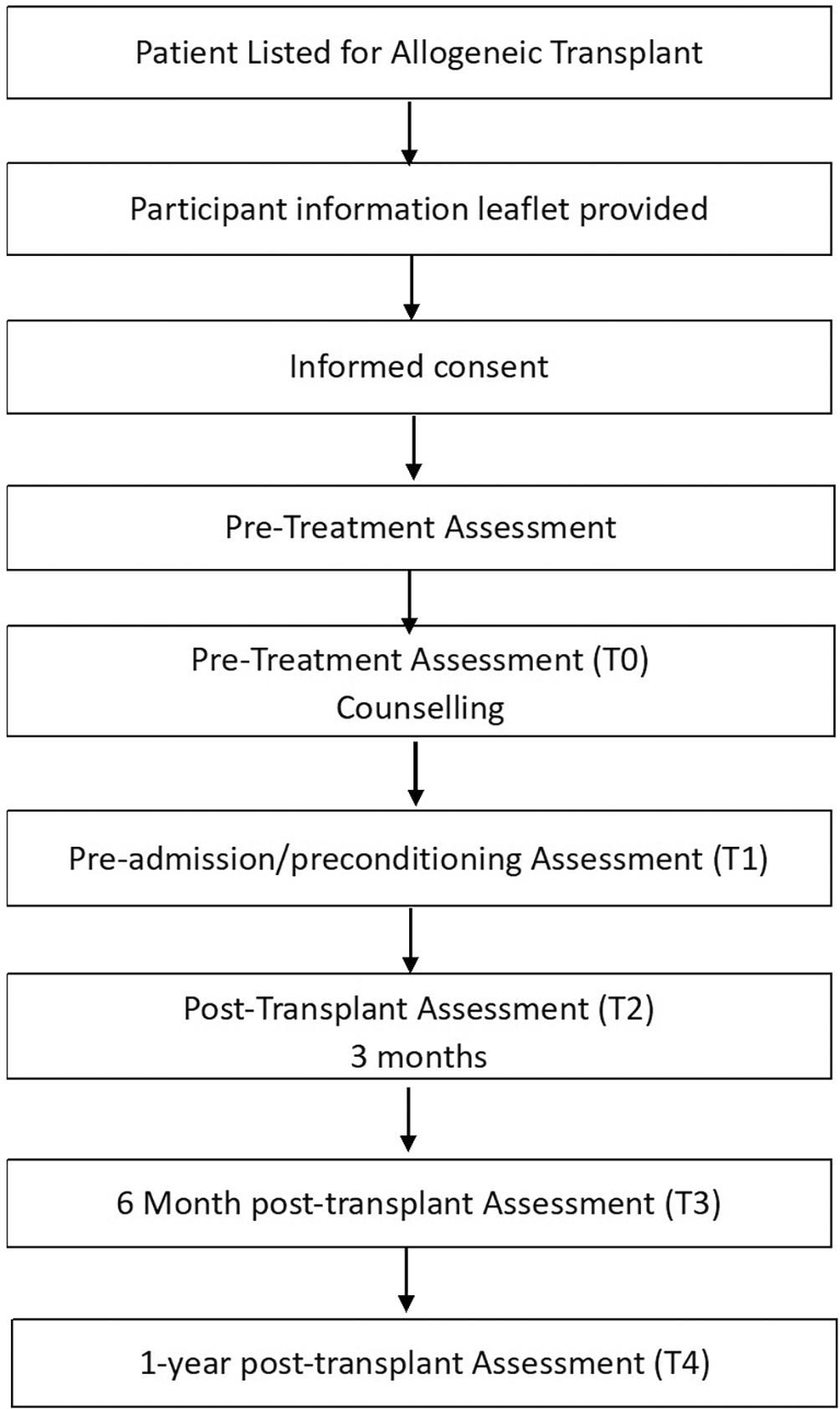
The REACT trial will recruit 140 patients. Participants will be recruited from the National Allogeneic Transplant Programme, Dublin, Ireland. Potential participants will be identified at pre-transplant clinics by the transplant co-ordinator. These patients will be informed about the study by a member of the research team and will receive a participant information leaflet ( Figure 1). Following a reflection period of 24–48 hours, a researcher will telephone the patient to confirm their interest in participation. Patients who are willing to participate will be invited to attend the CRF at SJH to provide written informed consent and for baseline testing. All participants will require written medical clearance from their treating consultant prior to enrolment.
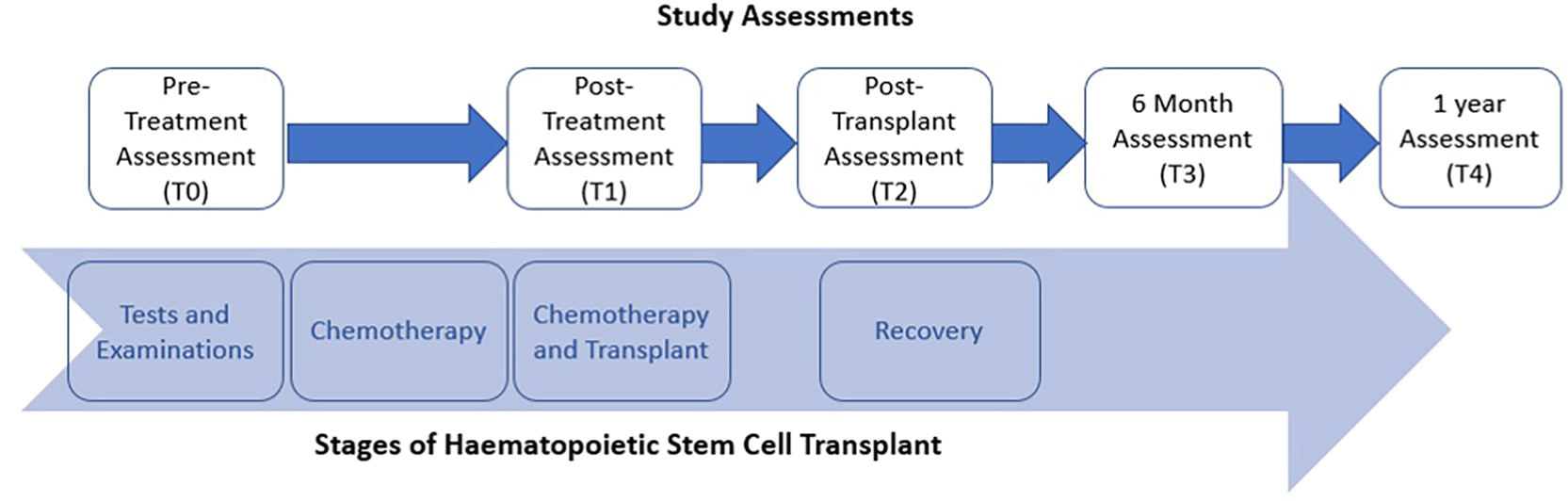
REACT study outcomes are listed in Table 1. Key timepoints for study assessments are outlined in Figure 2. At baseline information regarding socio-demographics will be collected from patient interview and data pertaining to medical history, cancer diagnosis and treatments will be obtained from patient’s medical records.
Short Physical Performance Battery
Objective physical performance will be assessed using the Short Physical Performance Battery (SPPB). The SPPB is a 3-part quick and objective physical function test with excellent test-retest reliability, predictive validity, and clinical applicability with defined clinically important difference values. It has predictive validity for important adverse health outcomes including all-cause mortality, disability, hospitalization, and institutionalization.18 The SPPB is a measure of physical functioning which consists of a gait speed, chair stand and balance test.19 Scores range from 0–12, wherein a higher score indicates greater functional ability.
WHODAS
Subjective physical, social and occupational functioning will be measured using the World Health Organization Disability Schedule 2.0 (WHODAS 2.0). The WHODAS 2.0 is a generic assessment instrument which provides a standardised method for measuring health and disability across cultures, which is available in multiple languages. The WHODAS 2.0 will be self-administered. The 12-item patient-reported outcome examines individuals’ difficulties in functioning across 6 domains (cognition, mobility, self-care, getting along with others, life activities and participation) over the past 30 days. Summative scores are converted to standardised 0 (no disability)-100 (maximum disability) metrics and provide domain specific as well as overall disability scores.20
Aerobic fitness
2 minute step test
The 2-minute step test (2MST) is a submaximal functional capacity assessment. It is increasingly used in cancer populations, including those undergoing or recovering from treatment, due to its feasibility and minimal space requirements. It provides an estimate of aerobic endurance and has been shown to be sensitive to changes in physical function and fatigue levels in oncology settings.21
Strength
Grip Strength
Hand grip strength, which provides a measure of hand and forearm strength and correlates well with overall muscle strength and physical function, will be measured by calibrated handheld dynamometry from a standard seated position with elbows at 90 degrees. Measurements will be taken in triplicate and the highest value recorded for data entry.22
30 second sit-to-stand
Leg strength and endurance will be measured using the 30-second sit to stand test. The number of stands a person can complete from a standardised-height chair in 30 seconds without using arms for assistance will be recorded.23
Frailty
Clinical Frailty Scale
The Clinical Frailty Scale is a judgement-based tool that categorises overall fitness or frailty in older adults using a 9-point scale. It summarises mobility, function, comorbidities, and cognitive status to stratify vulnerability and guide clinical decision-making in acute and community care.
Quality of life
Functional Assessment of Cancer Therapy – Bone Marrow Transplant (FACT-BMT Version 4).
This is a valid and reliable measure of five dimensions of quality of life in bone marrow transplant patients. The Functional Assessment of Cancer Therapy- discharge. The FACT-BMT was designed to measure aspects of QOL in relation to bone marrow transplantation. It consists of the general Functional Assessment of Cancer Therapy (FACT-G) and a Bone Marrow Transplantation Subscale (BMTS) which assess specific BMT-related concerns.24
The EQ-5D-5L (Euro-Qol 5-Dimension instrumentation, 5-level version), is a generic instrument which measures health-related quality of life (HRQoL) across five dimensions (mobility, self-care, usual activities, pain/discomfort and anxiety/depression) with each dimension ranging for no to severe impairment over a five level Likert scale. The resulting HRQoL values can inform quality-adjusted life-year (QALY) estimates, which in turn form part of cost-utility analyses.25
Fatigue
Multidimensional Fatigue Inventory
Fatigue will be measured using the Multidimensional Fatigue Inventory (MFI-20). The MFI-20 is a 20- item scale that measures the impact of fatigue in five dimensions: general, physical, cognitive, motivation and usual activities. It is scored from 1–20, with a cut-off score of ≥13 indicating severe fatigue. The psychometrics properties of the MFI-20 have been tested with individuals with cancer and determined strong validity and reliability.26
Psychosocial wellbeing
Hospital Anxiety Depression Scale
The Hospital Anxiety and Depression Scale (HADS) is one of the National Institute for Health and Care Excellence recommended tools for diagnosis of depression and anxiety. It is useful for initial diagnosis and to track progression (or resolution) of psychological symptoms. The questionnaire comprises seven questions for anxiety and seven questions for depression and takes 2–5 min to complete. Cut-off scores are available for quantification.27
Physical Activity
Godin Questionnaire
Physical activity will be assessed by the self-report Godin Leisure-Time Physical Activity Questionnaire. The Godin is a short, self-administered questionnaire which contain four items capturing the amount of time engaging in mild, moderate and strenuous activity bouts of at least 15 min in a typical week. Scores provide a leisure score index and classification into sufficiently active or insufficiently active categories.28
Health Economic Analysis
QALYs will be estimated using data collected via the EQ-5D-5L survey instrument at baseline and over the follow-up period.26 The evidence generated from the cohort study will go to inform the design and conduct of a full economic evaluation to assess the cost-effectiveness of any proposed rehabilitation interventions.
Additional cost details will be collected at study assessments, including treatment information, hospital length of stay, discharge destination and details of any re-admissions. The costing of hospital use will be carried out based on activity data from hospital records, with unit costs taken from the standard estimated costs from the Health Service Executive’s Healthcare Pricing Office. Formal care costs will be extracted from medical charts and from the institutional database. Information on the number of primary and acute care visits, private healthcare utilisation and costs associated with hospital outpatient appointments will also be collected for each participant.
Body Composition
Body composition will be measured using bio-electrical impedance analysis. This is a reliable, non-invasive, objective, and cost-effective body composition assessment method, with high reproducibility.29
A sub-group of participants will be invited to take part in an embedded qualitative study. Approximately 20 successively enrolled participants will be invited to participate. Longitudinal semi-structured telephone interviews will be conducted at all five measurement timepoints to explore patient-reported experiences of preparation for transplant, treatment, and haematopoietic stem cell transplantation (HSCT), including the impact on physical function.
Prior to testing, all participants will require written medical approval confirming their suitability for participation. All objective measures will take place in the CRF which is located within SJH and is covered by the hospital’s emergency response team. All incidents will be recorded, and serious incidents will be reported to the research ethics committees.
In 2021, 171 stem cell transplants were completed in St James’s Hospital, 81 autologous and 90 allografts. Sample size calculations were based upon detection of medium effect sizes (power = 0.8) With an a priori estimation of 10–12 predictor variables: a sample size of 100–120 is required.5 The study team will aim to recruit 120 participants to allow for 20% drop-out.
Demographic information, health characteristics and medical information will be summarised by descriptive statistics. Also, means and standard deviations will be used to summarise data for age and anthropometric (height, weight, BMI and percentage body fat) data. Chi-square test and Student’s t-test will be used to compare normally distributed variables at baseline, and the Mann–Whitney U test to compare non-parametric continuous variables.
To estimate mean changes, linear mixed models (random intercept models) will be calculated for physical performance with repeated measurements (after conditioning treatment, after transplant and 3 and 12 months) as level one units nested within individuals who were level-two units. Estimated mean changes in physical performance from baseline to 12-month follow-up will be shown as model-based post hoc estimates (mean, 95%CI). The interaction time x patient characteristics will assess whether the slopes of the curves differed between subgroups. Additionally, the models will be adjusted for age at baseline. Third, linear mixed models (random intercept models) will be used to analyse the effect of health characteristics and time on physical performance as the outcome variable. Data will be analysed using SPSS v20 (SPSS Inc., Chicago, IL, USA).
A qualitative approach will be taken to analyse participants’ experience of the impact of HSCT on physical function. Semi-structured interviews will use a discussion guide to explore topics such as the impact of the HSCT on health, well-being, and activities of daily living, facilitators and barriers to exercise, and recommendations for future implementation of a rehabilitation programme. Interviews will be digitally audio-recorded and transcribed verbatim for data analysis. A qualitative descriptive approach30 will be taken to the analysis, with the aim of providing a substantial description of what the participants said, without drawing deep implications from the data. Braun and Clarke’s 6 stage approach to thematic analysis will be used to analyse all data collected.31 A team of researchers will analyse all transcripts following an agreed process using nVivo 12 (QSR International, Australia).
Data monitoring will be provided by the trial steering committee, including overall project supervision, progress monitoring, advice on scientific credibility and ensuring the integrity and appropriate running of the project. The research team will make quarterly reports to the trial steering committee.
Findings of REACT will be disseminated via peer-reviewed publications and conference presentations. Aggregate study results will be presented to participants and their families at an education symposium upon study completion. Anonymised data will be made available on an open access repository.
This study will involve several PPI initiatives. Two patients will sit on the study steering group. We will seek PPI feedback on participant documentation, particularly the participant information leaflet and consent form, to ensure readability and clarity. In addition, a patient representative will be invited to speak at the education symposium in the final year of the project.
The REACT study will generate robust, clinically meaningful evidence to underpin the design and timing of rehabilitation interventions, ensuring that supportive care for allogeneic HSCT recipients is aligned with patients’ functional trajectories and real-world recovery needs. Patients will complete assessments at regular intervals throughout their treatment journey (up to 1-year after transplant) in order to characterise the trajectory of physical function, disability, and recovery over time following allogeneic HSCT.
Research aimed at factors potentially influencing patients experience of HSCT and improving patients’ quality of life is a priority of patients living with haematological cancer.14 Conducting this study within the National Adult Allogeneic Transplant Programme is essential to capture the full clinical spectrum of patients undergoing allogeneic HSCT in Ireland. Furthermore, the generation of Irish specific data is critically important, as current evidence on physical performance and rehabilitation after HSCT is largely derived from international cohorts and may not account for differences in healthcare delivery, service access, sociodemographic factors, or post-transplant support structures in Ireland. This work will address a significant national evidence gap and provide a robust foundation for the development of contextually relevant, equitable, and sustainable rehabilitation pathways for patients undergoing allogeneic HSCT in Ireland.
Provide sufficient details of any financial or non-financial competing interests to enable users to assess whether your comments might lead a reasonable person to question your impartiality. Consider the following examples, but note that this is not an exhaustive list:
Sign up for content alerts and receive a weekly or monthly email with all newly published articles
Register with HRB Open Research
Already registered? Sign in
Submission to HRB Open Research is open to all HRB grantholders or people working on a HRB-funded/co-funded grant on or since 1 January 2017. Sign up for information about developments, publishing and publications from HRB Open Research.
We'll keep you updated on any major new updates to HRB Open Research
The email address should be the one you originally registered with F1000.
You registered with F1000 via Google, so we cannot reset your password.
To sign in, please click here.
If you still need help with your Google account password, please click here.
You registered with F1000 via Facebook, so we cannot reset your password.
To sign in, please click here.
If you still need help with your Facebook account password, please click here.
If your email address is registered with us, we will email you instructions to reset your password.
If you think you should have received this email but it has not arrived, please check your spam filters and/or contact for further assistance.

Comments on this article Comments (0)