Keywords
core outcome measurement set, co-design, infant feeding, childhood obesity, standardised measurement

core outcome measurement set, co-design, infant feeding, childhood obesity, standardised measurement
Infant feeding refers to what, when, and how infants are fed in the first year of a child’s life. Establishing optimal infant feeding behaviours in the first year is crucial to support healthy growth and development.1–4 Infant feeding outcomes are commonly measured and promoted in health behaviour interventions and programmes designed to support early childhood health and prevent early childhood obesity.2–5 However, to know what is most effective in supporting optimal infant feeding behaviours, we must standardise how we evaluate interventions.5–7
A previously developed Core Outcome Set (COS) identified 26 core outcomes for trials of infant feeding interventions to prevent early childhood obesity.6,7 Outcome domains within this COS include breastfeeding, infant formula feeding, introduction of solid foods, caregiver feeding practices, and child weight.6,7 These outcomes can be measured through a variety of data collection techniques such as caregiver reports on structured questionnaires, recalls, food diaries, and measurement devices such as weighing scales.2–4
Once a COS has been developed, the next step is to reach consensus on a Core Outcome Measurement Set (COMS). A COMS specifies the best data collection methods, and specific Outcome Measurement Instruments (OMIs) to use for each outcome within a COS. To determine the most valid, reliable, acceptable, and relevant OMIs to recommend in a COMS, the measurement properties of identified OMIs must be evaluated.8,9 This work is being conducted by the Standardised measurement for Childhood Obesity Prevention (SCOPE) Project (www.eiascope.com),10 which aims to determine how best to measure outcomes included in the previously developed infant feeding COS over three work packages ( Figure 1).
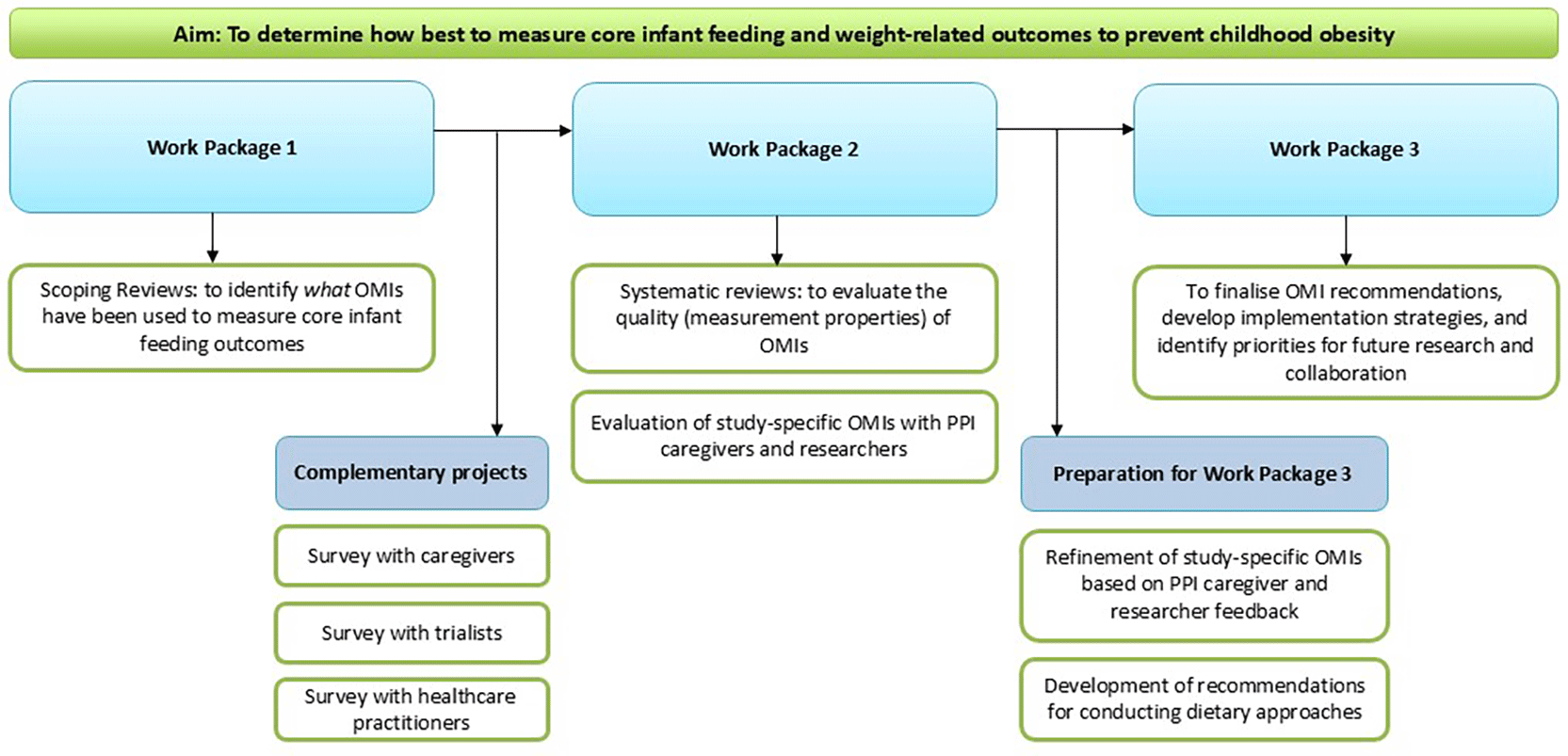
Within the SCOPE Project,10 identifying the “best” measurement approach for each infant feeding outcome is challenging because of the number of available OMIs and the variety of data collection methods employed. For instance, previous scoping reviews2–4 identified over 200 different OMIs that have been used to measure the outcomes included in the infant feeding COS6,7 and substantial heterogeneity in how, where, when, and by whom the OMIs were administered.2–4 A recent major individual participant data meta-analysis on early childhood obesity prevention, including 31 trials with 28,825 participants, also demonstrated extensive variability in how outcomes were measured across trials, limiting the ability to compare and synthesise findings, and reinforcing the need for standardised measurement practices.5 Recommendations to standardise outcome measurement, such as a COMS for infant feeding, offers a pathway to improving consistency.5
Existing OMIs for the infant feeding COS were first identified in the aforementioned scoping reviews2–4 (Work Package 1); the measurement properties of these OMIs were then evaluated in systematic reviews11–13 informed by guidance from the COnsensus-based Standards for Health Measurement INstruments (COSMIN) Initiative8,9 (Work Package 2). Findings of the systematic reviews indicate a paucity of high-quality evidence for the measurement properties of identified OMIs, with no published evaluation identified for OMIs measuring nine of the 26 core outcomes in the infant feeding COS,11–13 including knowing what foods should be offered/avoided, knowledge about how to offer solid foods, child self or assisted feeding, and caregiver modelling of eating behaviours. In addition, evaluation of identified study-specific OMIs with Patient and Public Involvement (PPI) contributors and international researchers identified issues related to comprehension, comprehensibility, feasibility, and ease-of-use of these OMIs. These findings indicate that development of a COMS that can recommend a single OMI per COS outcome, as per COSMIN guidance,8,9,14 is unlikely. Instead, the developed COMS will need to reflect the best currently available evidence on measuring the outcomes included in the infant feeding COS, including specific OMIs identified in our previous work,2,3,11,12 and recommendations and considerations for language, terminology, administration, and measurement in different contexts.
While development of a COMS is beneficial to enhance standardisation of measurement, benefits will only be observed if the COMS is used in research, policy, and practice. While there is limited evidence for use of COMS or individually recommended OMIs, evidence related to COS indicates low uptake across health areas in trials and systematic reviews.15–17 Further, recent surveys of experiences and perspectives of caregivers,18 trialists,19 and healthcare practitioners20 have identified barriers and facilitators related to measuring infant feeding and weight-related outcomes including considerations of time, cost, safety, ease of administration and completion. Thus, meaningful engagement with end-users is essential to ensure that the COMS is relevant and applicable across multiple contexts in which it is intended to be used.21 Engaging stakeholders through consensus and co-design processes22 can support development of COMS that are appropriate, acceptable, and feasible, as well as approaches to implementing and maximising uptake of the COMS. These consensus and co-design activities provide a structured process for integrating diverse expertise and lived experience into final decision making, ensuring that the COMS reflects stakeholder priorities. By embedding stakeholder engagement throughout the SCOPE Project,10 we strengthen the credibility, usability, and adoption of the finalised infant feeding COMS.
The Generative Co-Design Framework for Healthcare Innovation incorporates stakeholder voices in innovation design, which encompasses pre-design, co-design, and post-design phases.23 This framework uses a generative technique whereby an artefact (e.g., persona; story) is constructed about a future in which all challenges have been resolved.23 This solution-focused perspective has been proposed to lead to more creative and practical solutions, engaging participants to map the necessary requirements for successful innovation.23 The existing SCOPE Project evidence to date from the scoping reviews,2–4 systematic reviews,11,12 PPI contributor and researcher evaluation of study-specific OMIs, and surveys with caregivers,18 trialists,19 and healthcare practitioners20 have informed the development of a draft COMS to measure the 26 outcomes included in the infant feeding COS. This includes recommendations for specific OMIs to be used for specific COS outcomes, as well as guidance on use of broader measurement approaches (e.g., dietary recall). Agreeing and finalising the recommendations to form a final COMS for the infant feeding COS with key stakeholders is the final essential step of the SCOPE Project. Co-development of a future implementation plan and identifying important areas for further research based on study findings to date are also important to support the uptake and adoption of recommendations across research, policy, and practice, and to improve future research in this area respectively.
The primary aim of this study is to finalise the COMS to enable standardised measurement of core infant feeding outcomes across research, policy, and practice. The COMS will include recommendations on which individual OMIs to use (where supported by evidence) and recommendations for standardised measurement including considerations for language, terminology, administration, and measurement in different contexts.
The secondary aim is to develop evidence-based, stakeholder-informed implementation strategies to facilitate the adoption and uptake of the COMS and to identify and prioritise areas for future international research and collaboration based on SCOPE Project findings.
This multi-method study is the final step (Work Package 3) of the SCOPE Project.10 This study is informed by the COSMIN Initiative guidance,14 and the Generative Co-Design Framework for Healthcare Innovation.23 The study protocol will be made available via Open Science Framework.24 The published results paper will be reported in accordance with the ACcurate Consensus Reporting Document (ACCORD),25 the Consolidated criteria for reporting qualitative research (COREQ)26 and the Guidance for Reporting Involvement of Patients and the Public Short Form (GRIPP2-SF).27
This study will include two distinct phases, which are guided by an adapted version of the Generative Co-Design Framework for Healthcare Innovation23 ( Figure 2). The “pre-design” work typically included as part of this framework has already been conducted as part of work packages 12–4,18–20 and 211,12 of the SCOPE Project (See Supplementary File 1 for further detail). This study will involve “co-design” component of the framework, and will be conducted in two distinct phases:
• Phase 1) A series of online international stakeholder meetings to finalise the infant feeding COMS.
• Phase 2) One co-design workshop to develop implementation strategies to support future use of the COMS and determine priorities for future research.
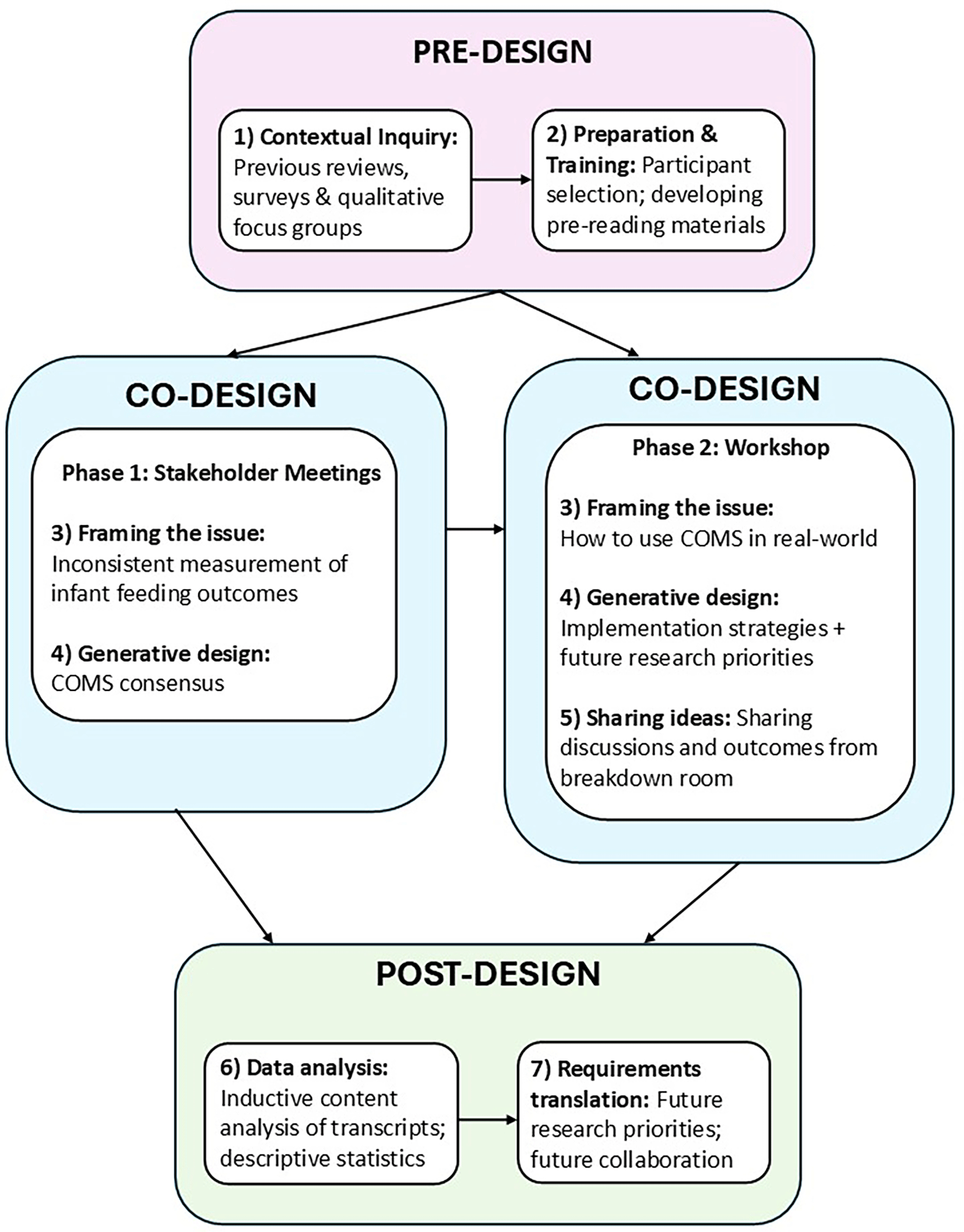
Within and between the two “co-design” phases we will undertake elements of “post-design” work, including analysis of data and generating implementation strategies. A dedicated “post-design” component will also be undertaken to finalise the COMS, implementation strategies, and future research priorities.
Participants will include parents/caregivers of infants and children up to 18 months old, healthcare practitioners (HCPs), researchers, and policymakers. Participants must be able to communicate in English to attend the online meetings and co-design workshop. Details of participant eligibility are presented below; details about required sample sizes are presented for each study phase in the respective phase subsections below.
Parents/caregivers. Parents/caregivers are operationalised in this study as primary or secondary caregivers of an infant or child up to 18 months old. This includes but is not limited to biological parents, foster parents, stepparents, adoptive parents, grandparents, or anyone who identifies as the primary or secondary caregiver. Parents/caregivers will include members of an existing panel of eight PPI contributors who have contributed to the SCOPE Project to date10 and newly recruited parents/caregivers. Existing PPI contributors are mothers of infants (≤1-year-old at time of recruitment), resident in Ireland, including Irish and non-Irish nationalities, who have knowledge and experience of engaging with, and providing their thoughts and opinions on, OMIs. As such, they are well placed to provide input on recommendations for relevant, acceptable, and appropriate measurement of infant feeding outcomes.10 Recruitment of additional parents/caregivers will be conducted to maximise representation of additional diverse caregiving experiences including fathers, caregivers of other genders, different ethnicities, and socioeconomic position. This will be achieved by contacting community groups supporting underserved and low socio-economic populations/areas, social media recruitment, and snowballing sampling through existing PPI contributors. PPI contributors will receive a €50 Me2You gift voucher for each online meeting they attend, and a €100 Me2You gift voucher for attending the co-design workshop, as per best practice for PPI reimbursement.28 Due to pragmatic limitations in reimbursing PPI contributors, only parents/caregivers based in Ireland are eligible to participate in this study as we are not able to reimburse those based internationally.
PPI contributors who express interest in participating in Phase 1 of the study will be contacted via email and will be provided with a copy of the study information leaflet (Supplementary File 2) and consent form to participate (Supplementary File 3). Following the completion of Phase 1, PPI contributors will be invited to participate in the co-design workshop (Phase 2) and provided with a separate study information leaflet (Supplementary File 4) and consent form (Supplementary File 5) to participate in this workshop.
HCPs. HCPs in this study include, but are not limited to, general practitioners/family doctors, public health nurses/health visitors, practice nurses, midwives, lactation consultants, and dietitians. HCPs can be based in any country and have experience measuring any infant feeding and/or anthropometric outcomes. HCPs will be recruited via social media (e.g., LinkedIn), direct email contact with professional organisations (e.g., World Organization of National Colleges, the UK Institute for Health Visiting, Academies and Academic Associations of General Practitioners/Family Physicians), snowball sampling through existing collaborations (e.g., the Early Promotion of Optimal Child Growth (EPOCH)-Translate collaboration;29 Health Service Executive Ireland), and professional networks of the research team. HCPs will be purposively sampled, with recruitment aiming to maximise diversity of professional role, expertise, geographical location, and interest across the infant feeding and anthropometric outcomes to be discussed in Phases 1 and 2. Social media recruitment will include brief information about the study (Supplementary File 6) and a link to the full study information leaflet (Supplementary File 7) and consent form (Supplementary File 8) to participate. Direct contact with professional organisations will include an invitation email briefly outlining the study details (Supplementary File 9) and the link to the study information leaflet and consent form (Supplementary Files 7 & 8). After participating in Phase 1 meetings, HCPs will be invited to participate in the Phase 2 workshop. If needed, additional social media recruitment (Supplementary File 10) and direct email contact (Supplementary File 11) will be used for Phase 2, in line with the process followed for Phase 1. All HCPs will be provided with the study information leaflet (Supplementary File 12) and complete the consent form (Supplementary File 13) for Phase 2 prior to participating.
Researchers. Researchers in this study are operationalised as researchers from any country and at any career stage involved in the design, conduct, and evaluation of trials of interventions to prevent early childhood obesity, promote healthy child growth and/or early childhood health behaviours (e.g., diet, physical activity), or research methodologists with expertise in measurement of early childhood growth or infant feeding outcomes. Researchers will be identified from: 1) previously conducted reviews of OMIs used to measure diet, caregiver feeding practices and environment, and anthropometric OMIs;42,3,11,12 2) the international Transforming Obesity Prevention for CHILDren (TOPCHILD) Collaboration;30 3) the EPOCH-Translate collaboration (based in Australia);29 and 4) professional networks and collaborators of the research team (i.e., researchers who have previously participated in research conducted by the SCOPE Project and/or expressed an interest in being involved in future research). Researchers will be purposively sampled, with recruitment aiming to maximise diversity of research expertise/interest across the infant feeding and anthropometric outcomes to be discussed, geographical location, and research experience. Social media recruitment for Phase 1 will include brief information about the study (Supplementary File 6), and a link to the full study information leaflet (Supplementary File 7) and consent form (Supplementary File 8) to participate. Direct contact with professional organisations will include an invitation email briefly outlining the study details (Supplementary File 9) and a link to the study information leaflet (Supplementary File 7) and consent form (Supplementary File 8). After participating in Phase 1, researchers will be invited to participate in Phase 2. Additional social media recruitment (Supplementary File 10) and direct email contact recruitment (Supplementary File 11) will be conducted if needed, in line with the process followed for Phase 1. All researchers will be provided with the study information leaflet (Supplementary File 12) and consent form (Supplementary File 13) for Phase 2 prior to participating.
Policymakers. Policymakers in this study are operationalised as individuals involved in program planning, policy development, and decision-making related to infant feeding, early childhood health promotion and obesity prevention. Policymakers can be based in any country and will be recruited via: social media (e.g., LinkedIn); direct contact to governmental health promotion programmes (e.g., publicly available email addresses on government websites); direct email contact with existing professional networks and collaborations of the research team (e.g., Health Service Executive Ireland, EPOCH-Translate,29 TOPCHILD Collaboration);30 and snowball recruitment. Social media recruitment for Phase 1 will include brief information about the study (Supplementary File 6), and a link to the full study information leaflet (Supplementary File 7) and consent form (Supplementary File 8) to participate. Direct contact with professional organisations will include an invitation email briefly outlining the study details (Supplementary File 9) and including a link to the study information leaflet (Supplementary File 7) and consent form (Supplementary File 8). After participating in Phase 1, policymakers will be invited to participate in Phase 2. Additional social media recruitment (Supplementary File 10) and direct email contact (Supplementary File 11) will be used for Phase 2 if needed, in line with the process followed for Phase 1. All policymakers will be provided with the study information leaflet (Supplementary File 12) and consent form (Supplementary File 13) for Phase 2 prior to participating.
Prior to taking part in the international stakeholder meetings (Phase 1) and co-design workshop (Phase 2), participant consent and demographic information will be collected online using Microsoft Forms. After returning completed consent forms, all parents/caregivers (PPI Contributors) will be asked to complete an anonymous survey which involves providing quantitative demographic data, including their gender, age, nationality, number of children, and the age of their youngest child (Supplementary File 14). The consent form will not be linked to the demographic survey, which will be provided separately. Demographic survey data will therefore be anonymous at point of collection.
HCPs, researchers, and policymakers will also be asked to provide quantitative demographic data including their gender, location, professional role, number of years’ experience, and experience related to infant feeding and healthy child growth (Supplementary File 15).
Participants who provide demographic data in Phase 1, will not need to provide this again if they participant in Phase 2, however new participants recruited and consenting to participate in Phase 2 will be required to complete the demographic survey prior to participating (Supplementary Files 14 & 15).
Online consensus meetings will be conducted with international stakeholders including parents/caregivers, HCPs, researchers, and policymakers. The aim of the stakeholder meetings is to finalise the infant feeding COMS. The COMS is operationalised as both recommendations for specific OMIs for related outcomes and considerations for language, terminology, administration, and measurement in different contexts. Meetings will be conducted using Microsoft Teams, with separate meetings conducted to reach consensus on measurement of: infant milk feeding outcomes (i.e., duration of breastfeeding from mother, amount/volume of formula consumed, infant’s age when solids were introduced); caregiver feeding practices and infant feeding environment outcomes (i.e., responsive infant feeding, offering age-appropriate foods and beverages, feeding environment); diet and feeding environment outcomes (i.e., types of food consumed, types of ‘other’ drinks consumed, portion size); and weight-related outcomes (i.e., child weight, weight gain over time, body composition). Dietary intake assessment approaches (i.e., 24-hour recalls, food diaries, food frequency questionnaires) and infant feeding environment outcomes will be included in multiple meetings to capture perspectives from participants with expertise in infant milk feeding, caregiver feeding practices, and diet-related outcomes.
Meetings will be conducted in line with best practice guidance for online consensus meetings.31 Meetings will be scheduled for 60–90 minutes and participants will be invited to attend meetings based on their content expertise and interest. PPI contributors will be invited to participate in individual meetings based on their interest and are not expected to attend all meetings; it is instead expected that PPI contributors will attend 1–2 meetings. We will aim to recruit 10–15 participants (2–5 individuals per stakeholder group) for each meeting.
Preparatory material for the online meetings, including visual and written lay language summaries of SCOPE Project findings to date,2–4,11,12,18–20 will be shared with participants in advance. Meetings will be facilitated by a member of the research team (DD), with additional team members present to support notetaking and facilitation (BC, KMS). Research team members are Caucasian, with research experience in public health nutrition (DD) and health psychology (KMS, BC), with a mix of parents (KMS) and non-parents (DD, BC). Meetings will be video recorded and transcribed using Microsoft Teams. Video recordings will be destroyed once transcription accuracy is checked by the research team (DD, BC). Notetaking documents and transcripts will be anonymised.
At the beginning of each stakeholder meeting, the purpose and processes of the meeting will be explained to participants. OMIs and recommendations will be presented sequentially based on their underpinning evidence base.
1. Outcomes and OMIs with published evidence to support their use, as identified in previously conducted systematic reviews11–13, will be presented first. Participants will have the opportunity for discussion if anyone disagrees with the recommendation of these OMIs for inclusion in the COMS. Any disagreements will be discussed to reach consensus on inclusion or exclusion.
2. Study-specific OMIs identified in previously conducted scoping reviews2–4 and refined by our research team based on feedback from expert researchers and PPI contributors, will then be presented to participants. Recommendations and considerations for the use of these OMIs based on feedback from expert researchers and PPI contributors will also be presented and discussed. Using Slido online software, participants will vote for each of the study-specific OMIs, regarding their inclusion in the final COMS. Voting options will include: ‘Agree with recommendations’, ‘Agree, but changes required’, or ‘Do not agree with recommendations’. Consensus agreement for inclusion in the final COMS is operationalised as ≥50% of participants voting ‘Agree with recommendations’. Consensus agreement that an OMI should not be included in the COMS is operationalised as ≥50% of participants voting ‘Do not agree with recommendations’. If consensus is not reached on inclusion or exclusion, there will then be opportunity for participants to provide further recommendations, guidance, and considerations for the use of these OMIs. The voting process will be repeated until consensus (>50% agreement) is reached.32
3. OMIs identified in previously conducted systematic reviews11–13 and recommended for use based solely on reviewer rating (DD, KMS) of content validity will then be presented to participants. Participants will be asked to vote for each of the OMIs regarding their inclusion in final COMS using the same voting process as above.
During all meetings, except the anthropometric focused meeting, participants will also discuss and vote to reach agreement on recommendations of identified resources and guidance for conducting dietary intake assessment approaches (e.g., dietary recall, food diary, FFQ). These resources and guidance documents, which will include considerations informed by previous stakeholder engagement with researchers and PPI contributors, will be provided to stakeholders in advance of the meeting to ensure time to review. Voting will be conducted as above; if consensus is not achieved, there will be opportunities for discussion followed by further voting to reach agreement as needed.
At the conclusion of each meeting, participants will be provided the opportunity to express interest in attending the Phase 2 online co-design workshop to develop implementation strategies to support the uptake and adoption of the COMS. Participants will be reminded that they have no obligation to attend the co-design workshop. Participants will also be provided with information regarding eligibility for group authorship for peer-reviewed publications related to this study.
See Supplementary File 16 for an agenda for the online stakeholder meetings.
The co-design workshop aims to develop implementation strategies to support the adoption and uptake of the infant feeding COMS across research, policy, and practice. Strategic priorities for future research, including for instance, plans for the development and evaluation of specific OMIs will also be identified and discussed, with potential future collaborations identified.
Workshop participants will include, but are not limited to, individuals who previously attended one of the Phase 1 stakeholder meetings, including parents/caregivers, HCPs, researchers, and policymakers. Additional recruitment will be conducted as necessary to ensure participation of at least 3 individuals per professional group (HCPs, researchers, policymakers) and 6 parents/caregivers at the workshop. There will be no set limit for the maximum number of participants who can attend the workshop; however, we will aim to ensure representative recruitment across the stakeholder groups. If there is overrepresentation from a particular stakeholder group, no further recruitment for that group will occur.
The workshop will be held online for 2.5 hours using Microsoft Teams and facilitated by a member of the research team (DD), with additional team members present to support notetaking and facilitation (BC, KMS). Interactive functionalities of Microsoft Whiteboard will be utilised to enable a shared, real time visual workspace for structured facilitation and inclusive participation during the workshop. The Whiteboard will be predominately used by research team members (DD, BC, KMS), rather than expecting participants to contribute if they do not feel comfortable with the software. The workshop will be video recorded and transcribed using Microsoft Teams. Video recordings will be destroyed once transcription accuracy is checked by the research team (DD, BC). Notetaking documents and transcripts will be anonymised. See Table 1 for an overview of the online co-design workshop, and further detail described in text below and in Supplementary File 17.
Prior to attending the workshop, participants will be sent an instructional written guide for Microsoft Whiteboard (Supplementary File 18) and complementary short video demonstrating the Microsoft Whiteboard functionalities (to be created by the research team). See Supplementary File 19 for an overview of additional information to be shared with participants prior to attending the online workshop, along with visual infographic summaries of SCOPE Project findings to date.
Following an initial icebreaker activity to build rapport, the primary facilitator (DD) will establish group norms for the workshop, including encouraging participants to use lay universal language and avoid using jargon. Individuals will be asked to explain any jargon they use during the meeting to ensure a shared understanding, and foster all participants to share their perspectives. The key areas of concern as determined in Phase 1 will then be presented to participants, including non-standardised measurement practices for infant feeding outcomes, barriers and facilitators for measurement across research, policy, and practice, and gaps in the evidence base for measurement properties of OMIs.
Participants will then be split into breakout groups themed by research, policy, or practice, and will include a mixture of participants and professional roles (i.e., caregiver, researcher, HCP, policymaker). Each breakout group will be assigned a persona that is representative of a potential user of the SCOPE COMS (e.g., researcher, HCP). This will involve groups initially immersing themselves in the context of their persona, considering the potential challenges they might face in attempting to implement the SCOPE COMS. Next, groups will imagine a future in which these challenges have all been addressed, therefore generating potential solutions to enable successful implementation of the COS and recommendations for standardised measurement across research, policy, or practice. As the persona may align with some participants’ lived experience, the structure of the group discussion will ensure that every participant can contribute equally, avoiding any one perspective being privileged over others. Break-out group members from roles and positions not directly aligned with a group’s focus area will be able to provide invaluable input, regarding the feasibility of successfully implementing proposed solutions, within their unique contexts (e.g., prospective policymaking solutions implemented in practice, or research).
Participants will then rejoin the wider group. The workshop facilitator (DD) will remind participants that the remainder of the workshop will be video-recorded and transcribed using Microsoft Teams. From here, a participant from each breakout group will share their respective recommendations with the full group. A broader full group discussion will then follow, encouraging participants to provide their perspectives, including counter views, on the solutions/recommendations suggested by other breakout groups, and share any final considerations to support the implementation and uptake of standardised measurement practices developed by the SCOPE Project.
Next, the group will focus on opportunities for future research. This will consist of an initial idea generation phase, whereby participants ideas will be added to sticky notes on the Microsoft Whiteboard. Participants can directly add to the Whiteboard or verbally indicate their ideas, which will be added to the Whiteboard by a member of the research team (BC). This will be followed by a group discussion, with participants asked to clarify their suggestions where necessary. Another facilitator (KMS) will add all suggested ideas to a Slido survey, which will then be used by participants to vote to determine the top priorities for future research during the workshop. The purpose is not to achieve consensus on priority areas, but instead to identify important areas that can facilitate future collaborative activities. The finalised priority areas for future research will then be presented to the participants, allowing them to identify shared interests, discuss ideas, and explore opportunities for future research and collaboration. Following the workshop, participants’ names and contact information will be shared via email, with permission, to support ongoing connections and collaboration.
Throughout the workshop, an ‘Idea Parking Lot’ will be available on the Microsoft Whiteboard as a dedicated space for participants to record ideas anonymously and asynchronously (including those they may not wish to raise verbally). This space will be reviewed by workshop facilitators during the break and in the closing discussion, with ideas shared with the group accordingly.
Participant demographic data will be analysed descriptively using IBM SPSS Statistics (Version 29). Phase 1 quantitative data, the votes regarding agreement with the COMS, will be analysed descriptively and reported as frequencies for each response category in real-time (within the meetings) using Slido online software. Qualitative data from Phase 1 will be analysed using inductive content analysis in NVivo (Version 15). The purpose of this analysis is to identify areas of agreement and disagreement, understand the rationale underpinning the stakeholder perspectives, and use these insights to inform refinements to the finalised COMS. The analysed data from the Phase 1 meetings will be brought to the Phase 2 workshop for discussion and to support identification of implementation strategies. The qualitative data from Phase 2 will be analysed following an inductive thematic analysis approach in NVivo (Version 15). This analysis will follow the six steps of thematic analysis as detailed by Braun and Clarke,33,34 and aims to generate an independent thematic interpretation of stakeholder perspectives, considerations, and contextual factors related to the implementation of the COMS. The quantitative data from Phase 2, specifically the rank-order priorities for future research, will be analysed and presented as rank-ordered results in real-time (within the workshop) using Slido online software. Finally, all analysed quantitative and qualitative data will be re-considered after both phases to generate a finalised COMS with implementation recommendations.
The primary outcome of this study will be the recommended COMS for measuring infant feeding outcomes included in a previously published infant feeding COS.7 Secondary outcomes are stakeholder-informed recommendations to support the implementation and wider adoption of the COMS, as well as priorities for future research and collaboration.
Key outputs of this research are listed below:
This study has obtained ethical approval from the University College Cork Social Research Ethics Committee (Log No: 2026–170). Written informed consent will be obtained from all participants in this study after they have been provided with and read the relevant participant information sheet. All data will be anonymised in the reporting of this study. Participants can withdraw their data at any stage up to two weeks after each meeting/workshop, after which their anonymised contributions will not be able to be identified and therefore removed.
Findings from this study will be disseminated in peer review publications and shared at local, national, and international webinars, seminars, and academic conferences to multi-disciplinary audiences. Lay language and visual infographic summaries of study findings will be shared on the SCOPE Project website (www.eiascope.com), and LinkedIn page (www.linkedin.com/company/eia-scope-project). Anonymised voting results from Phase 1 and 2 will also be made available via Open Science Framework (https://doi.org/10.17605/OSF.IO/APN7X).24
By integrating international stakeholder input and co-design, this study will advance consistent, meaningful, and stakeholder-informed measurement of core infant feeding outcomes. Findings from this research include the finalised infant feeding COMS based on the best available evidence and stakeholder-informed implementation strategies to support the adoption and sustainment of the COMS across research, policy, and practice. Determination of future research priorities will provide strategic next steps to advance the development and evaluation of OMIs for core infant feeding outcomes and inform future iterations of the COMS. Ultimately, findings from this study will help strengthen the design, quality, impact, and evaluation of interventions to promote optimal infant feeding and growth.
Provide sufficient details of any financial or non-financial competing interests to enable users to assess whether your comments might lead a reasonable person to question your impartiality. Consider the following examples, but note that this is not an exhaustive list:
Sign up for content alerts and receive a weekly or monthly email with all newly published articles
Register with HRB Open Research
Already registered? Sign in
Submission to HRB Open Research is open to all HRB grantholders or people working on a HRB-funded/co-funded grant on or since 1 January 2017. Sign up for information about developments, publishing and publications from HRB Open Research.
We'll keep you updated on any major new updates to HRB Open Research
The email address should be the one you originally registered with F1000.
You registered with F1000 via Google, so we cannot reset your password.
To sign in, please click here.
If you still need help with your Google account password, please click here.
You registered with F1000 via Facebook, so we cannot reset your password.
To sign in, please click here.
If you still need help with your Facebook account password, please click here.
If your email address is registered with us, we will email you instructions to reset your password.
If you think you should have received this email but it has not arrived, please check your spam filters and/or contact for further assistance.

Comments on this article Comments (0)