Keywords
public and patient involvement, puberty, participatory research, co-production, participatory research, youth engagement

This article is included in the Public and Patient Involvement collection.
public and patient involvement, puberty, participatory research, co-production, participatory research, youth engagement
Adolescence is a critical developmental stage encompassing the transition from the beginning of puberty to early adulthood (Sawyer et al., 2018). It marks a period of biopsychosocial transitions which dynamically interact to shape both current wellbeing and long-term outcomes (Williams et al., 2002). While often used interchangeably, adolescence and puberty are distinct yet overlapping processes; adolescence typically refers to social-developmental changes whereas puberty represents a process of physical development and reproductive maturation (Dorn & Susman, 2019 Dorn et al, 2019). Adolescent wellbeing is recognised as central to shaping school engagement, psychosocial functioning and lifelong health (Sawyer et al., 2012). Puberty is a biological process that has social and cultural meaning, and as such emerging research emphasise the biopsychosocial nature of puberty, shaped by environmental stressors, social and cultural expectations, and individual experiences (Susman et al., 2019). Thus, research on puberty and adolescence is important as experiences through this formative period shape trajectories across mental health, identity formation, and sexual development past adulthood (Sawyer et al., 2012).
However, the nature of this research requires careful methodological and ethical consideration, particularly of how developmental processes are measured and how aspects of social and cultural diversity are accounted for, and these considerations need close attention in study design and recruitment (Mendle et al., 2019). Additionally, assessments of pubertal development typically involve topics that may be considered intimate and, in some cases, use biological measures which may be associated with physical, social, or psychological discomfort. Further challenges may arise from cultural beliefs, family expectations or individual experiences that shape young people’s willingness to participate in research on topics such as physical development and menstruation. These facets may pose significant challenges in carrying out research on puberty with young people, and in turn, shape recruitment, completion and other aspects of research engagement, which may result in an under-representation of some groups, or other biases and which may inadvertently reinforces the disparities it seeks to address (Deardorff et al., 2019).
Despite adolescents often being the primary focus of puberty research, they are rarely engaged in the research process beyond the role of participants, with little to no involvement in the design and conduct of research beyond this (Jacquez et al., 2012). This misaligns with the principle that those affected by the research should actively be involved in shaping it (INVOLVE, 2012; Staniszewska et al., 2017). International frameworks reinforce the necessity to move beyond passive inclusion. Article 12 and the Lancet Commission on Adolescent Health and Wellbeing have emphasised adolescent participation as not only a matter of rights, but also as a mechanism for improving research quality, relevance, and impact (Baird et al., 2025). Despite Article 22 of the United Nations Convention on the Rights of the Child (UNCRC) which emphasizes adolescents’ right to be heard across all matters affecting them, this principle is rarely applied in research practice (Jacquez et al., 2012; United Nations, 1989). The Lancet Commission on Adolescent Health and Wellbeing has also called for a greater involvement of adolescence across research as a method of building research relevance, quality, and impact (Patton et al., 2016). It is estimated that <20% of studies on adolescence engage with adolescents at any other stage of the study other than participants, despite calls to incorporate the voice of adolescents throughout matters pertaining to them. Barriers to this include assumptions regarding adolescents’ capacity to understand empirical concepts, as well as general challenges to PPI work such as instructional risk aversion and methodological conservatism, which often inhibit the meaningful involvement of young people (Jacquez et al., 2012; Ocloo et al., 2021).
In response to these challenges a range of frameworks have been developed to foster inclusive engagement of young people within research processes. Public and Patient Involvement refers to research carried out by or with members of the research population rather than carrying out research about or for them (INVOLVE, 2012). Additionally other models such as community-engaged research, co-design and participatory action research use shared decision making, cultural relevance and power sharing between researchers and participants to elevate input in shaping research questions, methods, and interpretations (Jacquez et al., 2012; Cahill & Dadvand, 2018). These approaches position adolescents as co-creators rather than only participants, and offer a potential solution to addressing the ethical, cultural, and methodological challenges that present within puberty research; in light of privacy, stigma, and recruitment challenges.
However despite their promising nature, the uptake of these approaches across puberty related research is uncharted. Adolescent engagement in health research is described using a large breadth of terms without shared definitions or standard practice; despite existing tools for reporting this engagement such as the GRIPP2 (Sanchez et al. 2024; Staniszewska et al., 2017). Furthermore, transparency in reporting key details such as involvement across stages and rationale for these decisions is often provided in sufficient detail (Warraitch et al., 2024). The inconsistency in both the terminology used and reporting of engagement contributes to ambiguity as to how and when adolescent input is facilitated in the research cycle. This absence of record may hinder the replication of meaningful adolescent engagement practices and inhibits the ability to evaluate, scale or improve effective engagement practices.
There is a need to synthesise the research on how adolescents have been involved in puberty research beyond participants to date. While several reviews have examined youth engagement more broadly (Cahill & Dadvand, 2018; Jacquez et al., 2012; Sanchez et al., 2024), no existing review addresses the intersection of youth engagement in research on puberty. The absence of this synthesis leaves unclear the extent, nature, and quality of adolescent involvement in studies that seek to study puberty or use measures of puberty. A scoping review is necessary to map how, when and to what extent adolescents have been engaged as contributors rather than solely participants of puberty research and to identify patterns and recommendations for future research.
This scoping review aims to systematically map how adolescents have participated in puberty research or research with puberty measures beyond the role of participant, and in what formats they have been engaged. Specifically, the review will examine the nature of adolescent contribution to the research process in studies that study puberty or include measures of puberty development, including biological, self-reported or observational methods. By identifying the methods of engagement, terminology and reporting practices currently used this review aims to describe how adolescent contribution to puberty research design and conduct has been operationalised and what practices are used. These findings can inform clearer reporting, conceptual consistency, and methodological transparency in future puberty research.
The aim of the scoping review is to explore how children and adolescents are engaged in processes in puberty research. This review seeks to map the types, process, and contexts of involvement of children, adolescents and parents/caregivers and the practices used to facilitate engagement and reporting practices. The review seeks to explore the following research questions (Arksey & O’Malley, 2005) How are children and adolescents involved in the design and conduct of puberty-related research through public and patient involvement (PPI) or similar participatory strategies? What processes are used to engage children, adolescents, and their parents in PPI strategies within puberty-related research?
This scoping review aims to map out how children and adolescents, and where applicable, their parents/caregivers, or guardians, have been involved in the design and conduct of puberty research or research using measures of puberty. Scoping review methodology was selected for the exploratory nature of the research questions and the expected diverse literature base across multiple disciplines. Furthermore, a scoping review allows for systematic exploration of how involvement is shaped, who is included, and what frameworks have been used. This is important given that involvement has been observed to be inconsistently defined and reported, due to frequently being conflated with recruitment or participation in data collection (Preston et al., 2023). This aligns with methodological guidance recommending scoping reviews to examine conceptual boundaries, mapping practices, and identifying gaps (Arksey & O’Malley, 2005; Munn et al., 2018).
This scoping review was conducted following the five-step framework developed by Arksey and O’Malley (2005). This framework comprises five key stages; (Arksey & O’Malley, 2005) identifying the research question, identifying relevant studies, selecting applicable studies, charting the data, and collating, synthesising, and reporting the results. Additional methodological refinements by Levac et al. (2010) are incorporated, including post hoc development of inclusion and exclusion criteria, and team-based screening.
Reporting adhered to the PRISMA guidelines for scoping reviews (Tricco et al., 2018). Consistent with scoping review methodology, no formal risk of bias or quality assessment will be conducted. The review protocol was preregistered on OSF using the Generalised Systematic Review Registration form (van den Akker et al., 2023) and updates to the protocol were documented as revisions arose. This protocol can be accessed on OSF online at https://osf.io/7cwef/overview
The search strategy was developed to identify sources that include children and adolescents and their parents/caregivers in puberty research in an advisory, consultative, or collaborative manner. This was developed to identify literature at the intersection of 3 domains: research involving children, adolescents and their parents/caregivers, research examining puberty experiences or using measures of pubertal development, research using PPI, advisory or other participatory strategies.
The following databases were searched: PubMed, Embase, APA PsycINFO, CINAHL, Scopus, and ProQuest. PubMed and ProQuest databases were searched via their native interfaces, Embase and Scopus were accessed through Elsevier, APA PsycINFO and CINAHL were accessed through EBSCO interface. The last search was conducted on 24 June 2025.
Grey literature was included to capture the relevant studies, articles, reports, and materials not indexed in academic databases. This additionally aimed to reduce publication bias and increase the comprehensiveness of the review (Paez, 2017). Search sources included Google Scholar, BASE, CORE, sources listed on GreySource, OpenGrey, OpenDOAR, PsyArXiv, SocArXiv, SSRN, UCL Discovery and OSF.io. Institutional repositories and dissertation databases were also searched, including the Networked Digital Library of Theses & Dissertations (NDLTD), EBSCO Open Dissertations, DUMAS (HAL Open Science), DART-Europe, and OATD. Relevant outputs from major longitudinal studies were searched including HBSC, ALSPAC and Growing up In Ireland. Outputs from NGOs such as UNICEF Innocenti, WHO IRIS, Save the Children, Plan International and Menstrual Health Hub were also searched.
Additional search strategies included handsearching the reference lists of included studies, as well as forward citation searching using tools from CrossRef. This ascendancy and descendancy approach aimed to capture relevant studies not indexed in traditional databases and improve search yield (Hirt et al., 2023). Participatory research platforms, youth advisory networks, and known research networks were searched directly.
The review included literature published from 1979 onward reflecting a ten-year lead up to the 1989 adoption of Article 12 of the United Nations Convention on the Rights of the Child, which recognised children’s rights to be involved in decisions affecting them, including research involving children and adolescents. Sources had to involve children and adolescents and/or their parents/caregivers, or guardians in a public and patient involvement (PPI), consultative, advisory, co-design, or participatory action research during the design and/or conduct of research. Involvement for this review included the use of advisory groups, co-design activities, stakeholder consultation, or other documented engagement. The sources were required to position puberty as a major topic of research or use measures of pubertal development, including menarche, adrenarche, Tanner staging or references to secondary sex characteristics. Sources meeting these criteria were eligible regardless of their study design, methodological approach, or publication type. Both academic and grey literature were included to ensure a comprehensive mapping of these practices that have been used across puberty research to date. Only English-language sources were included as the authors only read in the English-language.
A core Boolean search string was developed to capture the intersection of literature on children, adolescents, and their parents/caregivers; (Arksey & O’Malley, 2005) puberty and related developmental markers (Baird et al., 2025) public and patient/advisory/consultative input in research design and conduct. The search string was added to meet requirements across differing search engines and databases to match specific indexing terms and field tags. A variation of the core string of: (adolescent OR adolescents OR teenager OR teenagers OR teen OR “young people” OR youth OR child OR children OR parents OR carers OR guardian OR guardians) AND (puberty OR pubertal OR menarche OR adrenarche OR “secondary sex characteristics” OR “tanner staging”) AND (“research participation” OR “patient and public involvement” OR “patient involvement” OR “public involvement” OR “community engaged research” OR “youth advisory” OR “co-design” OR “participatory research” OR “stakeholder engagement” OR “engaging adolescents” OR “engaging youth” OR “youth involvement” OR “child involvement” OR “parental involvement” OR “caregiver involvement” OR “parental engagement” OR “caregiver engagement” OR child consultation OR parent consultation OR caregiver consultation OR guardian consultation OR involvement of children OR involvement of parents OR involvement of guardians OR involvement of carers OR consulted parents OR consulted caregivers OR consulted children OR consulted teenagers).
Following an initial pilot of the search strategy, revisions to improve the relevance of studies and reduce the volume of irrelevant results. The search strategy used in the pilot included a broad truncation term including, pubert*, child*, and participat*, which resulted in a significant amount of irrelevant literature. In the case of child, many studies retrieved referred to non-related studies (e.g. childbirth, childbearing etc). Terms like participat*, recruit*, and collab* often returned articles where participation or collaboration was mentioned in a broad way, with no reference to the types of consultative, advisory, or PPI (Patient and Public Involvement) engagements sought related to this review. Hence, we revised the search strategy to improve specificity and alignment with our research objectives, and we removed broad truncation terms and instead used specific terms (i.e., pubert was changed to puberty OR pubertal, and child was changed to child OR children). Puberty terms were limited to abstract/summary fields in ProQuest to ensure the concept was central to the research focus, rather than mentioned peripherally (e.g. in definitions or reference lists) to reduce the volume of irrelevant results.
Screening was conducted in two stages; initial title and abstract screening proceeded by full-text review. All database outputs retrieved were uploaded into Rayyan, a web-based tool for systematic review management, and duplication checks were conducted (Ouzzani et al., 2016).
During the title and abstract screening, one reviewer independently screened all sources for eligibility based on the predefined inclusion criteria. A second reviewer independently screened 10% of records to assess consistency of screening. No AI assistance was used. Discrepancies were resolved through discussion with a third reviewer available to adjudicate if necessary. Records were categorised as “include” or “exclude,” with uncertain records retained for full text review to minimise the likelihood of false exclusions (Polanin et al., 2019). In full text screening, one reviewer conducted the full text screening with a second reviewer assessing 50% of the included records. This was revised from an original second screening of 10%, which was deemed insufficient to check for reliability due to the small number of texts present. Reasons for exclusion at the full-text stage were recorded systematically. Conflicts at this stage were resolved through discussion.
No blinding of the metadata was used as the nature of the research topic, and source indicated the risk of bias was minimal. All literature that met the inclusion criteria was retained.
Data extraction forms were developed iteratively by the review team to ensure consistency across the extraction stage. The form was developed to capture key characteristics of each source including publication year, country, study design, population details, puberty focus and/or measures. Engagement-related data was also extracted, including who was involved in PPI/advisory processes, the type and stage of involvement, the processes used for engagement, reporting frameworks used, compensation details, and usage of PPI/advisory input. One reviewer completed the data extraction for all included sources with no AI assistance, and a second reviewer completed the extraction for 10% of the records to assess the consistency of the extraction. No extractor blinding was used. Data was managed initially in Rayyan and Microsoft Excel. Any data that was missing, unclear or lacking in sufficient details was recorded as not reported.
Extracted data was synthesised using a descriptive and mapping-based approach consistent with the objectives of the scoping review methodology (Arksey & O’Malley, 2005; Levac et al., 2010). Quantitative data (e.g., publication year, country, study design, population involved) were summarised using basic frequency counts and tabled to identify patterns across time, geography, and study type. Inductive coding was used to thematically analyse qualitative data regarding who was involved, contexts of involvement, usage of PPI/advisory input, and stage of advisory input. Codes were developed iteratively based on the extracted data.
No formal critical appraisal of study quality or risk of bias was conducted in line with standard scoping review conventions and guidance (Peters et al., 2020; Tricco et al., 2018). The aim of the synthesis was not to evaluate the effectiveness of involvement but instead to capture the breadth and characteristics of how children, adolescents and or their caregivers have been engaged in the design and conduct of puberty research.
Missing or insufficient detail was coded as “not reported” and documented in summary tables where relevant. Where sufficient detail was available the review aimed to capture underlying participatory frameworks or guiding principles used to guide involvement type (e.g., community engaged, PPI, codesign).
As this study is a secondary data analysis of publicly available sources, formal ethical approval was not required. The review was approached with reflexive attention to how children and adolescents were represented in the included sources. Members of the review team have prior experience working directly with children and adolescents in both research and practical contexts, including youth advisory panels. This background informed our sensitivity to how involvement was reported and our awareness of involvement framing. We remained mindful of how our professional orientations may influence interpretations of what constitutes meaningful participation throughout this scoping review.
A total of 5435 records were identified through the searches of six academic databases (PubMed, Embase, APA PsycINFO, CINAHL, SCOPUS and ProQuest). An additional four grey literature sources were retrieved from the grey literature search. However, all four grey literature results were identified as duplicates and subsequently excluded. Following deduplication of 241 database records, 5194 unique records remained for title and abstract screening.
Of these records, 5172 were excluded as they did not meet the inclusion criteria primarily due to the absence of any involvement of children, adolescents, or their parents/caregivers in a participatory, advisory, or consultative research role. The remaining 22 sources were retrieved for full-text review. At full text screening, 12 sources for the following reasons: the absence of puberty/puberty aspect as a central component of the study (n = 9), and community consultation that did not include children, adolescents, or parents/caregivers (n = 3). Ultimately, 10 studies were included in the final synthesis. A PRISMA-ScR flow diagram ( Figure 1) presents the screening process in full.
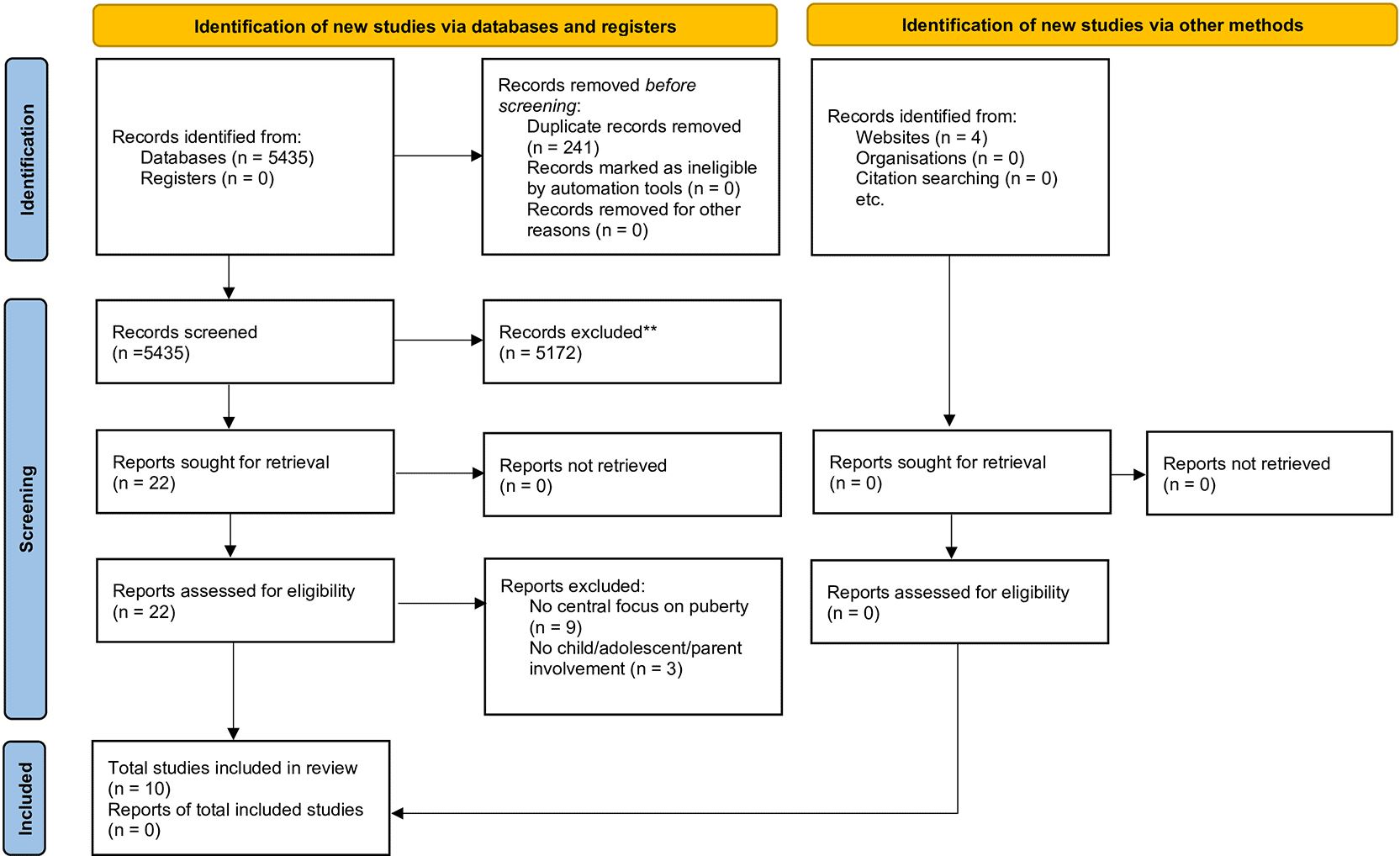
The ten included sources were published between 2009 and 2025 and represented research conducted across a diverse range of countries, including South Africa, Pakistan, the United States, Iran, Madagascar, and Tanzania. Participant populations mostly included adolescents aged 9–19, with some studies including additional input from key adults, parents/caregivers, teachers, youth workers, and health professionals. All included studies employed qualitative or mixed-method study designs, and methodologically, studies adopted a participatory methods approach, drawing on approaches including participatory action research (PAR), adolescent advisory groups and co-design. Table 1 outlines characteristics and participatory details of the 10 studies.
All included studies reported some form of involvement of adolescents and, in some cases, key adults in the process of puberty research. Involvement was predominantly situated in the preparatory and formative stages of research. No studies reported adolescent involvement in later research stages (beyond conventional participation), including data analysis, dissemination planning, or authorship. There was an observable pattern of front-loaded engagement where adolescents were included at the beginning of the research, but the inclusion was not sustained across analysis or dissemination components. The purpose of the participatory input within the sample was to design and inform intervention design (n = 3), or to facilitate data generation (n = 7).
While all studies used participatory techniques, few explicitly named guiding frameworks or principles such as Public and Patient Involvement (PPI). Instead, involvement was most often described narratively with varying levels of detail, and minimal reflection was described relevant to guiding principles or rationale.
Across the ten studies, puberty was conceptualised and described primarily through a sociocultural or experiential lens rather than with reference to clinical or biological measures of pubertal development. The studies did not use biological or physical indicators of measures, such as hormonal assessments or Tanner staging. Instead, puberty was explored through participants’ lived experiences, cultural narratives, and local social norms. This suggests participatory or advisory approaches are predominantly used in studies applying narrative and experiential approaches to puberty, focused on what puberty means to adolescents within specific social, cultural, or geographical contexts. Many studies focused on menstruation, menarche, educational experiences, and shame-related beliefs, particularly in low- and middle-income country contexts. This thematic focus likely shaped participant demographics, and the included studies focused almost exclusively on girls’ experiences (n = 7) with a minority including boys and girls (n = 3), indicating limited inclusion of boys or gender-diverse adolescents.
Reporting of engagement processes was generally inconsistent, and overall under-described and under-developed. None of the studies detailed the rationale for adolescent involvement or how power-sharing dynamics or ethical considerations were addressed (n = 10). A minority of studies reported compensating (n = 1) or not compensating (n = 1) adolescent contributors, with the rest (n = 8) did not provide information. None of the included studies evaluated the outcomes of the participatory engagement, such as its impact on study design, data quality, or acceptability. Additionally, no studies used formal reporting frameworks.
There was also an absence of reflexivity in reporting. No studies discussed the structural or cultural barriers that may have shaped adolescent involvement (Arksey & O’Malley, 2005; Warraitch et al., 2024) researcher positionality in conducting participatory engagement, (Baird et al., 2025) the limitations of the participatory approach used, (Cahill & Dadvand, 2018) how power dynamics were addressed, (Carter & Seaton, 2025) how decisions were made or shared between adolescents and adults. Overall, the lack of reported information makes it challenging to assess the depth or influence of adolescent engagement described.
This scoping review aimed to systematically map how children, adolescents, and where applicable, their parents/caregivers have been involved in puberty research beyond the role of participants. This review indicates that while some forms of participatory involvement have been integrated into studies on puberty, such engagement has been largely limited in scope, narrow in demographic range and representation, and inconsistently reported. Despite the growing emphasis on public and patient involvement in research and clear ethical imperatives to include young people in decisions affecting them (United Nations 1989; Baird et al., 2025), meaningful adolescent engagement - beyond conventional participation - in puberty research remains underdeveloped. Adolescents continue to be positioned primarily as data sources even within research described as consultative, advisory or coproduced research rather than acting as contributors to the design, conduct, implementation and/or dissemination of research. This persists in the face of sustained calls to involve participants across the research cycle (Jacquez et al., 2012; INVOLVE, 2012; Patton et al., 2016).
This scoping review revealed a consistent concentration of adolescent involvement within the formative stages of research, highlighting a constrained integration of young people in the overall research process. This observation aligns with broader critiques of “tokenistic” involvement of young people in participatory or engaged research (Hart, 1992; Cahill & Dadvand, 2018), where young people are consulted but not empowered to shape the research that affects them. Without a rationale, limiting the involvement of adolescents in research does little to challenge the hierarchies that position adult researchers as sole experts and gatekeepers of knowledge (Cahill & Dadvand, 2018). Importantly, this approach also does not align with the principles of modern youth participatory action research, which emphasise the importance of adolescents taking on meaningful roles across research stages (Jacquez et al., 2012; INVOLVE, 2012; Patton et al., 2016). Furthermore, the lack of participatory input across later stages of research constrains adolescents’ influence on how research findings are framed, shared, or applied, and, subsequently limiting opportunities for building adolescents’ research capacity, accountability and shared ownership over the knowledge produced.
The absence of literature engaging adolescents as research partners and advisors across the research cycle misaligns with the recognition of the empirical and ethical value of such involvement (Jacquez et al., 2012). This gap is particularly salient in puberty research, where the need for greater attention to diversity, social context and representation in study design has been called for (Mendle et al., 2019) and where community-based participatory research may offer a way of addressing these concerns. Given that puberty is both a physiological process as well as a deeply social, cultural, and emotional transition it is essential that adolescents are engaged in meaningful capacities to shape what is studied, in what ways and to what degrees different facets of pubertal development are studied. This absence of involvement of young people across the research cycle is particularly important in puberty research, where cultural contexts, privacy concerns and power dynamics may already limit adolescent input (Deardorff et al., 2019). The findings of this review suggest that while participatory engagement intentions exist, they are concentrated to preparatory stages, and where involvement is constrained to preparatory input, research may be participatory without offering meaningful influence or collaboration.
While all studies demonstrated some form of adolescent engagement or framing beyond conventional participation, the detail and transparency with which these processes were described varied. Studies used broad terms such as “participatory” or consultative” without a clear explanation of how these were operationalised in practice. The absence of this information created ambiguity as to how the research was guided by this practice. For many of the included studies, it was challenging, or not possible, to distinguish whether adolescents were involved as occasional informants, regularly consulted advisors, or co-researchers with decision-making parameters. This lack of clarity reflects a broader issue identified in the literature regarding the inconsistent use of terminology and frameworks in engaging young people in research processes (Jacquez et al., 2012; Sanchez et al., 2024).
Descriptions of how adolescents were prepared and supported in order to contribute meaningfully were generally limited or entirely absent across the included studies. Most studies did not report how adolescents were introduced to the research context, orientation, training, or ongoing support during the research process. Additionally, researchers’ approaches to considerations such as age-related power dynamics and compensation were not described. The absence of this data limits understanding of how these processes were designed to enable meaningful involvement by adolescents. These omissions do not inherently indicate that such support was absent, but their lack of visibility and limited transparency makes it challenging to learn from or build on previous approaches.
Notably, none of the included studies included statements of researcher reflexivity or ethical considerations involving adolescents in participatory work. This absence is notable as research, particularly on topics that may be considered sensitive such as puberty, necessitates ongoing reflection on how adult researchers understand and perceive adolescent involvement, and interpret young people’s contributions (Cahill & Dadvand, 2018; Ocloo et al., 2021). Reflexivity becomes particularly important in participatory work, as researchers’ own assumptions regarding capacity, positionality, and institutional roles may inadvertently shape the nature and scope of adolescent involvement, especially in research on puberty (Deardorff et al., 2019; Jacquez et al., 2012). The absence of reflexivity is an important point for reflection, as adult-led research processes may influence both the form and depth of adolescent participatory work, and this may be especially so when gender and cultural identity, or other aspects may be important to consider in the design and conduct of research (Carter & Seaton, 2025; Deardorff et al., 2019).
Across the included studies, there was a dominance of menstruation and menarche-focused research, which may be taken as a narrow framing of puberty, as well as research focused more on menstrual health than pubertal process or experience. While continued and deepening research on menstrual health and puberty education is essential, the lack of participatory work beyond these areas could make invisible the diversity of pubertal experiences among adolescents, especially for boys and gender-diverse adolescents. Only two studies included boys (alongside girls), and no studies referenced non-binary or transgender youth. The absence of boys and gender diverse youth reflects a potential gap in how adolescence is represented in participatory puberty research.
Another notable finding was the complete absence of biological or clinical measures of pubertal development in the included studies that used community-engaged or participatory approaches. None of the ten studies used methods such as Tanner staging or hormonal sampling, and conceptualised puberty through sociocultural or educational framing, often in relation to menstruation, stigma, and local beliefs. This suggests that participatory engagement in puberty research has emerged almost exclusively in qualitative, community contexts rather than in biological or clinical research. While the reasons for this are not explicit, this aligns with literature indicating the challenges of health-related participatory research with young people including challenges of a lack of resources, perceptions of participatory work within disciplines given the noted differences in research foci and methods used to study puberty (Susman et al., 2019), and understanding and awareness on engaging youth (Warraitch, 2022).
Consistent with scoping review methodology no critical appraisal of study quality or risk of bias was used. As such the robustness, depth or effectiveness of the participatory processes described cannot be evaluated. This scoping review relied on published descriptions of engagement processes; it is possible that participatory work occurred but was insufficiently described or was omitted in published reports. The absence of description on training, compensation, reflexivity and power sharing also does not infer definite absence; however, the absence of transparent reporting itself represents an important finding and highlights limitations in current reporting practices. The sources included were also limited to the English language, which may limit the geographical scope of this review. While this was necessary due to language constraints, it may have inadvertently excluded relevant participatory puberty research conducted and published in other languages. Furthermore, despite extensive grey literature searching, there was very little non-peer-reviewed participatory work retrieved. This may reflect constraints in the accessibility of grey literature sources, and as such, some relevant sources may not have been captured.
This review contributes to the field of adolescent puberty research but also to the broader development of ethical, inclusive, and methodologically strong research practices with young people (Staniszewska et al., 2017; Ocloo et al., 2021). By mapping the existing literature, the review supports the development of clearer guidance for stakeholders committed to engaging adolescents in research processes and can strengthen both the relevance and acceptability of future puberty research. Overall, exclusion of participatory approaches from biological puberty research represents a misalignment with important research principles relevant to understanding puberty and adolescent wellbeing (United Nations, 1989). Where biological measures or physical examination methods are employed, adolescents should have a role in shaping how these methods are introduced, discussed, and consented to. Where the research may include aspects relevant to understanding puberty and pubertal development through a cultural or sociocontextual lens, then engaging adolescents across the research cycle offers the possibility of adjusting the research methods and conceptual framework to be inclusive and reflect the experiences of children and adolescents in puberty. Participatory approaches may offer valuable insights into navigating challenges of biological research, including privacy and dignity for young people presenting an important opportunity to explore.
Open Science Framework. Patient and Public Involvement of Children and Adolescents in Research on Puberty: A Scoping Review. https://doi.org/10.17605/OSF.IO/XETDC (Marshall & Dockray, 2025).
This project contains the following underlying data:
• Data extraction sheet (Excel file containing extracted variables).
• PRISMA checklist (completed reporting checklist).
Data are available under the Creative Commons Attribution 4.0 International (CC BY 4.0) license.
Provide sufficient details of any financial or non-financial competing interests to enable users to assess whether your comments might lead a reasonable person to question your impartiality. Consider the following examples, but note that this is not an exhaustive list:
Sign up for content alerts and receive a weekly or monthly email with all newly published articles
Register with HRB Open Research
Already registered? Sign in
Submission to HRB Open Research is open to all HRB grantholders or people working on a HRB-funded/co-funded grant on or since 1 January 2017. Sign up for information about developments, publishing and publications from HRB Open Research.
We'll keep you updated on any major new updates to HRB Open Research
The email address should be the one you originally registered with F1000.
You registered with F1000 via Google, so we cannot reset your password.
To sign in, please click here.
If you still need help with your Google account password, please click here.
You registered with F1000 via Facebook, so we cannot reset your password.
To sign in, please click here.
If you still need help with your Facebook account password, please click here.
If your email address is registered with us, we will email you instructions to reset your password.
If you think you should have received this email but it has not arrived, please check your spam filters and/or contact for further assistance.

Comments on this article Comments (0)