Keywords
Meat, Wholefood, Protein, Exercise, Training, Muscle, Lean tissue, Fat mass

Meat, Wholefood, Protein, Exercise, Training, Muscle, Lean tissue, Fat mass
Adequate protein intake and resistance exercise (RTEX) together occupy a salient role in the promotion and maintenance of health throughout an adult’s lifespan.1–3 In young adults, RTEX interventions have been shown to improve bone health4 and mental health outcomes5; reduce the risk of chronic inflammation,6 type 2 diabetes7 and cardiovascular disease.7,8 Furthermore, RTEX appears to be the most effective strategy for preventing the loss of muscle mass and strength which occur as part of the natural ageing process.9 Small reductions (<1% per year) in muscle mass and strength typically occur during the fourth and fifth decades of life; accelerating after the age of 50 with up to 2% of lean tissue and up to 5% of strength lost each year.9–11 These losses contribute to the development of degenerative diseases such as sarcopenia12,13 which in turn effectuate the occurrence of additional adverse health outcomes.14 The early adoption of RTEX is recommended to help prevent age-related declines in muscle quality and function,1 while additionally conferring numerous other acute and chronic health benefits.2
The importance of adequate protein intake for supporting and augmenting RTEX adaptation has been highlighted previously.3,15 In short, greater daily intakes of protein {i.e. above the population reference intake of ~0.8 g/kg/day}16 lead to increased muscle protein synthesis (MPS) throughout the day helping with the maintenance of old and synthesis of new myofibrillar proteins.17–20 Optimal dietary protein intakes for maintaining or increasing muscle mass and strength are likely between 1.2 and 1.6 g/kg/day depending on factors such as age, habitual physical activity and the physical health status.21,22 It’s worth highlighting that many active adults and athletes still rely on protein supplements to increase their daily protein intake,23 despite potential health and unintentional doping concerns.24 While not always convenient, achieving daily protein requirements through whole foods is likely a safer approach and may confer additional benefit for RTEX adaptation beyond protein content.24 For example, studies suggest that whole eggs may be more effective at stimulating MPS and inducing chronic RTEX adaptations when compared to isonitrogenous egg whites alone.25,26 It therefore seems that the beneficial effects of different wholefood sources of protein on RTEX adaptations may to some degree, depend on the composition (and likely the ratio) of macronutrients, micronutrients and bioactive compounds.25,26
Beef is a promising wholefood source of protein with a favourable composition of essential amino acids,27 high digestibility28 and is additionally rich in micronutrients such as bioavailable heme iron.29 Beef may have a positive effect on muscle strength and body composition changes during RTEX,30 however, there are few high-quality RCT’s examining the potential of lean beef ingestion to augment chronic RTEX-induced adaptations such as strength and muscle accretion. Some previous studies have shown improvements in strength31 and body composition31,32 following combined RTEX training and lean beef ingestion, while others report no clear differences.33,34 Notably, neither of the studies reporting improvements in strength and/or lean tissue accretion had a control arm receiving a placebo or isoenergetic control.31,32 Additionally, neither of these studies reported a detailed breakdown of the macro- and micronutrient composition of their nutrition interventions.31,32 This makes accurately replicating these studies more challenging. Finally, the studies carried out in younger adults were generally underpowered and the intervention durations were arguably too short (8 weeks) to identify significant temporal changes within or between groups.32,35
The design and conduct of RCT’s in the field of nutrition invites numerous methodological challenges particularly when investigating whole food interventions.36 Resultantly, it is significantly more difficult to plan and run high-quality RCT’s without notable limitations. This is reflected in the previous RCT’s investigating the role of lean beef for enhancing RTEX adaptation in young adults which were inadequately powered, short in duration, without the presence of isoenergetic/isonitrogenous control groups and failed to report compositional data on the nutrition interventions utilised. The aim of this proposed study therefore, is to conduct a high-quality RCT examining the impact of lean beef ingestion on RTEX induced strength and body composition adaptations.
A 12-week, 3-arm, parallel randomized controlled trial evaluating the impact of lean beef ingestion on adaptations to RTEX will be carried out. The trial will be conducted at the Human Nutrition Studies Unit, University College Cork, Cork, Ireland.
This trial will be conducted in accordance with the ethical standards set forth in the Declaration of Helsinki and has received ethical approval from the Clinical Research Ethics Committee of the Cork Teaching Hospitals; authorization number: ECM 4 (h) 02/07/2024 & ECM 57 02/07/2023 & ECM 3 (lll) 04/02/2025. The trial was also preregistered with ClinicalTrials.gov (Reference Number: NCT06739408; date of initial release: 11/25/2024; https://clinicaltrials.gov/study/NCT06739408) and will be monitored by the UCC Sponsor’s Office, University College Cork, Ireland.
Participants will be recruited primarily from University College Cork and the surrounding area using a variety of recruitment methods. Paid social media advertisements on Facebook and Instagram (Meta business suite), word of mouth, poster advertisements and university-wide email lists will be the primary recruitment method.
Eligibility criteria
Inclusion criteria will include: (a) 18 to 35 years old, (b) never engaged in resistance training consistently (at least once a week) for a period of 6 months or more, (c) willing to provide written informed consent to participate, (d) not taking any protein or performance/recovery enhancing supplements including protein supplements, branched chain amino acids, individual amino acids (such as glutamine or arginine), caffeine, creatine (any form), β-alanine and β-Hydroxy β-methylbutyric acid. Data on participant supplement usage will be collected in the study screening questionnaire. Where a participant noted consuming a supplement that has the potential to confer a performance-enhancing benefit,37 they will be requested to cease usage for the duration of the study, unless medically prescribed. Other non-medically prescribed supplements reported will be assessed on a case-by-case basis.
Exclusion criteria will include: (a) Any notable health concern or disability which may conceivably increase risk to the participant and/or affect outcomes, (b) is a smoker, (d) is pregnant or planning to become pregnant during the study period, (f ) has a food allergy or intolerance that may place participant at risk to consume any of the study treatments, (g) is post-menopausal or currently undergoing menopause, (h) follows a vegetarian or meat-avoidant diet or otherwise unwilling to consume meat or dairy.
Randomization and blinding
Participants will be randomized to one of three groups at a ratio of 1:1:1 using a block randomization protocol generated (by an individual otherwise not involved in the study) using the www.sealedenvelope.com established platform/website. This randomization protocol will stratify participants by sex and incorporate three levels of block size; 6, 9 and 12. Outcome assessors and data analysts will be fully blinded. While attempts will be made to keep all participants blinded, it is notable that those consuming the lean beef will likely be aware that they are due to the nature of the product. They will, however, not be aware that the lean beef is the experimental protein source or the nature of the other trial arms prescribed.
The random allocation sequence will only be available to a member of the research team not involved in the assessment of outcomes or data analysis. The unblinding of assessors and data analysts will not be permissible; participants will be unblinded only once their involvement in the study has concluded or in the event of an adverse event necessitating unblinding.
Participant consent
Written informed consent will be obtained for all participants (prior to commencing any study procedures) by an appropriately trained member of the research team. Participants will be provided with a comprehensive verbal and written explanation of the study and invited to ask any questions they have before providing their consent. Changes to the trial protocol, study objectives, design, population, sample sizes, or procedures, will be approved by the Clinical Research Ethics Commission of the Cork Teaching Hospitals prior to implementation and explained to participants where applicable.
To determine the required sample size for this study, a power analysis was conducted using G*Power software (3.1.9.7).38 A repeated measure, within-between interaction, analysis of variance (ANOVA) was used to estimate the necessary sample size. An effect size of 0.2 was derived from a previously published meta-analysis30 which examined the effects of beef protein supplementation on resistance training adaptations in lower limb muscle strength. Based on the effect size of 0.2, the sample size required to detect changes in lower limb muscle strength with 90% power at p ≤ 0.05 significance level was 19 per group (57 total across the 3 groups). Accounting for a dropout rate of approximately 20%, this study will therefore aim to recruit 72 participants.
Each of the study groups will engage in the same resistance exercise program for a 12-week period. Additionally, participants will be randomly assigned to consume either (i) 30 g of protein from beef rump steak, (ii) 30 g of protein from whey protein powder (Kinetica Sports Whey protein, batch number: 24222; mixed with approximately 350 ml water), or (iii) an isocaloric maltodextrin control (Tereos Maldex190, Batch number: F3M153760; mixed with approximately 350 ml water). Each participant will consume one serving of their respective nutritional intervention within 60 minutes following each of the three weekly resistance exercise sessions (3 servings per week in total). Participants will be asked to avoid protein-fortified foods for the duration of the study; defined as ‘any food or beverage where additional protein has been added during the manufacturing process to increase the total amount of protein beyond what would be typical’. To ensure compliance with the nutritional intervention, participants will fill out a compliance sheet to log all doses taken and missed. Additionally, empty packaging will be collected from participants periodically and any remaining powder they haven’t consumed will be weighed. A minimum of 80% compliance with the nutritional intervention will be required for inclusion in any final analyses.
The study will be conducted over three phases (shown in Figure 1):
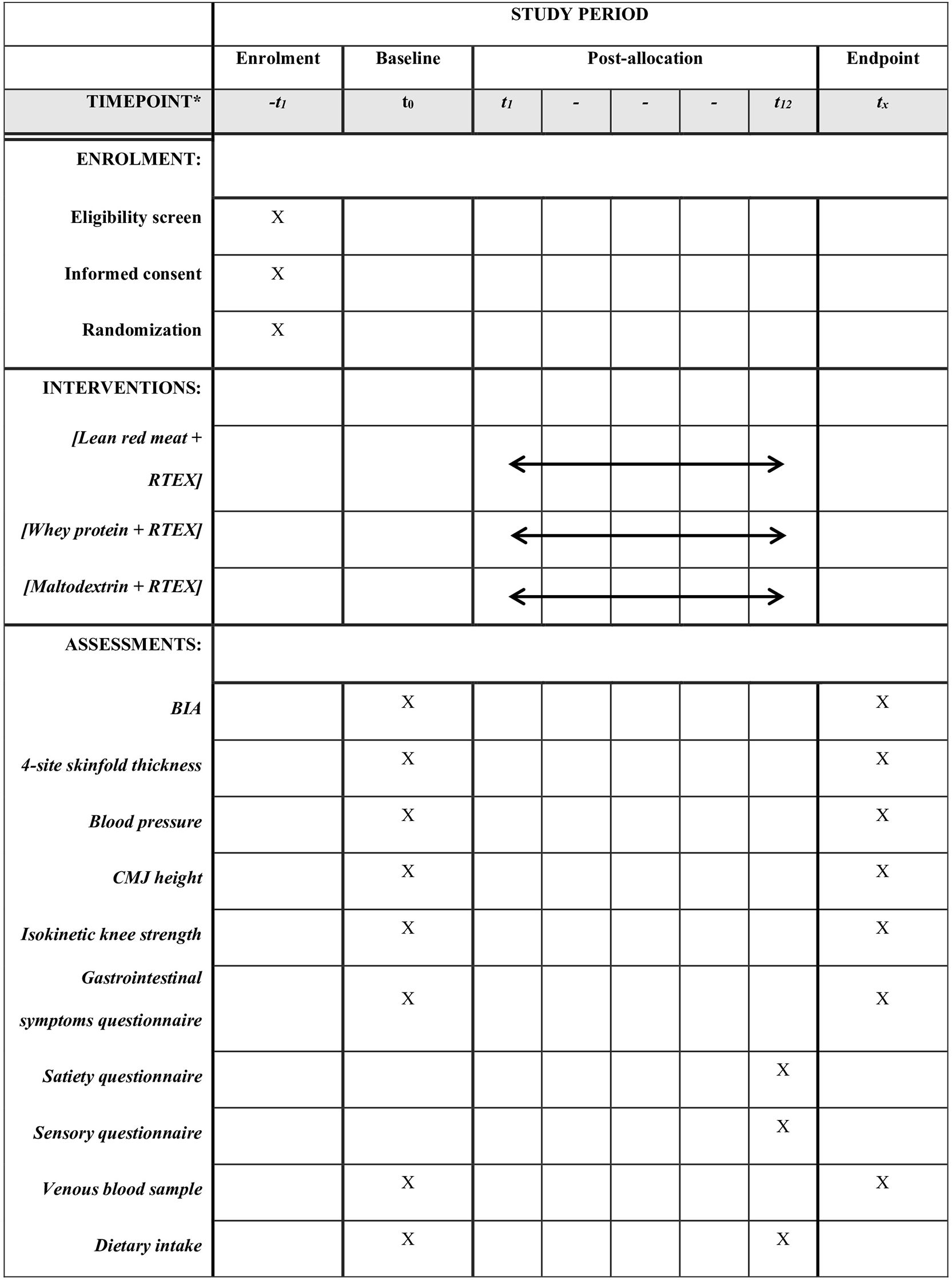
*Time-points of the protocol: -t1, enrolment; t0, baseline; t1, intervention week 1; t12, intervention week 12; tx, endpoint. RTEX, resistance exercise; BIA, bioelectrical impedance analysis; CMJ, Countermovement Jump.
Phase 1: A one-week period where the study’s baseline visit will be conducted with assessments as outlined in Figure 1. On a separate day, participants will attend a resistance exercise familiarization visit. A 3-day weighed food diary will also be completed during this week.
Phase 2: A 12-week intervention period where participants will engage in resistance training three days per week and consume their assigned study treatment on each of these three days only. During week 12 of the intervention period satiety and sensory outcomes will be measured and dietary intake will be reassessed.
Phase 3: A one-week post intervention period during which all measures taken during phase one will be repeated apart from the dietary intake assessment during the study’s endpoint visit.
Resistance training intervention
The American College of Sports Medicine guidelines39 for resistance exercise in novice weightlifters were used to determine the frequency, intensity, time and type of exercise. Participants will undertake three weekly sessions for a total of 12 weeks. Participants will be instructed to complete 5 minutes of light aerobic exercise of their choosing on a treadmill, stationary bicycle or cross-trainer (corresponding to an intensity of between 3 and 5 on a 10-point RPE scale) as an initial warm up prior to every session. All sessions will include three sets of the same 7 machine-based resistance exercises focusing on the major muscle groups: leg press, leg extension, leg curl, shoulder press, seated row, chest press, and lateral pulldown. The initially prescribed weight for each exercise will be determined during the participants’ familiarization visit, which will be supervised by a qualified strength and conditioning coach. The participant will be prescribed a weight that they can lift for 8 repetitions with good technique for 3 sets with approximately 90 seconds rest in between. The number of repetitions will be increased every 4 weeks from 8 to 10 to 12. As the participant progresses and gets stronger, they will be advised to increase the weight being lifted for each exercise by 2–10% where necessary to ensure the working intensity remains in the 70–85% of 1RM range as recommended.39 Participants will have access to their own personalized training program through the Teambuildr platform (Teambuildr, LLC); which will allow a member of the research team to upload each participants program, monitor their progress and record their exercise session compliance (in addition to sign-in sheet at the gym). Aside from the initial familiarisation session, other exercise sessions will not be supervised although qualified staff will be present to assist if needed. A minimum of 80% compliance with the resistance training program will be required for inclusion in any final analyses. Participants will be asked not to engage in any resistance exercise outside of the study; they may engage in aerobic exercise such as walking or cycling.
Isokinetic muscle strength
Isokinetic lower limb strength will be measured using an isokinetic dynamometer (Biodex system 3 pro) by a qualified exercise physiologist in a laboratory setting.40 The protocol will assess unilateral knee extension and flexion strength in the dominant leg only. The isokinetic strength test will be carried out following a standardized 5-minute warm up on a stationary bike. A warmup on the isokinetic dynamometer will also be performed involving 10 repetitions at increasing intensity from 10–100%. Following this the participants will complete 3 sets of 3 repetitions (at maximum voluntary contraction) of knee extension and flexion at a fixed angular velocity of 60 degrees per second.
Body composition
Multi-frequency bioelectrical impedance analysis (Fresenius Medical Care Body Composition Monitor 2BJA2481) will be used to assess changes in fat mass and fat-free mass from baseline to endpoint. Participants will be instructed to refrain from consuming caffeine for 12 hours and alcohol 24 hours before the measurement. They will also be instructed to avoid vigorous physical activity for at least 8 hours prior to the test and not to eat or drink within 4 hours prior to the test.
Body fat percentage
A 4-site skinfold measurement will be assessed by an experienced researcher with expertise in antropometric assessment and using a standardized approach.41 Body fat percentage will be predicted from the 4-sites using the Durnin and Womersley equation.42
Countermovement jump height
Maximum vertical jump height will be recorded using the Leonardo Mechanograph force plates (Leonardo Mechanograph GRFP STD).43 A standardized warmup consisting of 5 minutes cycling on a stationary bike (at an RPE of 11–13 on the Borg scale44) followed by 6–10 practice jumps will be completed. Once the correct technique has been established, a minimum of 3 maximum jump efforts will be recorded with 60 seconds rest between each effort.
Blood pressure
Following a period of rest, blood pressure will be measured at baseline and endpoint using a digital blood pressure monitor (Omron M7, Omron Healthcare ltd.). The measurement of blood pressure will allow for the assessment of whether increased red meat consumption increases blood pressure as previous research has speculated it may.45
Nutritional status
A fasted venous blood sample (~20 ml) will be taken at baseline (week 0) and endpoint by a suitably qualified and experienced nurse to measure select biomarkers of micronutrient status, blood lipids and measures of inflammation. The micronutrient status biomarkers to be assessed include serum ferritin, zinc, vitamin B12, vitamin A and 25-hydroxyvitamin D. Blood samples will be processed to serum/plasma within two hours of collection, stored at −80∘C, and analysed in a clinical laboratory using standard techniques.
Dietary intake
Dietary intake will be assessed using a 3-day weighed food and drink diary during both the baseline visit (week 0) and during the final week of the intervention (week 12) to account for differences in dietary intake. During week 12, assessment will include at least one training day and at least one non-training day. The data will be transferred to Nutritics by a blinded member of the research team who will employ a standardized approach for making decisions when information is missing or incomplete. Routine quality checks will be carried out to ensure data has been correctly entered in Nutritics.
Questionnaires
Gastrointestinal symptoms will be assessed using the Structured Assessment of Gastrointestinal Symptoms (SAGIS) Questionnaire46 at baseline and endpoint. Sensory characteristics of study dietary interventions will be assessed using a 9-point hedonic questionnaire that asks participants to rate the appearance, color, flavor, texture, aroma and overall liking of the study treatment product from ‘liked extremely’ to ‘disliked extremely’. Participants will be asked to complete this questionnaire within 30 to 60 minutes after consuming their final serving of the study treatment in week 12 of the intervention. Finally, satiety following ingestion of study interventions will be assessed using the Satiety Labelled Intensity Magnitude (SLIM) questionnaire47 30–60 minutes after awakening (and before eating) in the morning and again 30–60 minutes following ingestion of the study treatment.
This study will be subject to audit from the UCC Sponsors Office at the University College Cork to ensure it is being conducted in line with the approved study protocol. Anticipated adverse events may include ligament sprains or muscle strains. To reduce the risk of serious injuries relating to the exercise intervention machine-based exercises which require less familiarization will be prescribed over free weight exercise.39 Additionally, a qualified strength and conditioning coach will ensure participants have the correct setup and technique for each of the exercises during their familiarization visit. Adverse events related to the nutritional interventions are unlikely as they are all commercially available products. Any adverse events that occur will be recorded in an adverse events log and reported when the study findings are disseminated. If a blood pressure reading is excessively elevated, participants will be advised to visit their medical physician.
The participants pseudonymized data will be entered into a modified Microsoft Excel spreadsheet. This spreadsheet will serve as the study master database, and the final version will be exported to SPSS (IBM Corporation, Version 29.0.2.0) at the end of the trial for data and statistical analysis. Random quality checks will be carried out on manually entered data to minimize the occurrence of errors. A separate sheet linking participants’ names with their ID numbers will be stored on an encrypted server, only accessible by the Principal Investigator of the study. A ‘per protocol’ analysis will be carried out on data from participants who are at least 80% compliant with both the RTEX and nutrition intervention. SPSS software will be used to generate descriptive statistics and to examine baseline characteristic differences between each of the groups. Additionally, temporal mean differences within and between group outcomes from baseline to post-intervention will be analysed using t-tests (or Wilcoxon Signed Ranked) and an ANOVA. Post Hoc tests will be performed where appropriate. Compliance with the exercise and nutritional interventions will be monitored throughout the study to minimize missing data. If outcome data for participants is unavailable, the reasons for missing data will be recorded and reported. De-identified participant data will be made available upon request following publication of the study findings.
The whole food matrix may have the potential to amplify RTEX adaptations beyond that of isolated protein sources alone.25,26 To date, however, high-quality RCT’s in this area have been lacking. The present RCT is designed to provide evidence as to whether lean beef is an effective nutritional intervention for augmenting adaptations to RTEX in young healthy adults. This study will also aim to address some of the more notable limitations in previous studies, namely the lack of placebo/energy-matched control groups, under reporting of the macro- and micronutrient compositional data for the nutrition interventions, short treatment periods (8 weeks) and inadequate sample sizes.32,35
Trials without an active control group are generally considered to provide only weak evidence as it’s not possible to conclude that any effect observed would not have occurred in lieu of the intervention.48 The proposed study will have two control conditions: one group receiving an isocaloric, isonitrogenous intervention (whey protein) and the other receiving an isocaloric intervention (maltodextrin). Having an isonitrogenous control will enable this study to examine whether the specific source of protein impacts adaptation to RTEX or if protein affects adaptation equally irrespective of source. Additionally, having an isocaloric control without protein allows investigation of whether any potential adaptations which occur are as a result of the RTEX and slightly increased energy intake independent of protein content. This will be a strength of this study compared to previous research.
Furthermore, the current study will measure and report a detailed compositional breakdown of the nutrition interventions that will be given to participants. This will include the content of macronutrients and key micronutrients including calcium, potassium, phosphorus, iron, zinc and vitamins B6, B12, D3. There is potential for co-ingested nutrients to interact with each other and confer additional benefit to MPS25 and long term RTEX adaptations26,49 beyond what is expected from isolated protein sources alone. Therefore, understanding the complete nutrient profile of the nutrition interventions will provide important context that may contribute to our understanding of nutrient-nutrient interactions within wholefood sources. Additionally, understanding precisely what was administered to the experimental group in these studies is essential for any researchers attempting to replicate the study. This is an important issue in sports science research broadly speaking as only 28% of findings from studies in the field appear to be reproducible.50
The current study will implement a 12-week intervention which is longer than the 8-week interventions that have been previously employed in studies on young adults.32,35 Lean tissue accretion is a long-term adaptation to RTEX which occurs very gradually.51 Therefore, it’s likely that a longer timeframe is required to achieve measurable outcomes, especially when aiming to identify potentially small differences between groups. This is particularly true when dealing with participants who don’t have previous RTEX experience as lean tissue accretion is almost non-existent in the early stages of RTEX.51
Finally, this study also aims to recruit more participants than have been included in previous studies. The average sample size for previous studies examining the benefit of beef supplementation on RTEX adaptation in young adults (35 and under) was 12 participants per group.30 Our sample size calculation suggests that at least 19 participants per group is necessary to adequately power statistical analysis. We will actively aim to recruit a minimum of 72 participants in total with the goal of achieving a final sample of 19 or more in each of the 3 groups. Sample size calculations have often not been employed in sports nutrition research which has contributed to the under-powering of many studies,52,53 making results less reliable and contributing to a much larger issue around replication.50,54,55
Although all assessors and data analysts will be blinded to which nutritional intervention each participant is receiving, it is likely that the intervention group receiving the lean beef will be aware of what they are consuming due to the nature of the product. This is an unavoidable limitation of this type of research using wholefood products. To minimize the risk of bias, participants will not be informed of what any of the intervention products are, only that the study is investigating the impact of different sources of protein on adaptation from RTEX. Participants will also not be informed which group they are assigned to and will be asked not to discuss their nutritional product with anyone. The distribution of the nutrition interventions will be carried out by a member of staff not involved in the assessment of outcomes or analysis of data.
While dietary habits will be monitored at baseline and during the intervention itself using 3-day weighed food diaries, it’s notable that there may be significant variability between and within individual participants diets. Participants will be encouraged to maintain their usual diet throughout the study including during the 3-day food diary measurements to reduce the likelihood that radical changes in diet may affect outcomes. This approach, however, won’t control for the potential of whole food matrices within the participants habitual diet to interact with each other and the nutrition intervention, conceivably affecting the outcomes of the study. This is a limitation of the study design that must be taken into consideration when interpreting the results.
The findings of the study will be published in peer-reviewed journals once the trial is complete and results generated. Findings will also be presented at conferences and made accessible to the public through social media posts and forums.
All amendments to the study protocol will be first approved by the relevant ethics committee prior to implementation. Amendments will also be reflected in the corresponding Clinicaltrials.gov registration. The study may be terminated prematurely if any of the procedures pose unacceptable risk to participants. The decision to terminate the study will be made by the Principal Investigator in consultation with the research team and, where appropriate, the research ethics committee.
Provide sufficient details of any financial or non-financial competing interests to enable users to assess whether your comments might lead a reasonable person to question your impartiality. Consider the following examples, but note that this is not an exhaustive list:
Sign up for content alerts and receive a weekly or monthly email with all newly published articles
Register with HRB Open Research
Already registered? Sign in
Submission to HRB Open Research is open to all HRB grantholders or people working on a HRB-funded/co-funded grant on or since 1 January 2017. Sign up for information about developments, publishing and publications from HRB Open Research.
We'll keep you updated on any major new updates to HRB Open Research
The email address should be the one you originally registered with F1000.
You registered with F1000 via Google, so we cannot reset your password.
To sign in, please click here.
If you still need help with your Google account password, please click here.
You registered with F1000 via Facebook, so we cannot reset your password.
To sign in, please click here.
If you still need help with your Facebook account password, please click here.
If your email address is registered with us, we will email you instructions to reset your password.
If you think you should have received this email but it has not arrived, please check your spam filters and/or contact for further assistance.

Comments on this article Comments (0)