Keywords
Type 1 diabetes; young adults; complex intervention; process evaluation; mixed methods; fidelity

Type 1 diabetes; young adults; complex intervention; process evaluation; mixed methods; fidelity
Young adulthood (18–25 years) can be a time of transition and upheaval. For young adults living with type 1 diabetes (T1D), this life stage of rapid social and personal change presents a challenging intersection with the demands of self-management. As a result, young adults living with T1D experience unique self-management challenges, higher blood glucose levels, higher distress, and reduced clinic attendance when compared to other age groups with the same condition1–9.
The D1 Now study aims to address these gaps with a complex intervention that is specifically designed to support young adults with T1D. Building on a theory, evidence and user-centred programme of work, the D1 Now team have developed and refined a two-component intervention (Agenda-Setting Tool and Support Worker), while working closely with a Young Adult Panel (YAP) of people living with T1D10,11. The resulting two-component intervention combines a Support Worker, who provides continuity and helps young adults navigate the diabetes clinic system, with an Agenda Setting Tool that structures consultations around the priorities of the young person. Together, these components aim to make care more responsive to the realities of emerging adulthood, where life circumstances and self-management demands are constantly evolving. A pilot cluster Randomised Controlled Trial (RCT) demonstrated the feasibility and acceptability of this approach, underlining the importance of keeping lived experience central to intervention design12–14. The definitive D1 Now RCT is now underway, testing the effectiveness of the intervention versus standard care across 12 diabetes centres in Ireland. The RCT aims to recruit 348 young adults aged 18–25 years living with T1D. Centres are randomised to deliver either standard care or the D1 Now intervention. The primary outcome is change in HbA1c between baseline and 12-month follow-up, with secondary outcomes including psychosocial wellbeing, self-management behaviours, and healthcare utilisation. These outcomes have been selected in line with a Core Outcome Set15. Data are collected through blood samples, online surveys, and patient records at baseline and 12 months.
Recent guidance proposes that investigating how complex interventions are implemented and why they succeed or fail is as important as evaluating whether they work16. The Medical Research Council (MRC) recommends conducting a process evaluation alongside effectiveness evaluations for this reason17. According to the MRC guidance, a process evaluation typically examines implementation domains such as fidelity (what is delivered, and how faithfully), reach (whether and how the intended audience comes into contact with the intervention), mechanisms of impact (how the intervention’s activities and resources produce change), and context (how external factors influence implementation and outcomes)17. This becomes particularly critical in pragmatic, multi-site trials, where interventions are shaped by variation in services, staffing, and patient circumstances, leading to likely heterogeneity in delivery and outcomes. Without process evaluation, findings risk being interpreted without an understanding of whether the intervention was implemented as planned. By using both qualitative and quantitative methods, process evaluation provides a more comprehensive picture of how an intervention works across different settings, explains variations in outcomes, and informs decisions about replication, adaptation, and scale-up18,19.
The main D1 Now RCT protocol provides a comprehensive account of the study design, including the rationale, recruitment strategy, intervention description, outcome measures, and statistical analysis plan20. It also provides a brief insight into trial governance, data management and plans for health economic evaluation. This process evaluation protocol sets out the plan for how we will examine implementation, participant and staff experiences, and the contextual factors that influence delivery and outcomes. It complements the main trial protocol by providing detailed methods for the process evaluation.
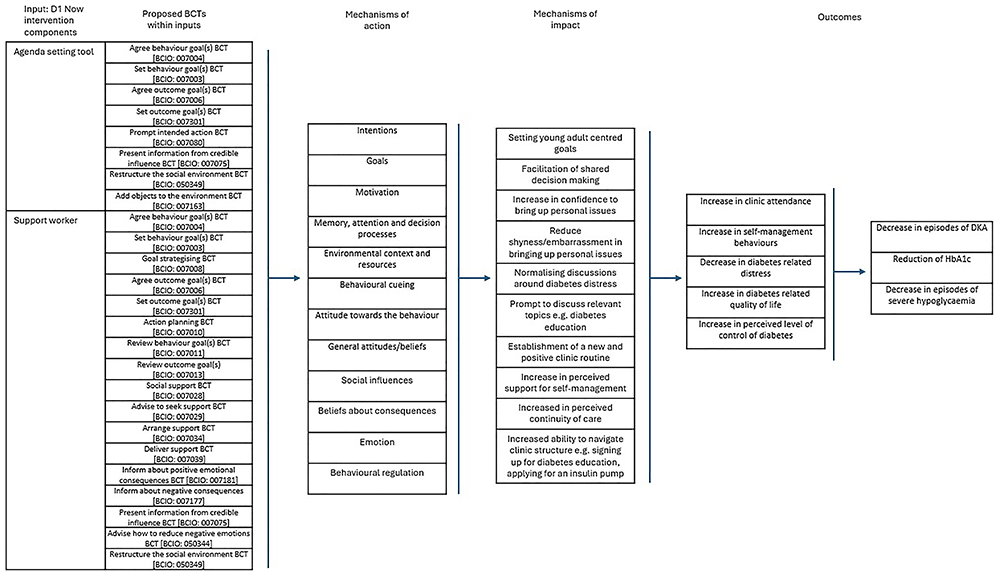
The programme theory for the intervention is summarised in the D1 Now logic model (Figure 1). The model was first developed during the systematic, user-centred intervention development process reported previously10, using the Behaviour Change Techniques Taxonomy v121 to specify the active components and proposed mechanisms of action. Following the pilot cluster RCT, the model was refined to reflect findings from the feasibility work and updates to the intervention components. The revised logic model applies the latest Behaviour Change Intervention Ontology (BCIO) framework22 to clearly map the relationships between intervention functions, mechanisms, and outcomes. It illustrates how the Agenda-Setting Tool and Support Worker are expected to influence proximal mechanisms such as engagement with care, self-efficacy, shared decision-making, and therapeutic alliance, which are hypothesised to lead to improved clinical and psychosocial outcomes for young adults with T1D. Embedding this refined logic model within the process evaluation allows us to test these hypothesised pathways and further develop our understanding of how the intervention works in practice.
The overarching aim of this process evaluation is to explain how the D1 Now intervention is implemented in practice, how it is experienced by young adults and clinic teams, and how contextual factors shape its effects in the definitive cluster RCT.
The specific objectives are to:
1. Describe implementation across sites, including reach and fidelity to core functions.
2. Assess acceptability and feasibility of the intervention for young adults and healthcare professionals, and identify barriers and facilitators at individual, clinic, and system levels.
3. Examine the hypothesised mechanisms of impact outlined in the programme theory and consider their role in mediating outcomes.
4. Document RCT processes (screening, recruitment, retention) and contextual variation that may influence delivery, uptake, and equity of engagement across diverse groups of young adults.
5. Integrate process and outcome data to interpret RCT findings, explain heterogeneity between sites, and generate practical guidance for optimisation, sustainability, and scale-up if effectiveness is demonstrated.
This is a mixed-methods process evaluation embedded within the definitive D1 Now cluster RCT. The evaluation will run in parallel with the trial and use a convergent design, triangulating quantitative and qualitative data to capture a comprehensive picture of how the intervention is delivered, received, and experienced23. The approach is guided by the MRC framework for process evaluations of complex interventions16,17 and a specific framework designed to guide design and reporting of process evaluations of cluster RCTs18.
All results will be reported using appropriate guidelines (e.g. Consolidated criteria for reporting qualitative research (COREQ)for qualitative data24).
The D1 Now RCT has been prospectively registered on ISRCTN (ISRCTN28944606) and a full RCT protocol is available20. The SPIRIT 2013 checklist and flow diagram are reported for the main D1 Now cluster RCT protocol20; the present manuscript focuses on the embedded process evaluation and therefore does not duplicate full trial-level SPIRIT reporting.
The process evaluation will be conducted across all sites participating in the D1 Now definitive RCT.
The trial is delivered using a structured infrastructure designed to support consistency and fidelity across sites. This includes centralised training for Support Workers and clinic teams, alongside participant orientation to the Agenda Setting Tool. The trial team uses standard operating procedures and templates from the local Clinical Research Facility to guide key processes such as site activation, delegation logs, training documentation, quality monitoring, and data handling. These structures form part of the implementation context and provide a documented record of how the intervention is delivered across sites.
All RCT participants will contribute to routine process data. A purposive subsample of young adults and staff from both intervention and control sites will be invited to take part in online, individual, semi structured qualitative interviews via MS Teams after the 12-month follow-up. This will be during the three months period following the last clinical visit of the participants. Maximum variation of the sample will be targeted to identify diverse experiences of participants from different age, gender, clinic locations. Inclusion of participants from both RCT arms will allow comparison of experiences of care and RCT participation.
Sample size for the qualitative interviews will be guided by data adequacy. To ensure inclusion of participants from the intervention sites, the number of interviews are estimated as follows: six young adults from six intervention sites (36 in total), three young adults from six control sites (18 in total), four healthcare staff including support workers from three intervention sites (12 in total), and three healthcare staff from three control sites (9 in total).
Process evaluation data collection focuses on four domains:
1. Implementation: how the intervention and RCT processes are delivered, including fidelity. This will be assessed using RCT documentation, training records, and structured fidelity checklists, complemented by qualitative interviews with young adults, Support Workers, and clinic staff to explore adaptations in practice.
2. Mechanisms of impact: whether the hypothesised mediators of change (such as self-efficacy, shared decision-making, and engagement with care) are activated. This will be examined using a 10-item questionnaire administered at baseline and 12 months, co-developed with the Young Adult Panel and based on the programme theory (Figure 1). This measure captures hypothesised mediators. Clinic attendance data and qualitative interviews will provide additional insight into whether the pathways in the logic model were activated.
3. Context: how local factors at clinic, team, and system levels influence delivery and outcomes. These will be explored through site-level characteristics and variations in recruitment and retention rates, as well as interviews with staff, Support Workers, and young adults across intervention and control sites to understand organisational, systemic, and individual factors.
4. Acceptability and feasibility: how young adults and staff perceive the intervention and its integration into care. This will be assessed through training feedback, fidelity checklists, and post-intervention interviews with participants and staff, exploring perceptions of usefulness, sustainability, potential for integration into routine care and unintended consequences.
See Table 1 for data collection details.
The qualitative data will be collected using semi-structured interview guides (Appendix 1), developed based on the components of the D1 Now logic model.
Data sources and timing for each domain are outlined in Table 1.
Following the convergent parallel mixed-methods design, the qualitative and quantitative data will be collected simultaneously and analysed individually.
Quantitative analysis
Process data will be summarised descriptively. Fidelity measures will be reported as proportions and averages, both overall and by site. Recruitment, retention, and reach will be presented using CONSORT-style reporting. Mechanism questionnaire scores will be compared within and between arms from baseline to follow-up.
Qualitative analysis
The qualitative data will be performed using inductive reflective thematic analysis following Braun and Clarke’s six steps25. NVivo 20 software will support the data analysis. The interviews will be recorded with the participants’ consent and transcribed verbatim. The researchers will familiarise themselves with the data and generate notes. The data will then be coded systematically, and initial themes will be developed from the coded and collated data. The themes will be developed and reviewed by the research team, which will then further refined, defined, and named accordingly. A comprehensive report will be prepared including direct quotes from the participants.
Integration
Quantitative and qualitative findings will be brought together using a triangulation protocol. A concurrent triangulation strategy will be followed to ensure that both datasets are integrated to inform and complement each other23. Convergence and divergence across data sources will be examined to generate explanatory insights into how and why the intervention was implemented as observed and how this shaped outcomes.
The D1 Now intervention was co-designed with young people – the D1 Now Young Adult (YAP)1. The YAP, established in 2014, is composed of young adults living with T1D and has contributed to all stages of the programme of work26. For process evaluation specifically, the YAP has advised on the design and wording of the mechanisms of impact questionnaire to ensure it is relevant and accessible to young adults. They will also provide feedback and advice on the drafts of the interview topic guides for the qualitative component of the evaluation, helping to ensure that the questions reflect young adults’ priorities and experiences. In addition, members of the YAP will be involved in qualitative data analysis by contributing to the interpretation of themes, enhancing the validity and relevance of findings.
This study will be conducted in accordance with the Declaration of Helsinki. As this is a study protocol submitted prior to the commencement of any research activities, ethics approvals are being obtained through the required multi-site process. At the time of submission, full approval has been granted by three Research Ethics Committees (St Vincents Healthcare Group Research Ethics Committee – reference number RS25-039; Galway Clinical Research Ethics Committee – reference number CA339; HSE Reference Research Ethics Committee Dublin & Midlands Health Region and HSE Centre Studies - reference number RRECB0125S), covering nine of the twelve participating centres. These approval letters have been uploaded to our OSF repository (DOI: 10.17605/OSF.IO/TUYGW).
Approval for the remaining three centres is currently under review by the relevant RECs. No participant recruitment, data collection, or contact with potential participants will occur at any site until full approval has been issued. REC names, approval dates, and reference numbers will be added to the OSF repository as soon as additional approvals are received.
Consent for publication is not applicable to the protocol. Participants will provide written informed consent for the use of their anonymised data and quotes in resultant publications. Data will be stored securely and pseudonymised to protect the participants’ identity. The European Union General Data Protection Regulations (2016) will be strictly adhered to.
Findings will be disseminated through open-access peer-reviewed publications, conference presentations, and lay summaries co-produced with the D1 Now Young Adult Panel. Extended data (e.g., case report form, recruitment materials) will be deposited in an open repository under a CC-By license - osf.io/qyw3p
This study is prospectively registered with the ISRCTN registry (ISRCTN28944606; DOI: 10.1186/ISRCTN28944606). The study was submitted on 11 February 2025 and formally registered on 17 February 2025. Recruitment is expected to begin in May 2026 and conclude in September 2026, with follow-up to October 2027.
This process evaluation will provide essential insights into how the D1 Now cluster RCT and intervention is delivered, received, and experienced in routine diabetes clinic settings. By combining quantitative measures of fidelity, reach, and mechanisms with qualitative exploration of acceptability, feasibility, and contextual influences, we will generate a rich understanding of the processes underlying the RCT outcomes.
The inclusion of both intervention and control sites strengthens the evaluation by providing an additional perspective, highlighting differences in usual care and potential sources of contamination. In addition, purposive sampling of young adults and clinic staff will allow us to capture diverse perspectives, including those who may be less engaged with the intervention, ensuring that barriers and facilitators to delivery are fully documented.
A key strength of this process evaluation is the involvement of the D1 Now Young Adult Panel, who have shaped the development of measures and will contribute to the interpretation of findings. Their lived experience will help ensure that conclusions remain grounded in the realities of young adult diabetes care. A potential limitation is recall bias, as qualitative interviews will be conducted after trial completion. Additionally, the mechanisms of impact questionnaire is a bespoke tool developed for this study and, while grounded in the programme theory and co-designed with young adults, it has not yet been psychometrically validated. In addition, variation in resources and staffing across sites may contribute to heterogeneity in implementation and participant experience, this will be carefully explored in the analysis.
Ultimately, the findings will inform the interpretation of the definitive RCT results, clarifying whether outcomes reflect intervention effectiveness, implementation fidelity, or contextual factors. They will also provide practical guidance for optimisation and scale-up, should the intervention prove effective, or highlight areas for adaptation if outcomes are mixed. This evaluation will therefore be critical for determining the potential of D1 Now to be integrated into routine care and to improve outcomes for young adults with T1D.
Provide sufficient details of any financial or non-financial competing interests to enable users to assess whether your comments might lead a reasonable person to question your impartiality. Consider the following examples, but note that this is not an exhaustive list:
Sign up for content alerts and receive a weekly or monthly email with all newly published articles
Register with HRB Open Research
Already registered? Sign in
Submission to HRB Open Research is open to all HRB grantholders or people working on a HRB-funded/co-funded grant on or since 1 January 2017. Sign up for information about developments, publishing and publications from HRB Open Research.
We'll keep you updated on any major new updates to HRB Open Research
The email address should be the one you originally registered with F1000.
You registered with F1000 via Google, so we cannot reset your password.
To sign in, please click here.
If you still need help with your Google account password, please click here.
You registered with F1000 via Facebook, so we cannot reset your password.
To sign in, please click here.
If you still need help with your Facebook account password, please click here.
If your email address is registered with us, we will email you instructions to reset your password.
If you think you should have received this email but it has not arrived, please check your spam filters and/or contact for further assistance.

Comments on this article Comments (0)