Keywords
Cognition, traumatic brain injury, homeless, magnetic resonance imaging, biomarker

Cognition, traumatic brain injury, homeless, magnetic resonance imaging, biomarker
Homelessness is an escalating crisis worldwide and rates are increasing in both the Global North and South, including within the European Union,1 North America,2,3 Latin America4 and South East Asia.5 The prevalence of homelessness is similarly rising in Ireland, and the most recent data (published in November 2025) reporting the highest number of people living in homelessness in Ireland since records began.6 Homelessness results in chronic stress,7–9 and is associated with immune dysregulation,9 high levels of medical multimorbidity10 and early mortality11: in a 2024 report on deaths among people experiencing homeless (PEH) in Ireland, the median age at death was 42 for men and only 36.5 for women.12
Numerous previous studies have suggested that PEH experience cognitive impairment (CI) at a higher rate than the housed population. A 2015 quantitative review of cognitive function in homeless adults pooled data on rates of CI amongst PEH from 16 studies, giving a 25.4% prevalence of CI.13 However, large variability in the prevalence of CI in different populations of PEH has been reported, with estimates ranging widely from 1.7% to 92.9%, depending on the population studied and the tests used.14,15 Moreover, the majority of studies investigating cognition in PEH have used screening tools alone, such as the Mini-Mental State Examination (MMSE) or the Montreal Cognitive Assessment (MoCA).13 Fewer studies have investigated domain-specific patterns of CI amongst PEH. Whilst there is some evidence to suggest that PEH often have particular deficits in frontal-executive functioning and episodic memory, this finding has also been attributed to the application of inappropriate normative data as a comparator, resulting in over-estimation of these deficits amongst PEH.16–18 Additionally, no cognitive study performed to date has attempted to measure neurodegenerative biomarkers in PEH.
There is evidence to suggest that PEH experience high rates of traumatic brain injury (TBI). A 2020 systematic review and meta-analysis aimed to evaluate the lifetime prevalence of TBI amongst PEH.19 Authors included 22 studies in the meta-analysis, and identified a lifetime prevalence of any severity TBI amongst homeless and marginally housed individuals of 53.1%, and a lifetime prevalence of moderate or severe TBI of 22.5%.19 However, few studies have investigated the association between TBI and measured CI amongst PEH, or have attempted to describe the lifelong experience of TBI, including repetitive head impacts (RHIs) amongst PEH.
Despite the high prevalence of CI amongst PEH, in addition to the high lifetime prevalence of TBI experienced by this group, the neuroanatomic correlates of these amongst PEH have been investigated in comparatively few cohorts. Indeed, the majority of published neuroimaging studies amongst PEH were published from imaging data obtained on the same 312 participants recruited to the Hotel Study.20–26 There is some evidence regional brain volume reductions amongst PEH, particularly amongst PEH with a history of TBI.23,24,27 However, the regions in which volumes were found to be reduced amongst PEH have differed between studies.24,27
There is evidence of Chronic Traumatic Encephalopathy (CTE) amongst PEH, in the absence of the traditional sports-related and military RHI exposures described in other cohorts with CTE.28 The clinical syndrome associated with CTE neuropathology is Traumatic Encephalopathy Syndrome (TES), which features the development of progressive CI particularly affecting frontal-executive and episodic memory function, consistent with the pattern of impairment often reported amongst PEH as described above.29 However, no previous study has attempted to investigate if CTE may be driving the high prevalence of CI seen in PEH. No study has investigated the prevalence of TES in a population of PEH, and nor has blood-brain barrier (BBB) dysfunction, a hallmark neuropathology associated with CTE, previously been investigated amongst PEH.30
This study aims to estimate the prevalence and describe the domain-specific neuropsychological characteristics of cognitive impairment among PEH in Ireland, and to compare cognitive performance with both population normative data and a matched housed control group. The study further aims to characterise participants’ lifetime exposure to TBI and RHI. Additionally, it aims to examine associations between cognitive impairment and measures of brain structure, fluid biomarkers of neurodegeneration, and multimodal assessments of blood–brain barrier integrity, in order to explore potential biological correlates of cognitive impairment in PEH. Finally, this study aims to assess the proportion of participants with a phenotype suggestive of CTE based on the TES criteria and supporting BBB fluid biomarker and neuroimaging assessments.
The core hypotheses are as follows:
• Cognitive impairment will be more prevalent amongst people experiencing homelessness (PEH) than is seen in the population normative and control participant data, and domain-specific deficits in cognitive performance will be seen in PEH, featuring prominent frontal-executive dysfunction.
• PEH will demonstrate a high rate of traumatic brain injury, including repetitive head impacts, which begin prior to their first experience of homelessness and continue whilst they live in homelessness, and association will be identified between participants’ experience of head injury and their cognitive performance.
• Differences in global-, tissue- and region-specific brain volumes and blood-brain barrier function will be identified between PEH and matched housed controls, and these measures will be associated with fluid biomarkers of neurodegeneration and their cognitive performance.
The research questions which will be addressed through this study are as follows:
1. What is the prevalence of cognitive impairment amongst PEH in Ireland, and how does it compare to that which is seen in population normative data and a matched housed control group?
2. What domain-specific pattern of impairment is seen amongst PEH in Ireland, and how does it compare to that which is seen in population normative data and a matched housed control group?
3. What is the lifetime prevalence of concussion, exposure to repetitive head impacts and traumatic brain injury amongst PEH in Ireland?
4. Do neuroimaging measures differ between PEH and matched housed controls, and are these associated with cognitive performance and exposure to TBI/RHI?
5. Do fluid biomarkers of neurodegeneration differ between PEH and matched housed controls, and are these associated with cognitive performance, neuroimaging measures and exposure to TBI/RHI?
6. Do the vascular risk profiles of PEH and control participants differ, and how are these associated with neuroimaging markers of vascular disease?
7. Are there differences in perceived stress, well-being and resilience and experience of childhood adversity between PEH and control participants, and are these associated with their cognitive performance?
8. Does the prevalence of frailty, sarcopenia and other age-associated conditions differ between PEH and matched housed control participants?
9. What proportion of PEH included in the study meet research diagnostic criteria for TES?
This study comprises an exploratory cross-sectional observational study of cognitive function and its neuroimaging and biomarker associations in long-term homeless adults (LTHAs). A population-representative cohort of adults in long-term homelessness will be recruited from the community in Dublin, Ireland, to undergo a series of structured biopsychosocial and cognitive assessments and will be invited to provide blood samples and undergo contrast-enhanced brain Magnetic Resonance Imaging (MRI). A control sample of housed adults will be recruited from staff working in homeless services. Controls will be matched on a 1:2 basis to an LTHA that has completed the study protocol based on age, sex and educational attainment. Controls will complete an aligned assessment protocol, including structured biopsychosocial and cognitive assessments, blood sampling and brain MRI and will serve as a housed comparison group.
A study Public and Patient Involvement (PPI) group of five people with lived experience of homelessness was formed in collaboration with Depaul Ireland. The study PPI group have diverse socioeconomic backgrounds, educational attainment and experience of homelessness in Ireland. A programme of regular, subsidised meetings was devised, spaced over the course of the study to ensure ongoing PPI input into the study protocol, the first of which was held early in the initial study design phase. At this meeting, the PPI group provided expertise formed through their lived experience on the study design, informing the recruitment methodology, location of assessments and assessment measures selected. The PPI group also reviewed the study documentation to ensure that it is accessible and acceptable to the target LTHA study population.
Potential participants in homelessness will be identified through gatekeeper organisations, comprising the principal homeless service providers in Ireland: Depaul Ireland, Focus Ireland, the Peter McVerry Trust, Novas and Crosscare. Information on the study, including the eligibility criteria ( Table 1) and assessment protocol will be disseminated to gatekeeper organisation staff and directly to potential participants through presentations at gatekeeper organisation staff meetings and presentations in the service common areas. Staff and potential participants will then be given the opportunity to ask questions about participation in a no-obligation setting, in which the power differential between the study team and potential participants is minimised. Telephone and email contact details will be disseminated to gatekeeper organisation staff and potential participants, facilitating referral of potential participants for assessment.
| Inclusion criteria | Exclusion criteria |
|---|---|
| Age of 18 years or greater. | Previously identified intellectual disability requiring additional support at school. |
| ETHOS1 category one to three. | Significant current psychiatric symptomatology (MCSI score of >30). |
| More than six months in total of life-long homelessness. | Alcohol intoxication (breath alcohol levels >22mcg/100 ml on breathalysation). |
| Fluent English Language Skills. | |
| Most recent use of a non-prescribed or illicit drug more than 24 h from assessment. | |
| Able to give written informed consent. |
Following referral, potential participants will be met on site at the referring gatekeeper location in a private location. They will be offered the presence of their keyworker for emotional support. Potential participants will then be screened using the eligibility criteria ( Table 1).
Control participants will also be recruited, comprising housed adults matched based on age, sex and educational attainment to an LTHA that has completed the study assessment protocol. Control participants will be recruited from staff working in the gatekeeper organisations, and thereafter via snowball sampling. Potential control participants will be considered eligible if they are aged over the age of 18 years, with fluent English language ability. Potential control participants will be excluded if they have previous experience of social exclusion (including homelessness and incarceration), a previous concussion or experience of repetitive head impacts or any current or previously identified central neurological disorder (such as stroke or multiple sclerosis). This will be done to ensure that the control group represent a neurologically healthy housed comparison group.
Eligible potential participants will be provided with the patient information leaflet (PIL) and consent forms, with the opportunity to have these read out loud offered. Participants’ ability to give informed consent will be assessed using an established teach-back method.31 In brief, participants will be provided with the study information (either by reading the study PIL or by having it read out to them). They will then be asked to repeat what they recalled and understood of the provided information, and their understanding will then be clarified and additional tailored information provided as necessary. The cycle will be repeated as needed to ensure that the study information was adequately understood, retained and weighed by the participant to facilitate communication of their informed consent. The rights of the participant to withdraw from the study at any time without giving a reason and without this affecting their future medical care, and to decline to participate in any component of the study of their choosing will be emphasised. The opportunity to ask questions will then be provided, and eligible potential participants will thus be asked to provide informed written consent to participate. A summary of the recruitment and assessment process is provided in Figure 1.
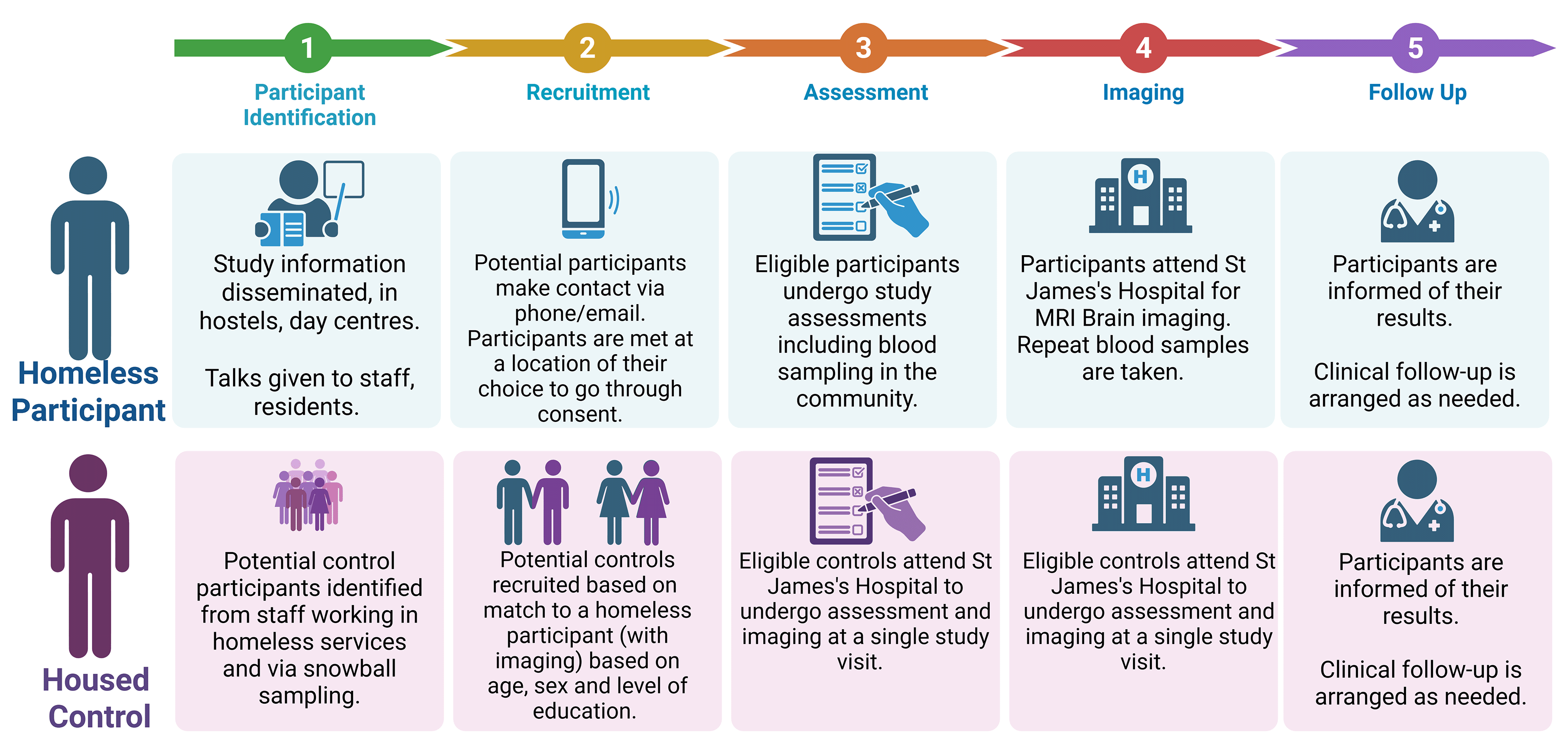
LTHA participants will undergo their clinical assessments, including phlebotomy, on site in the homeless service from which they were recruited. They will be offered the presence of their keyworker for emotional support during their assessment. After completion of their clinical assessment, participants will then be asked to attend St James’s Hospital, Dublin, to undergo repeat blood sampling and contrast-enhanced brain MRI. Imaging will be arranged within two weeks of the participant’s clinical assessment when possible. Taxis will be provided for the participant to travel to-and-from their imaging appointment, and they will be offered the presence of their keyworker for emotional support during this appointment.
Biopsychosocial assessment
LTHA participant sociodemographic, medical and life-history self-report data will be collected through clinical interview directly into a study-specific REDCap form. Data on participants’ medical and psychiatric history, smoking history, drug and alcohol use, education and employment history, housing history and forensic history will be collected. Their resting heart rate and blood pressure will be measured using an electronic blood pressure monitor. Their grip strength will be measured and recorded twice in each hand using a hand-held hydraulic dynamometer (JAMAR®), and their handedness will be documented. Participants will then be asked to complete a battery of validated biopsychosocial and cognitive assessments, as detailed in Table 2. This battery has been selected to test examine participants’ cognitive performance across neurocognitive domains, and is enriched to evaluate their frontal-executive performance in the most depth, as this is where the impairment has previously been identified most often in the published literature. This battery has been refined based on feedback from the study PPI group and expertise provided by a cognitive neurologist and a senior clinical neuropsychologist.
| Category | Measure | Data collected |
|---|---|---|
| Biopsychosocial Assessments | The Ohio State University Traumatic Brain Injury Identification Method (OSU TBI-ID)47 | Lifetime history of TBI |
| The FRAIL Scale48 | Screening assessment for frailty | |
| The Survey of Health, Ageing and Retirement in Europe Frailty Index (SHARE-FI)49 | Measurement of frailty | |
| The Rockwood Clinical Frailty Scale (CFS)50 | Clinician judgement assessment of frailty | |
| The Brief Resilience Scale (BRS)51 | Resilience score | |
| The Mental Health Continuum-Short Form (MHC-SF)52 | Social, psychological and emotional well-being | |
| The Perceived Stress Scale53 | Recent experience of stress | |
| The Adverse Childhood Experiences (ACEs) questionnaire54 | Experience of childhood adversity | |
| The Brief Instrumental Functioning Scale55 | Instrumental activities of daily living (IADL) function | |
| Assessment of Subjective Memory Impairment56 | Subjective memory problems, subjective memory change over time | |
| Cognitive Assessments | The Montreal Cognitive Assessment (MoCA)57 | Screening for cognitive impairment |
| The Rowland Universal Dementia Assessment Scale58 | Screening for cognitive impairment | |
| Craft Story-21 Recall59 | Verbal episodic memory | |
| The Frontal Systems Behaviour Scale (self-report, post-injury component)60 | Frontally mediated behaviour | |
| The Visual Object Space Perception Battery (Incomplete Letters and Position Discrimination subtests)61 | Visuospatial function | |
| The Delis-Kaplan Executive Function System (D-KEFS) Verbal Fluency Test62 | Executive function | |
| The D-KEFS Colour-Word Interference Test62 | Executive function | |
| The Sydney Language Battery63 | Language function | |
| The Cambridge Neuropsychological Test Automated Battery (CANTAB) Spatial Working Memory test64 | Working memory | |
| The CANTAB Emotional Bias Task Happy/Sad and Happy/Disgust Tests64 | Social cognition |
Biobanking
Venous blood will be drawn at the time of the participant’s clinical assessment, and again when they attend for MRI, comprising a short-interval follow-up sample. Three 9 ml Lithium Heparin-coated, one 8 ml Serum Separator Clot Activator, and one 9 ml K3EDTA Vacuette© tubes will be collected and transported immediately for processing and storage of serum, plasma, peripheral blood mononuclear cells (PBMCs) and whole blood. Whole blood stimulation assays will also be performed to examine participants’ innate immune responses to challenge. These feature stimulation of blood with four innate immune agonists (lipopolysaccharide, Resiquimod, polyinosinic:polycytidylic acid and interferon-alpha) with supernatants collected via centrifugation after a 22-hour incubation. All samples will be stored at -80 °C in a secure location for a period not exceeding five years from study completion for future related analyses.
Blood based biomarkers
Plasma samples from participants that provide explicit informed consent for sample transfer will have circulating fluid biomarker levels quantified using NUcleic acid Linked Immuno-Sandwich Assay (NULISA).32 More than 120 biomarkers associated with neurological disease and BBB function, including brain-derived tau (BD-tau) isoforms, amyloid β-40 and -42 (Aβ40 and Aβ42), neurofilament light (NfL), Glial Fibrillary Acidic Protein (GFAP), S100β and ubiquitin carboxy-terminal hydrolase L1 (UCHL1) will be quantified. Plasma samples from the Tallaght University Hospital Institute of Memory and Cognition – Biobank for Research in Ageing and Neurodegeneration (TIMC-BRAiN) biobank, comprising samples from older adults with mild cognitive impairment without Alzheimer’s Disease (AD) pathology, and older adults with AD will be sent for simultaneous analysis. The protocol for banking of these samples has been previously published, and laboratory methodology was consistent between the TIMC-BRAiN biobank and the current study.33 These samples will serve as additional controls, contextualising the results from the LTHA and matched control participants relative to a population of housed older adults with MCI without AD, and to a population of older adults with a consensus diagnosis of AD.
MRI assessment
All study participants will be invited to attend St James’s Hospital for brain MRI. A 3 Tesla Philips Achieva scanner (Philips, Best, The Netherlands) will be used. The following sequences will be obtained: T1 magnetisation-prepared rapid acquisition with gradient echo (MPRAGE), T2 fluid attenuated inversion recovery (FLAIR), T2*, diffusion tensor imaging (DTI) in 61 directions and dynamic contrast enhanced (DCE) ( Table 3). All neuroimaging will be reported clinically by a consultant neuroradiologist, and clinically significant findings will be followed up as per their recommendation.
Clinical follow-up
Participants will be contacted within two weeks of completion of their assessment to go through their testing results via telephone. Abnormal results will be identified, and follow-up will be arranged through the St James’s Hospital Inclusion Health Service as needed. Participants’ General Practitioners will be informed of their participation in the study and will be copied on any correspondence that results from their participation. Participants will have been informed that this is a component of the study in the Participant Information Leaflet and will have provided explicit consent for this to take place.
• Ascertain the prevalence of cognitive impairment amongst long-term homeless adults and determine its domain-specific neuropsychological characteristics.
• Estimate the lifetime concussion rate, exposure to repetitive head impacts and traumatic brain injury amongst adults experiencing homelessness and characterise exposure patterns (including frequency, severity, mechanism and age at first/most recent injury).
• Quantify group differences in neuroimaging (including brain volumes) between a robustly characterised cohort in long-term homelessness and matched housed control participants.
• Evaluate blood-brain barrier integrity in adults experiencing homelessness using multimodal assessment (including neuroimaging and fluid biomarker examination) and compare findings to matched housed controls.
• Evaluate evidence of neurodegeneration and neuronal injury using fluid biomarkers in the long-term homelessness cohort, and test associations with TBI/RHI exposure, cognition, and neuroimaging measures.
• Examine participants’ vascular risk profile and compare it to their neuroimaging burden of white matter disease.
• Quantify participants’ perceived stress, well-being and resilience and their experience of childhood adversity.
• Compare the prevalence of frailty, sarcopenia and other age-associated conditions between LTHA and matched control groups.
• Examine the proportion of LTHA study participants that meet TES criteria, and the level of CTE diagnostic certainty seen within this group.
Target recruitment is for 80 adults in long-term homelessness. As an exploratory observational study, the effect sizes for many of the main outcome measures listed remain unknown. However, it is estimated that recruitment of 80 LTHA would provide sufficient statistical power to identify the prevalence of cognitive impairment and identify its neuropsychiatric characteristics amongst people experiencing homelessness in Ireland for the first time. International estimates for the prevalence of CI amongst PEH experiencing homelessness range from 1.7% to 92.9%, depending on the population studied and test used.14,15 Assuming a conservative normative population rate of impairment of 0.5%, a sample size of 80 would provide adequate power to detect a minimum prevalence of CI amongst PEH of 3.85%, with an alpha of 0.05.34
Statistical analysis will be performed using R version 4.5.2 (2025-10-31 ucrt). Distributions of variables will be visually inspected, and non-normally distributed variables (for example biomarker results) will be log-transformed prior to further analysis.
Prior to between-group analyses, continuous variables will be tested for normality using the Shapiro-Wilk test. Normally distributed continuous variables will be compared using t-tests, and non-normally distributed continuous variables compared using the Wilcoxon rank-sum test. Ordinal variables will be compared using Spearman correlation. Categorical variables will be compared using the chi-square test for independence or Fisher’s exact test (if the expected counts in more than 20% of cells was less than five). The threshold for statistical significance is set at α = 0.05.
Cognitive impairment
The prevalence of cognitive impairment amongst LTHA will be estimated by comparing their MoCA test results to established cut-off scores indicative of mild cognitive impairment and dementia.35,36 It will be compared to participants’ Subjective Memory Impairment scores to evaluate the accuracy of their self-report, and to provide an estimation of their subjective memory change in the preceding one and ten years.
To determine participants’ domain-specific cognitive performance, their domain-specific cognitive test results will be converted to z-scores using previously published population normative data. The proportion of participants demonstrating impairment in each cognitive domain will be calculated, with impairment defined as performance more than 1.5 standard deviations below the normative mean (z-score < −1.5). These analyses will allow description of the pattern and relative burden of impairment across cognitive domains within the LTHA cohort.
To further contextualise LTHA participants’ cognitive performance, the LTHA and control participants’ domain-specific cognitive test results will also be compared. For these analyses, LTHA participants’ domain-specific cognitive results will be z-scored based on the mean and standard deviation of the control participants’ results. Using the same impairment threshold (z-score < −1.5), this approach will permit comparison of domain-specific cognitive performance relative to a contemporaneously assessed matched housed control sample.
Head injury exposure
The Ohio State University TBI-ID method will be used to estimate the lifetime concussion rate, exposure to repetitive head impacts and traumatic brain injury amongst adults experiencing homelessness. Participants will also be asked to report on frequency, severity and mechanism of all head injuries that they have experienced. The age at the participants’ first injury and their most recent injury will be derived from this data. This data can be further used to explore the relationship between participants’ experience of head injury and other outcome measures, adjusting for age and sex, using multivariable linear regression.
Neuroimaging
Participants’ global, tissue- and area-specific brain volumes will be quantified using an automated convolutional neural network pipeline (AssemblyNet; VolBrain).37 After automated segmentation, region-, area- and tissue-specific volumes will be calculated, and normalised to the total intracranial volume (TIV) to account for differences in head size between participants. Participants’ global-, tissue- and area-specific brain volumes will then compared between LTHA and controls using linear regression models, with the brain volume metric as the outcome and group (LTHA vs control) as the primary predictor. All models will be adjusted for age, sex and TIV.
To explore whether any observed differences in brain volume between LTHA and control participants are attributable to other variables, a structured effect attenuation analysis using multiple linear regression will be performed. A base model, adjusted for age, sex and TIV will be fitted, with its group estimate representative of association between homelessness and brain volume. Variables, selected based on a priori hypotheses, include Charlson Comorbidity Index, mental health problems, educational attainment, smoking, alcohol use and drug use will be added individually into the base model. The adjusted group effect size, the corresponding percentage attenuation of the group effect size relative to the base model, and associated p-values will be reported. Finally, all covariates will be included simultaneously to assess their combined impact on the group association.
Amongst LTHA participants, the associations between homelessness exposure and traumatic brain injury (TBI) history and total and regional brain volumes will be examined using multiple linear regression models, adjusted for age, sex, and TIV. In addition, associations between global cognitive performance, indicated by participants’ total MoCA score, and total and regional brain volumes will be assessed using similarly adjusted regression models.
To account for multiple comparisons across neuroimaging outcomes, p-values will be corrected using the Benjamini–Hochberg false discovery rate (FDR) procedure.
Blood-brain barrier
Participants’ BBB permeability will be assessed using DCE-MRI. BBB permeability maps will be created for each participant based on the presence of contrast agent in each parenchymal brain voxel over time, as previously described.38,39 The threshold for increased permeability in each voxel will be set at the 95th percentile based on a previously imaged healthy control population. The percentage of voxels in which the BBB is impaired relative to the previously imaged healthy control population can thereby be calculated for each participant, reflecting their percentage BBB disruption (BBBD). Percentage BBBD will then be compared between the LTHA and matched housed control groups using linear regression models, with percentage BBBD as the outcome and group (LTHA vs control) as the primary predictor. All models will be adjusted for age and sex. As described above, structured attenuation analysis will be performed to explore whether any observed differences in brain volume between LTHA and control participants are attributable to other variables. Amongst LTHA participants, the associations between homelessness exposure, traumatic brain injury (TBI) history, MoCA score and BBD will also be examined using similarly adjusted linear regression models. To account for multiple comparisons, p-values will be BH-adjusted.
Fluid biomarkers
Blood biomarker levels will be compared between groups. Short interval follow-up samples will be compared using paired analyses to identify biomarker stability over time within the LTHA group. Amongst LTHA participants, the associations between homelessness exposure, traumatic brain injury (TBI) history, cognitive scores, neuroimaging measures and biomarker levels will also be examined using similarly linear regression models adjusted for age and sex. To account for multiple comparisons, p-values will be BH-adjusted.
All data collection instruments have been imported into Research Electronic Data Capture (REDCap) and will completed directly during the participant assessment. Participant data will be collected through in-person interview into the corresponding REDCap forms. Study data will thereafter be stored in a REDCap electronic database hosted by Trinity College Dublin.40,41 There is a full audit trail of activities on REDCap and access will be monitored on an ongoing basis. Only pseudonymised data will be input to REDCap thereby reducing the impact of unauthorised, unlawful processing on individuals. All data will be processed in accordance with Article 6 (1)(e) and Article 9 (2)(j) of the General Data Protection Regulations. Data will be stored for a period of five years following the completion of the study to facilitate further analysis as needed and will thereafter be destroyed. A Data Protection Impact Assessment (DPIA) has been completed for this project, and the overall level of risk identified was low.
To maximise the population-representativeness of the LTHA population recruited, recruitment will be performed in collaboration with all major homeless service providers in Dublin. Individuals that are rough sleeping will be accessed through recruitment from day centres and drop-in services providing targeted support to this population. However, participation is on an opt-in basis, and there may therefore be self-selection bias introduced in the recruited population, with recruited participants potentially differing from those that decline to take part. Additionally, the neurocognitive assessment components necessitate English language proficiency for participant assessment to ensure valid test administration and interpretation. As such non-fluent English speakers will be excluded, which may limit the generalisability of the findings.
There is a recognised risk that the LTHA population recruited may include some participants with an intellectual disability (ID), a group that is over-represented amongst PEH relative to the general population.42 This could result in over-estimation of the prevalence of acquired cognitive impairment in the LTHA cohort. To mitigate against this, efforts will be made to exclude participants with ID based on self-reported diagnosis and reported additional needs identified during the participants’ schooling. Inclusion of a formal measure to identify premorbid functioning, for example the National Adult Reading Test43 was considered. However, following consultation with the study PPI group, this was removed from the study protocol as it was deemed likely to be a significant deterrent to participation amongst the target population living in long-term homelessness.
This study protocol is ambitious and requires sustained participant engagement over two study visits (if they opt in to brain MRI). No study involving a similar in-depth biopsychosocial assessment, neurocognitive assessment, fluid biomarker measurement and brain MRI has been attempted in a community-dwelling population of people experiencing homelessness before.
The decision to split the study assessment over two visits was consciously made, following consultation with the study PPI group. This allows the majority of the participant assessment to take place in the community in an environment in which the participant is familiar and comfortable. This serves to reduce the power imbalance between the study team and participant and may improve the likelihood that they attend their assessment and increase the chance that they complete the assessment. It is acknowledged, however, that as participants’ imaging is therefore scheduled at on a later date, this may reduce the chance that the participant attends for their imaging. Additionally, in contrast with many other studies in this population, no financial remuneration will be provided for participation in this study.
Multiple strategies have however been incorporated in the study protocol to improve participant engagement, including recruitment through gatekeeper organisations to foster trust between the participants and study team, involvement of the participant’s keyworker for emotional support, scheduling of participants’ imaging within two weeks of their initial assessment when possible and the provision of funded taxis to and from their imaging appointment. However, there remains a risk of participant drop-out between appointments.
This study involves recruitment and assessment of a highly vulnerable population living in social exclusion. As described above, study participation is on an opt-in basis. Potential participants are provided with study information in common areas of the homeless services at which they attend on a group basis, reducing any perceived obligation to participate that may be introduced were this information to be disseminated on a 1:1 basis. Providing this information on site in the service ensures that participants are in a location familiar to them, ‘their territory’, reducing the power imbalance between the study team and participant, further empowering them to decline to participant if they so choose. For similar reasons, participant assessments will be performed on site in the homeless service, with the support of the participant’s keyworker if they so choose, further ensuring that participants feel empowered to be able to opt-out of any study components with which they feel uncomfortable.
Financial compensation for participation was not included in the study protocol to reduce the risk of undue financial inducement to participate among this financially vulnerable cohort. Participation will, however, allow PEH living in the community with unrecognised cognitive impairment to be provided with appropriate investigations and follow-up, that they may otherwise have struggled to access. Involvement of the gatekeeper organisations, including the participant’s keyworker, will also maximise the chance that should a participant require ongoing clinical follow up that they are provided with the necessary support to attend this.
Low literacy levels are reported amongst PEH,44 and it is anticipated that a substantial proportion of study participants will have cognitive impairment. In order to ensure that participants are able to give informed consent to participate, the study documentation have been written to a fifth-class reading level. Additionally, the option to have the documentation read to the participant will be provided. Finally, understanding will be assessed using a teach-back method,31 to ensure that participants are adequately informed about the study protocol prior to being asked to give their consent to participate.
The study protocol itself involves minimal risk to the study participant. Participants will be excluded from the MRI component of the study if they fail standard MRI safety checks. Their renal function will be checked when their blood samples are taken during their initial assessment (within a target of two weeks prior to their imaging appointment), and participants with creatinine clearance of less than 30 mL/min/1.73 m2 will undergo imaging without the use of gadolinium-based contrast.
Ethical Approval for this study (project number 3759) was granted by the St James’s Hospital/Tallaght University Hospital Joint Research Ethics Committee (SJH/TUH JREC) prior to the first recruitment of human subjects.
Study results will be disseminated to participants via the gatekeeper organisations. Findings will also be disseminated to staff working in homeless services through the production of tailored reports on the study findings and through oral presentations to service providers. Findings will also be disseminated to the scientific community through open-access publication and presentation at conferences, complying with STROBE guidance.
Provide sufficient details of any financial or non-financial competing interests to enable users to assess whether your comments might lead a reasonable person to question your impartiality. Consider the following examples, but note that this is not an exhaustive list:
Sign up for content alerts and receive a weekly or monthly email with all newly published articles
Register with HRB Open Research
Already registered? Sign in
Submission to HRB Open Research is open to all HRB grantholders or people working on a HRB-funded/co-funded grant on or since 1 January 2017. Sign up for information about developments, publishing and publications from HRB Open Research.
We'll keep you updated on any major new updates to HRB Open Research
The email address should be the one you originally registered with F1000.
You registered with F1000 via Google, so we cannot reset your password.
To sign in, please click here.
If you still need help with your Google account password, please click here.
You registered with F1000 via Facebook, so we cannot reset your password.
To sign in, please click here.
If you still need help with your Facebook account password, please click here.
If your email address is registered with us, we will email you instructions to reset your password.
If you think you should have received this email but it has not arrived, please check your spam filters and/or contact for further assistance.

Comments on this article Comments (0)