Keywords
Stroke, Hypertension, telemonitoring, self-measurement, secondary prevention, home blood pressure measurement.

Stroke, Hypertension, telemonitoring, self-measurement, secondary prevention, home blood pressure measurement.
Approximately 1.1 million people in Europe have a stroke each year1. Recurrence of vascular events after stroke is a major problem, affecting almost one-third of survivors by 5 years2. Transient ischaemic attack (TIA) also increases risk of stroke, with a recent international study noting 6% of people with TIA suffered a stroke within 1 year3.
Hypertension is a key risk factor for stroke. A 20mm Hg systolic or 10mm Hg diastolic increase in blood pressure (BP) is associated with an approximate doubling in first-ever stroke risk, and elevated blood pressure following stroke/TIA is associated with an increased risk of recurrence4,5.
Results of clinical trials such as PROGRESS support BP lowering after ischaemic stroke to reduce recurrent stroke events6. The SPS37, PAST BP8, and RESPECT9 trials support blood pressure lowering to a target of <130mmHg for secondary prevention, whichis the current recommendation of the European Stroke Organisation (ESO)10, American Stroke Association11 and National Clinical Guideline for Stroke for the UK and Ireland guidelines12.
There are high rates of failure to achieve guideline recommended targets in clinical practice13–15. Home blood pressure measurement and telemonitoring (HBPM-TM) is a promising approach to improve BP compliance.
HBPM-TM is recognised from previous studies such as TASMIN-SR16 and TASMIN-H417 as being acceptable to patients, and the TASMIN-SR trial noted a significant reduction in BP at 12 months. The latest ESO guidelines note continued uncertainty over the use of out-of-office blood pressure measurements for adult patients following ischaemic stroke or TIA due to insufficient data, and recommend further research10.
European blood Pressure Intensive Control after Stroke (EPICS) Pilot trial will recruit patients with recent stroke/high-risk TIA events with systolic BP ≥130 mmHg and randomise them to standard of care or HBPM-TM and early medication titration. The study hypothesis is that HBPM-TM with early medication titration may lead to improved BP control compared to standard of care clinical practice, where titration of medications is often done based on office-measured BPs typically at visit intervals of several months.
The aims of this study are the following:
1) To evaluate the effect of the intervention on early SBP control
2) To assess the feasibility of HBPM-TM, as well as the feasibility of specific study tasks, including patient identification and retention, and remote medication titration
3) To explore the acceptability of HBPM-TM in stroke/high-risk TIA patients
4) To examine the safety of HBPM-TM and remote medication titration in stroke/high-risk TIA patients
EPICS-Pilot is an investigator led prospective, open-label, blinded endpoint assessed (PROBE) randomised, parallel group pilot/feasibility clinical trial, comparing BP patient self-measurement and telemonitoring with standard of care monitoring for improved BP control after ischaemic stroke/TIA. It fulfils the non-mutually exclusive criteria for both a pilot study (testing a design for a larger trial on a smaller scale) and feasibility study (testing if specific study tasks are possible and should proceed as initially-planned)18, in preparation for a larger randomised trial.
The intervention group are randomised to home-based BP self-measurement, telemonitoring, and medication titration, and the control group to usual care, which may incorporate office-based BP measurement, ambulatory blood pressure measurement (ABPM) or HBPM. In both arms, treating physicians are advised to target BP control based on current ESO10, American Stroke Association11 and UK guidelines (target SBP <130mmHg). The primary outcome measure will be the difference in mean SBP office measurement between the intervention and control arms at 3 months.
The study includes stable patients with SBP≥130 from 72 hours to 1 year after ischaemic stroke, or high-risk TIA (Table 1), with the goal of obtaining results that will be widely-generalisable to the patient intended for inclusion in a later definitive trial, and to most patients with ischaemic stroke/TIA. Participants are recruited from outpatient clinics, or inpatient stroke units nearing time of discharge, at six acute hospitals in Ireland (4 Primary Stroke Centres, and 2 Comprehensive Stroke Centres).
| Inclusion Criteria | Exclusion Criteria |
|---|---|
| 1. Age ≥40 | 1. SBP <110mmHg after 3 minutes of standing or other contra-indication2 to intensive SBP lowering in opinion of treating clinician (eg. Orthostatic symptoms, syncope or pre syncope, recurrent falls) |
| 2. Ischaemic stroke1 (including stroke secondary to large-artery atherosclerosis, cardio-embolism or undetermined aetiology), OR High-risk TIA1 AND Brain CT/MRI has excluded primary intracranial haemorrhage | 2. Qualifying stroke due to intracerebral haemorrhage (ICH) or other defined causes (eg. Dissection, endocarditis, other specified) |
| 3. Living at home and independent (walking without the aid of another person, but may have some help for daily activities) | 3. Severe stenosis or occlusion of large cranio-cervical artery (>70% stenosis/occlusion of cervical carotid, vertebral, or Circle of Willis artery) |
| 4. SBP≥130mmHg at entry (average of 2nd and 3rd measures, seated, in the same arm, after resting alone in office for 10 minutes) | 4. Unlikely to comply with study procedures due to severe or fatal comorbid illness (eg. dementia, active malignancy, severe frailty) or other factor (eg. inability to travel) |
| 5. Qualifying event between 72 hours and 1 year of randomisation | 5. Pregnancy or breastfeeding |
| 6. Glomerular filtration rate (eGFR) greater than or equal to 50ml/min/m2 (within 3 months of randomisation | |
| 7. Medically-stable and capable of participating in a randomised trial, including home BP measures, in the opinion of the study physician | |
| 8. Willing to provide written informed consent (no surrogate consent will apply) |
1. stroke includes symptoms<24 hours duration with imaging evidence of acute brain ischaemia. High-risk TIA defined as motor or speech symptoms <24 hours duration, no acute imaging evidence of infarction, and craniocervical stenosis in appropriate artery of 30–69%. 2. if a contra-indication exists to an anti-hypertensive drug class [eg. ACE inhibitors], patients will not be excluded from the trial but clinicians will be requested to prescribe an alternative antihypertensive agent)
Patients who meet eligibility criteria and provide written informed consent are randomly allocated to one BP monitoring strategy using a web-based randomisation tool. The randomisation tool incorporates a minimisation algorithm to ensure groups are balanced for key prognostic variables affecting recurrent stroke risk, including age, time since qualifying event, history of prior stroke/TIA, and presence of high-risk markers (ischaemic heart disease, diabetes or current smoking). At randomisation, a unique participant identifier is generated for each trial participant.
Baseline assessment
All participants receive appropriate lifestyle and dietary advice, smoking cessation advice and antithrombotic and lipid-lowering treatment per guidelines. Co-morbid medical conditions, concomitant medications, baseline modified Rankin score, baseline cognitive assessments (Montreal Cognitive Assessment, MOCA), and baseline quality of life assessment (EQ-5D-5L) are assessed. Frailty is measured using the Rockwood Clinical Frailty Scale.
Intervention arm
At the Baseline Visit, patients randomised to HBPM+TM are trained in the technique of HBPM using standardized materials provided by the British and Irish Hypertension Society (BIHS). They are provided with a bluetooth-enabled licensed validated HBPM device (Omron M4), with cuff size appropriate to their arm circumference. For the first three months they are instructed to measure their BP a minimum of four times weekly (maximum once daily), and twice weekly thereafter. They take 3 consecutive measurements (separated by at least 1 minute), ideally in the morning (0600am-1200pm) or evening (1800-2400pm). BP measures are returned to their local trial team weekly for the first 3 months, and monthly thereafter.
Patients have the choice of two options to communicate their BP measures to the study office:
1. Returning their readings to the clinician by manually entering their readings into the trial smartphone app, which will transmit readings directly to the research team OR
2. Mailing the written record from their BP diary to the study office. (For this they are given a BP diary for written entry of BP values and stamped addressed envelopes at their baseline visit).
Face-to-face (FTF) in-person follow-up visits are conducted at 3 months, 6 months, and end of trial (12 months) (3 FTF visits over the course of the trial). Assessments for safety, recurrent events, concomitant medications, and compliance are done at all FTF visits, together with review of HBPM technique and re-training if required. Renal function is measured at 3 months. Further monitoring of renal function may be required at other time periods based on medication titration and local-site clinical judgement. Office BP measures (3 measures, seated, average of measures 2 and 3 calculated) are done. Qualitative feedback from patients on their views relating to the feasibility of home blood pressure monitoring, positive and negative aspects (eg. potential for raising health anxiety), and other study procedures is sought at each FTF visit. In addition, brief scheduled phone calls are done at months 1, 2, 8 and 10. Each of these takes approximately 15 minutes and is done by trial staff at the local participating centres, to assess for the presence of outcome events, SAEs, treatment compliance. BP medications are titrated if required.
Smartphone app
A dedicated smartphone app has been developed to facilitate transmission of HBPM directly to the study team. The app requires participants to manually input the readings taken using their HBPM device, which are then communicated to the clinician. Participants receive an appropriate prompt to re-measure or seek medical assistance if readings are SBP<100mmHg or elevated (BP >180/100). The app contains a video demonstrating the correct technique for home blood pressure monitoring. Clinicians are able to review individual BP readings on a clinician dashboard interface at the treating hospital and rapidly address home BP readings outside the intended target range.
Medication titration
At randomisation, participants in the intervention arm receive intensification of their antihypertensive treatment, according to the algorithm in Figure 1. Medications are titrated at least monthly to reach a target SBP<130, based on calculation of the average SBPs of the 2nd and 3rd home blood pressure measurements. The choice and dose of antihypertensive treatment(s) is at the discretion of the treating clinicians, with a recommended strategy of medication titration based on low-to-moderate doses of different classes of antihypertensive drugs. Medication titration continues for the duration of the trial based on home blood pressure measurements.
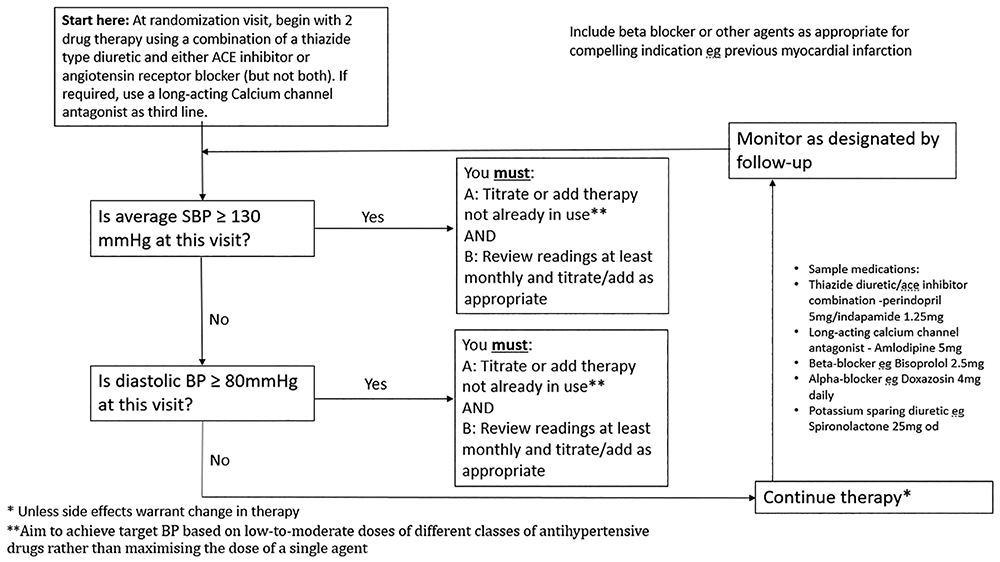
Control group
Patients randomised to SOC are advised to attend their GP and/or hospital physician for routine office-based BP measures, as per usual care. They have a face-to-face study visit at 3 months to incorporate an office BP measure, a telephone call at 6 months, and an end-of-trial FTF visit at 12 months. Full details of the schedule of events for both participant groups are available in Table 2.
| Screening/ Baseline | Follow Up | Follow Up | End of Trial | ||||||||||
|---|---|---|---|---|---|---|---|---|---|---|---|---|---|
| Assessments/ Outcomes | Month 1 | Month 2 | Month 3 | Month 4 | Month 5 | Month 6 | Month 7 | Month 8 | Month 9 | Month 10 | Month 11 | Month 12 | |
| Inclusion Exclusion Criteria | x | ||||||||||||
| Informed Consent1 | x | ||||||||||||
| Clinical assessment | x | ||||||||||||
| Blood Pressure2 | x | x | x | x | |||||||||
| Pregnancy test3 | x | ||||||||||||
| Renal function test4 | x | X | |||||||||||
| Randomisation | x | ||||||||||||
| Lifestyle/dietary advice | x | ||||||||||||
| Co-morbid medical conditions check | x | x | |||||||||||
| Concomitant medications check | x | x | x | x | x | x | x | x | |||||
| Modified Rankin score | x | x | |||||||||||
| Montreal Cognitive Assessment (MOCA) | x | x | |||||||||||
| Quality of life assessment (EQ-5D-5L) | x | x | |||||||||||
| Rockwood Frailty Scale score | x | x | |||||||||||
| Randomization | |||||||||||||
| Intervention Group5 | x | x | x | x | x | x | x | ||||||
| Blood pressure diary review | x | x | x | x | x | x | x | x | x | x | x | x | |
| BP medication titration (if required) | x | x | x | x | x | x | x | x | x | x | x | x | |
| Home blood pressure technique review | x | x | x | x | x | x | x | ||||||
| Qualitative feedback | x | x | x | ||||||||||
| SOC6 | x | x | x | ||||||||||
| Adverse events/ outcomes review | x | x | x | x | x | x | x | x | |||||
1Written informed consent should be obtained before any study related procedures. 2. Patients to rest for 10 minutes alone (3 measures, seated, average of measures 2 and 3 calculated). 3. To be done on all women of childbearing potential. 4. A baseline eGFR should be checked if not done in the last 3 months. Intervention Group - renal function test at 3 months. Further monitoring of renal function may be required at other time periods based on medication titration and local-site clinical judgement.
5Intervention Group Face to face (FTF) visits at 3, 6, and 12 months and phone visits at months 1, 2, 8 and 10months.
6SOC FTF at 3 and 12months, including blood pressure measurement, and phone visits at 6 months.
Primary outcome
The primary outcome will be the difference in mean SBP (office-based measure, mean of 2nd and 3rd measures, same arm and cuff size, seated, after 10 minutes rest) between the intervention versus control groups, measured at 3 months. This outcome is a single over-arching feasibility measure of treatment strategy effectiveness. In randomised trials, clinical benefit of SBP reduction is proportional to the attained SBP difference between treatment arms.
Secondary outcomes
Secondary outcomes are outlined in Table 3.
Safety and adverse events
The safety and tolerability of study interventions is evaluated and reported consistently in EPICS, including the reporting of the pre-specified adverse events outlined in Table 4. Other events which fulfil Good Clinical Practice (GCP) guidelines as Serious (ie. Causing death, disability, hospitalisation, other important medical events, or congenital defects) are systematically monitored and reported. All Serious Adverse Events (SAEs) identified by site staff are recorded on the trial database and reported within 24 hours to the Safety Monitoring office. The sponsor Safety Monitoring team will follow these events until resolution or until the event is considered stable by the Site Investigator. Safety outcomes, including SAEs and pre-specified adverse events, will be compared between intervention and control groups.
Table 4 describes pre-specified adverse events that will be monitored in the trial. Recurrent stroke includes ischaemic stroke, intracerebral haemorrhage, and subarachnoid haemorrhage. Hospitalisation is defined as “any event resulting in an overnight stay in hospital”. The following are not included in the definition of hospitalisation and do not require reporting as SAEs – Visits to clinics or day hospitals, emergency departments or other hospital day services eg minor surgical procedures; surgeries or procedures planned before randomisation but conducted after; Hospital admission for an outcome event. Acute kidney injury is defined as an Increase in serum creatinine to X1.5 times baseline, which is known or presumed to have occurred within the prior 7 days.
Sample size
A sample size of 142 patients (71 per arm) will provide 80% power (alpha 0.05) to detect an effect size at least of 8mmHg difference (standard deviation 17mmHg, mean SBP 127mmHg versus 135mmHg) between intensive and control arms.
For the primary analysis, baseline variables will be compared using t-tests or Wilcoxon tests (continuous variables) and chi-squared (categorical variables) testing. The primary outcome (difference in mean SBP) will be compared in intervention and control arms using a t-test, after verifying that the distributions fulfil assumptions of normality.
Analysis of each feasibility measure will be done by examining numbers and proportions of patients compared within study arms where appropriate by chi-squared tests, supplemented by review of qualitative data as appropriate.
For secondary outcomes, we will compare the time to the first occurrence of the composite vascular outcome using a log-rank test and will utilize multivariable Cox regression to test the hazard ratio of the composite vascular outcome by SBP study arm with appropriate adjustment for potential confounders depending on the number of outcome variables. Annual event rates per SBP category will be established using life-table analysis and Kaplan Meier curves with censoring for patients lost to follow-up. Other secondary outcomes and safety events will be compared using t-tests, Wilcoxon tests, or chi-squared tests as appropriate for continuous (normal or non-normal distributed) or categorical data.
An electronic Case Report Form (eCRF) is used for this study. The data in the study database is pseudo-anonymised. A number is assigned to each patient which will be mapped to identifiable patient details at each hospital site only. Central data management is performed by an experienced Data Management Centre. User access will be controlled via assigned usernames and passwords, approved by the study Data Manager. The main database is hosted in a secure data centre. All sites will have remote data monitoring conducted by the Project Team, and data checked for completeness, logic, and validity, with queries sent to sites to verify data as required.
Although hypertension is a well-established risk factor for recurrent stroke, blood pressure frequently remains inadequately controlled, with previous cohorts not meeting the historically recommended target of SBP <140. In Europe, the Euro-aspire study showed that only 38% of patients had controlled BP at 1 year15. Irish findings are similar, with Aspire-S showing only 37% control, and Irish primary-care cohort studies of stroke/TIA patients showing only one third had controlled BP13,14.
Current ESO guidelines recommend BP lowering to <130 following ischaemic stroke/TIA. However, the optimal strategy to achieve this for stroke patients is not clear. ESO guidelines note continued uncertainty over the use of out-of-office BP measures and recommend further research in this area. New implementation strategies to bridge the gap between the evidence base and achieving improved hypertension control are essential. HBPM with telemonitoring has good potential, particularly in the early post stroke period, where stroke recurrence risk is high, and engagement with treatment may be improved.
HBPM and self-management of BP are effective strategies for BP lowering in non-stroke patients with hypertension. The most recent individual patient-data meta-analysis of self-monitoring in hypertension also found that self-monitoring was effective at BP lowering in patients with hypertension-related multimorbidity19. However, for stroke patients specifically, this benefit was dependent on high-intensity co-interventions accompanying self-monitoring, including systematic medication titration by doctors, pharmacists or patients, or individually tailored support from study personnel. Low-intensity interventions such as self-monitoring with initial education, or with automated feedback or support was not associated with improved BP control.
People with stroke face additional challenges in hypertension management, which may account for the requirement for high-intensity co-interventions to show the benefits of HBPM. These may include post-stroke depression, disability and cognitive impairment, which may impact both medication adherence and accessing services for medication titration. Patient concerns regarding possible adverse events due to antihypertensive medication may also be a factor, as may clinician inertia to optimise BP treatment in some cases.
HBPM-TM is recognised as convenient and therefore acceptable to most patients and healthcare practitioners16 Feasibility studies have highlighted the potential of this benefit for stroke patients using different co-intervention strategies20,21. The TASMIN5S-IRL feasibility study in high cardiovascular risk stroke and TIA patients reported that a strategy of blood pressure self-monitoring using an integrated feedback system and medication titration was feasible and acceptable to patients20 In comparison to EPICS, TASMIN5S-IRL was based in primary care, and patients were enrolled at least one month after their qualifying event for a 3 month intervention. Titration was completed with a three-step titration plan agreed at the baseline visit. The frequency of BP measurement was also less frequent compared to EPICS, with BP measured monthly for three days (twice daily) within a 7-day period. In contrast, the EPICS trial intervention arm will incorporate BP readings 4-times weekly for the first three months, and twice-weekly thereafter.
Similarly, the TASC (Telehealth After Stroke Care) feasibility study found HBPM-TM with multidisciplinary intervention for stroke patients lowered SBP at 3 months21. The intervention arm of this trial included HBPM with wireless transmission of readings, telenursing support, and pharmacist visits. Different co-intervention strategies may need to be tailored for specific populations, with a recent trial of HBPM-TM in Black and Hispanic Stroke patients highlighting the additional benefit of nurse case-management compared to HBTM-alone22.
Our study has a number of strengths. EPICS-Pilot gives particular focus to the early post-stroke/TIA period where recurrence risk is highest, and aims to establish BP control in the first three months through weekly review of readings and medication titration at least monthly. The use of a defined algorithm for medication titration while allowing physician choice of antihypertensive class encourages achieving target BP based on low-to-moderate doses of different classes of antihypertensives, while mirroring current prescribing practice. The usual care group reflects contemporary “real-world” practice, and includes not just office-based BP, but ambulatory blood pressure monitoring and self-measured blood pressures as per standard care. Through the use of a smartphone app to return blood pressure readings, the study team can explore the feasibility and acceptability of mobile health technology for this purpose in a stroke population. The broad inclusion criteria will enhance external validity of the study.
Limitations include the small sample size and restricted geographic setting (Ireland), which may limit generalisability to other healthcare settings.
EPICS-Pilot will provide new evidence on a novel strategy of home blood pressure monitoring and telemonitoring to improve hypertension management to inform future randomised controlled trials.
Favourable ethical approval was obtained from The Mater Misericordiae University Hospital Research Ethics Committee on 13th December 2023 (reference 1/378/2374). All authors have consented to the publication of the research presented in this manuscript.
BP – Blood Pressure
TIA – Transient Ischaemic Attack
ESO – European Stroke Organisation
SBP – Systolic Blood Pressure
HBPM – Home Blood Pressure Measurement
HBPM-TM – Home Blood Pressure Measurement and Telemonitoring
ABPM - ambulatory blood pressure measurement
Provide sufficient details of any financial or non-financial competing interests to enable users to assess whether your comments might lead a reasonable person to question your impartiality. Consider the following examples, but note that this is not an exhaustive list:
Sign up for content alerts and receive a weekly or monthly email with all newly published articles
Register with HRB Open Research
Already registered? Sign in
Submission to HRB Open Research is open to all HRB grantholders or people working on a HRB-funded/co-funded grant on or since 1 January 2017. Sign up for information about developments, publishing and publications from HRB Open Research.
We'll keep you updated on any major new updates to HRB Open Research
The email address should be the one you originally registered with F1000.
You registered with F1000 via Google, so we cannot reset your password.
To sign in, please click here.
If you still need help with your Google account password, please click here.
You registered with F1000 via Facebook, so we cannot reset your password.
To sign in, please click here.
If you still need help with your Facebook account password, please click here.
If your email address is registered with us, we will email you instructions to reset your password.
If you think you should have received this email but it has not arrived, please check your spam filters and/or contact for further assistance.

Comments on this article Comments (0)